

More news on this day
Hundreds of passengers across Japan faced unexpected disruption on April 3 as a wave of operational issues led to 27 flight cancellations and 398 delays at Tokyo, Osaka, Tottori, and Hachijojima airports, affecting services operated by All Nippon Airways, Japan Airlines, ANA Wings, Ibex Airlines, Jetstar Japan, and several smaller carriers.
Get the latest news straight to your inbox!
Widespread Disruption Across Key Japanese Airports
Publicly available flight tracking and airport operations data for April 3 indicate that the disruption was concentrated at Tokyo’s Haneda and Narita airports, Osaka’s Itami and Kansai gateways, as well as regional fields at Tottori and Hachijojima. Together, the airports recorded 27 outright cancellations alongside 398 delayed departures and arrivals, creating knock-on effects throughout domestic and some short haul regional networks.
The pattern of disruption suggests a rolling operational issue rather than a single isolated incident. Irregular operations at major hubs typically ripple through tightly timed domestic schedules in Japan, where aircraft and crews are frequently turned around multiple times per day on short sectors such as Tokyo to Osaka, Tokyo to Tottori, and Tokyo to Hachijojima.
While the majority of flights still operated, the high volume of delays meant many travelers missed connections or arrived several hours behind schedule. The impact was most visible during the morning and early evening peaks, when dense banks of departures and arrivals leave little room in the schedule to recover from earlier time losses.
Regional airports such as Tottori and Hachijojima, which rely on a small number of daily rotations, were especially vulnerable. A single delayed or canceled aircraft movement can significantly reduce connectivity for entire prefectures, limiting options for rebooking and forcing passengers to wait for later departures or alternative routings.
Major Domestic Carriers Bear the Brunt
Operational data show that Japan’s two largest full service airlines, All Nippon Airways and Japan Airlines, were among those most affected by the day’s disruption, alongside group subsidiaries such as ANA Wings. These carriers dominate domestic trunk and regional routes, meaning any widespread irregular operations quickly translate into large numbers of inconvenienced passengers.
Low cost and regional operators, including Jetstar Japan and Ibex Airlines, also experienced knock on effects where they interface with congested hub airports. In Japan’s integrated domestic system, smaller airlines often depend on carefully timed slots at Haneda, Narita, and Itami to connect with larger networks, so even minor schedule shifts can cascade into significant delays later in the day.
Published customer guidance from Japanese airlines emphasizes that passengers facing same day cancellations or severe delays are typically offered rebooking on the next available flight, with some carriers outlining meal and accommodation support in cases where travelers cannot reach their final destination on the planned date. In practice, today’s combination of limited spare capacity and high demand made rapid reaccommodation more challenging, particularly on popular evening services.
The disruption also intersected with ongoing schedule adjustments in the Japanese market, as airlines refine their domestic networks for the late spring and summer seasons. Capacity changes, aircraft rotations, and shifting demand patterns can leave schedules more exposed when irregular operations occur, especially at the start of a new timetable period.
Passenger Experience: Crowded Terminals and Tight Connections
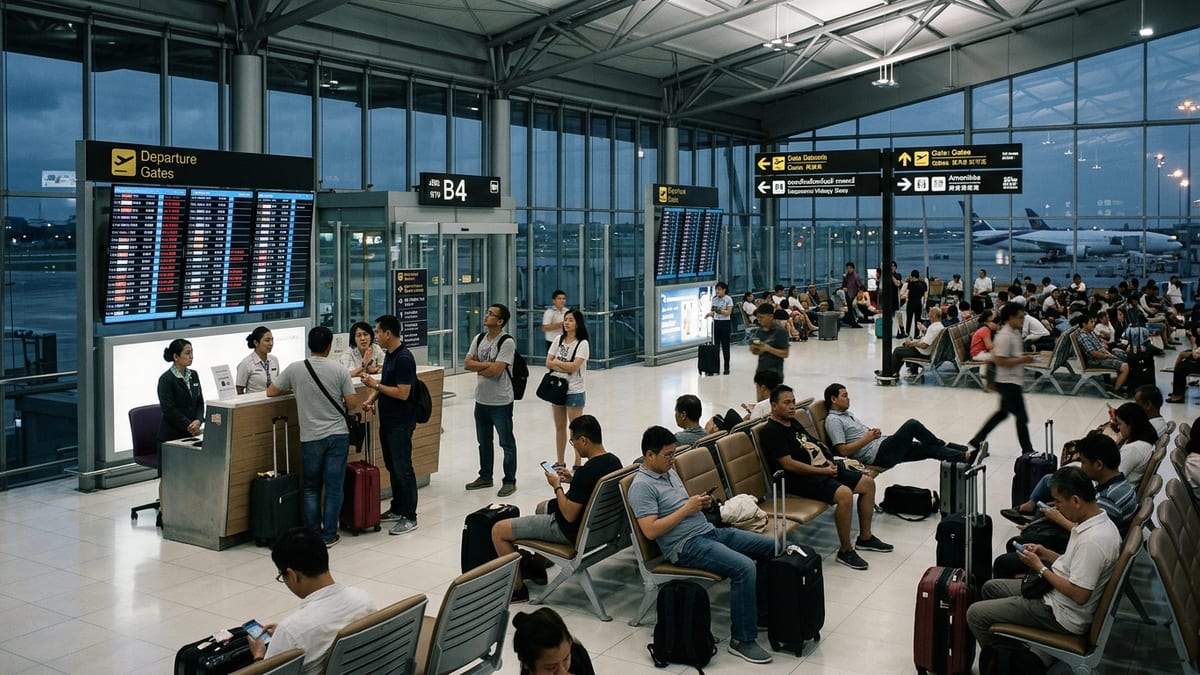
Reports from local media and live operations dashboards described crowded departure halls at Tokyo and Osaka as travelers queued at service counters to rebook or inquire about missed connections. Departure boards at the major hubs showed long strings of flights marked delayed, with some domestic routes experiencing rolling delays as aircraft and crews gradually fell further behind schedule.
For passengers on short domestic hops, even modest delays can have outsized impacts. A thirty to sixty minute setback on a Tokyo to Osaka or Tokyo to Tottori sector can be the difference between making or missing a last onward connection, particularly for travelers connecting from domestic flights onto international departures at Narita, Haneda, or Kansai.
Regional travelers bore a particular burden where alternatives were limited. Airports such as Tottori and Hachijojima often see only a handful of daily flights on specific routes, leaving few same day options when an aircraft is delayed or canceled. Some passengers faced extended waits for the next available seat or were rerouted through larger hubs, lengthening total journey times.
Families and business travelers alike were forced to adjust plans on short notice, from rescheduling meetings to extending hotel stays. Travel agents and airline call centers experienced elevated volumes as people sought clarification on their options and attempted to secure seats before remaining inventory disappeared.
Operational Pressures Behind the Numbers
Industry analysis of today’s figures points to a combination of factors behind the 27 cancellations and 398 delays, including tight aircraft utilization, high load factors, and ongoing airspace and staffing constraints across parts of Asia Pacific. When aircraft and crews are scheduled with minimal downtime, even a single inbound delay can cascade across multiple subsequent segments.
Japan’s domestic network is particularly sensitive to such disruptions because it relies heavily on high frequency, short haul operations linking Tokyo and Osaka with secondary and tertiary cities. Any bottleneck at the major hubs can quickly echo out to smaller airports, as seen today at Tottori and Hachijojima.
Recent regional trends have also added complexity. Adjustments to long haul and regional schedules, including restructuring at some Japanese carriers and evolving partnerships with foreign airlines, have altered how aircraft and crews are rotated through domestic and international networks. This can leave certain routes with less operational slack to absorb irregular events.
While no single weather or safety incident appears to have driven the entire disruption, the day’s performance underlines how vulnerable dense, highly optimized schedules can be to a combination of minor operational challenges. Once delays accumulate beyond a certain point, airlines often resort to targeted cancellations to reset rotations and comply with crew duty regulations.
What Travelers Can Do During Irregular Operations
Consumer advocates regularly advise passengers in Japan to monitor their flight status closely on days of widespread disruption and to move quickly to secure alternative arrangements if a delay or cancellation appears likely. Same day changes are often easier to arrange when requested early, before remaining seats on later flights are taken by other disrupted travelers.
Publicly available guidance from Japanese carriers encourages customers to use digital tools such as airline apps and automated change functions where possible, reducing the need to queue at airport counters. Many domestic tickets can be rebooked or refunded online during irregular operations, particularly when delays or cancellations are attributed to the carrier.
Travelers are also urged to retain receipts for any out of pocket expenses incurred during extended disruptions, such as meals, ground transport, or accommodation, as some airlines accept reimbursement claims after the fact under specific conditions. Policy details vary by carrier and fare type, so passengers are encouraged to review the conditions of carriage associated with their ticket.
For those with critical onward connections, including international departures or time sensitive commitments, today’s events serve as a reminder of the benefits of longer connection windows and flexible itineraries. As Japan’s aviation sector continues to adapt to shifting demand and evolving regional dynamics, occasional days of concentrated disruption remain a possibility, even in one of the world’s most punctual air travel markets.