

More news on this day
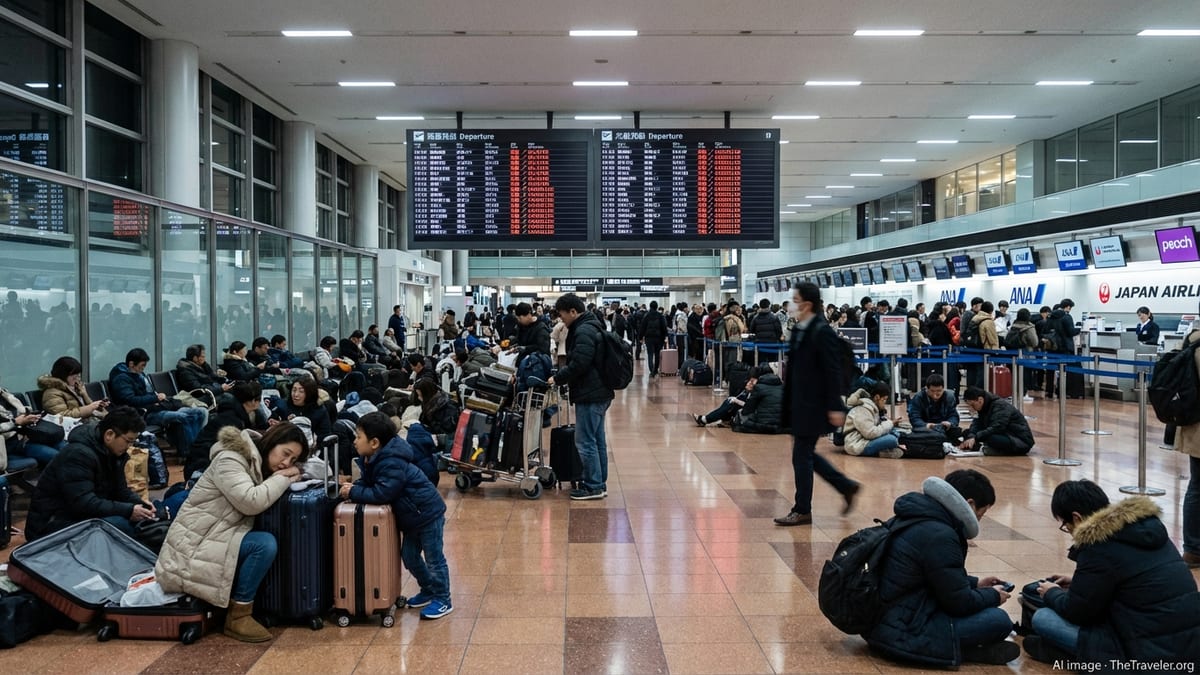
Hundreds of passengers have been left stranded at Tokyo Haneda, Kansai and Fukuoka airports after a fresh wave of disruption saw 274 domestic and regional flights delayed and one cancelled, snarling operations for major carriers including ANA, Japan Airlines and Peach Aviation and triggering knock-on chaos at airports from Sapporo and Nagoya to Hiroshima and Sendai.
Disruption Concentrated at Japan’s Busiest Gateways
Operational data from Japan’s major domestic hubs on Thursday shows Haneda, Kansai and Fukuoka at the epicentre of the latest aviation disruption, with the three airports collectively accounting for 274 delayed flights and one cancellation over the course of the day. The imbalance between delays and cancellations underscores how airlines and airport operators attempted to keep the network moving, even as punctuality deteriorated sharply.
Tokyo’s Haneda, one of the world’s busiest mixed-use airports, recorded the single cancellation along with well over a hundred delays on domestic and short-haul regional routes. Departures to key business and leisure destinations such as Sapporo, Fukuoka, Osaka and Hiroshima were among those affected, pushing turnaround times well beyond their scheduled windows and forcing late-night arrivals into already stretched ground-handling shifts.
At Kansai International, serving the wider Osaka, Kyoto and Kobe region, nearly eighty flights were reported delayed as tight runway slots, high traffic and weather-related spacing constraints slowed operations. Low-cost and full-service carriers alike saw short-haul departures pushed back, with aircraft often landing and then waiting for available gates while passengers watched departure boards turn steadily from on-time to delayed.
Fukuoka Airport in Kyushu, a critical domestic hub linking southern Japan with Tokyo and northern Honshu, added close to sixty delays to the daily tally. The airport’s compact terminal and heavy evening bank of flights magnified the impact, leaving lounges and concourses crowded with passengers rebooking onward connections or simply seeking a place to sit as aircraft awaited release slots.
Major Carriers ANA, JAL and Peach Under Pressure
All Nippon Airways and Japan Airlines, the country’s two largest network carriers, bore the brunt of Thursday’s disruption as their dense domestic schedules across Haneda, Kansai and Fukuoka were hit by rolling delays. With many routes operating at high load factors during the late-winter travel period, relatively small schedule perturbations quickly snowballed into significant backlogs, particularly on trunk sectors linking Tokyo with Sapporo, Fukuoka, Nagoya and Okinawa.
Peach Aviation, a key low-cost operator based at Kansai, was also heavily affected as late aircraft arrivals and congested turnarounds cut into its tightly timed rotations. Budget airlines rely on rapid ground times to keep fares low, but when a morning delay cascades across successive legs, there is limited slack in the schedule to recover. Passengers booked on Peach’s leisure-heavy routes to Sapporo, Fukuoka and regional airports in Kyushu reported waits stretching into several hours.
Regional and niche carriers, including ANA Wings, Air Do and Solaseed Air, were not spared, as their feeder operations depend on precise coordination with mainline services at hubs such as Haneda and Fukuoka. Once primary flights slipped behind schedule, regional spokes into smaller airports like Sendai, Nagasaki and Kagoshima also experienced pushbacks or missed connection windows, further complicating recovery efforts.
Japan Airlines and ANA customer service channels were quickly inundated with requests for rebooking, refunds and hotel assistance. While both carriers encouraged passengers to use websites and mobile apps to manage disrupted itineraries, many travelers at the airports said they still queued at service counters, citing a desire to speak to staff directly amid rapidly changing departure estimates.
Knock-on Effects Across Sapporo, Nagoya, Kyoto and Kobe
The impact of the delays was felt far beyond the three primary hubs, rippling outward across Japan’s interconnected domestic network. Sapporo’s New Chitose Airport, a key gateway for Hokkaido, experienced mounting congestion as delayed arrivals from Haneda and Kansai pushed departure banks later into the evening. Aircraft and crew arriving late from Tokyo left outbound flights with compressed turnarounds, with some services forced into rolling delays to maintain safety margins and maintenance checks.
Nagoya’s Chubu Centrair International, while less affected than Tokyo and Osaka, nonetheless reported a steady stream of late arrivals from Haneda and Fukuoka. Business travelers connecting to regional industrial centers across central Japan faced missed trains and rescheduled meetings as flight delays compounded with evening rail crowding. Some passengers opted to switch to shinkansen services at the last minute, further crowding intercity rail corridors.
In the Kansai region, the effects extended beyond Kansai International itself. Osaka Itami, serving primarily domestic flights, and the broader Kyoto and Kobe catchment area saw bus and rail transfers run behind schedule as long-haul passengers arrived late into Kansai before dispersing onward. Hotel operators around Osaka and Kobe reported a spike in last-minute walk-in bookings from stranded travelers seeking overnight accommodation.
Smaller regional airports such as Hiroshima and Sendai experienced what one observer described as a “domino effect,” where even a modest number of delayed flights led to gate shortages and congested baggage belts at peak times. Local tourism operators in Hiroshima noted that tightly planned day trips built around specific arrival times had to be scrapped or truncated, resulting in lost bookings for tours and attractions.
Passengers Face Long Queues, Confusion and Mounting Costs
For travelers on the ground, the immediate experience of the disruption was defined by long queues at check in, security and service counters, as well as crowded seating areas near departure gates. At Haneda, passengers reported snaking lines extending into terminal walkways as delayed flights continued to board while new waves of departing customers arrived for later services.
Families and elderly travelers appeared particularly vulnerable to the strain, many of them sitting on the floor or leaning against pillars in gate areas with limited spare seating. With announcements often issued only in Japanese or delivered over crackling loudspeakers, some foreign tourists said they were left refreshing airline apps repeatedly to piece together the status of their flights and find out whether they needed to collect baggage for overnight stays.
The financial implications for passengers were also significant. While Japanese carriers provided accommodation or meal vouchers in some cases, many travelers had to pay out of pocket for hotels, taxis and rebooked trains, especially when delays did not meet strict eligibility thresholds for assistance. Travel insurance may absorb some of these costs, but policy conditions vary widely, and claims can take weeks to process.
For business travelers and those with time-sensitive commitments, the disruption carried intangible costs. Missed client meetings, rescheduled events and lost vacation days added to the frustration, with some passengers expressing concern that Japan’s domestic aviation network, long regarded as among the world’s most reliable, is showing signs of mounting strain under peak seasonal and weather pressures.
Weather and Operational Strain Combine to Test Resilience
The latest wave of disruption arrived against a backdrop of challenging seasonal weather in northern Japan and sustained operational strain at key hubs. Snowfall and low-visibility conditions around Sapporo and other northern airports have forced airlines to pad schedules, increase de-icing times and occasionally suspend services altogether, creating a fragile equilibrium that can be easily tipped by even minor technical or staffing issues elsewhere in the network.
Operational experts note that Japan’s domestic carriers run some of the densest short-haul schedules in the world, with fast turnarounds and high aircraft utilization. While this model supports frequent service and competitive fares, it leaves limited room for recovery when multiple hubs experience concurrent delays. A single late-arriving aircraft in Haneda can cascade through Fukuoka, Sapporo and back to Tokyo over a single day, touching hundreds of passengers in the process.
Capacity constraints at major airports compound the challenge. Runway and gate availability at Haneda is tightly managed, and any deviation from the planned sequence of arrivals and departures can trigger bottlenecks. Similar constraints at Kansai, which is built on an artificial island with limited room for expansion, mean that even small surges in ground traffic can slow aircraft movements and lengthen taxi times.
Airport and airline officials have been cautious in apportioning blame, emphasizing that safety remains paramount and that aircraft will not depart until crews, weather and technical conditions align with regulatory requirements. However, the recurring nature of such disruption episodes over recent months has prompted calls from passenger groups and tourism bodies for a deeper review of scheduling resilience, crew allocation and infrastructure investment.
Tourism and Local Economies Feel the Impact
The timing of the disruption is particularly unwelcome for Japan’s tourism sector, which has been steadily rebuilding inbound and domestic demand. Haneda and Kansai serve as vital gateways not only for international visitors, but also for domestic travelers heading to winter sports destinations in Hokkaido, cultural hotspots in Kyoto and Kobe, and city-break escapes in Fukuoka and Hiroshima.
Tour operators reported that some group itineraries had to be hastily reconfigured or shortened as late arrivals cut into sightseeing time. Ski resorts accessible from Sapporo and regional airports in Nagano and Tohoku faced postponed arrivals and hurried check ins, compressing what should have been relaxed multi-day stays into shorter, more stressful visits. Local guides and transport providers, often paid per service rather than per day, lost revenue when activities were canceled outright.
In urban centers such as Nagoya, Kyoto and Sendai, hospitality businesses saw a mixed effect. Some hotels near airports and main railway stations benefited from an uptick in distressed bookings from stranded travellers, while smaller inns and guesthouses in outlying districts reported late cancellations and no-shows. Restaurateurs in arrival-area concourses did brisk trade as passengers waited out delays, but businesses in planned destination neighborhoods noted quieter-than-expected evenings.
Regional tourism boards have increasingly emphasized the need for clearer communication with travelers during disruption events, including multilingual updates and better integration between airline alerts, rail timetables and local transport information. For destinations that depend heavily on short domestic breaks, ensuring that visitors feel supported during travel hiccups is seen as essential to long-term reputation.
How Airlines and Airports Are Responding
In response to the latest disruption, airlines operating out of Haneda, Kansai and Fukuoka have taken a series of short-term mitigation steps. These include adding larger aircraft on select high-demand routes later in the day to consolidate passengers from multiple delayed flights, waiving change fees for affected itineraries, and deploying additional customer service staff in terminals and call centers to handle rebooking and information requests.
Some carriers introduced temporary protective scheduling, building slightly longer turnaround times into late-evening rotations in an attempt to “reset” the network overnight. This can allow maintenance teams additional time to clear backlogs of routine checks that may have been compressed during busy daytime operations. However, such measures reduce daily aircraft utilization and, if sustained, could increase operating costs that eventually filter through to fares.
Airport operators at Haneda, Kansai and Fukuoka, meanwhile, have focused on easing immediate congestion. Measures range from opening overflow waiting areas and deploying additional security and cleaning staff to coordinating more closely with rail and bus companies to manage late-night passenger flows when flights land after public transport curfews. In some cases, airports have extended operating hours for retail and food outlets to accommodate stranded customers.
Longer term, both airlines and airports are exploring investments in upgraded air traffic management tools, improved de-icing capacity at northern gateways and enhanced real-time communication systems. Industry analysts say such upgrades will be crucial if Japan is to accommodate growing passenger numbers while maintaining the high standards of punctuality and reliability that have long been a hallmark of its domestic aviation market.
Advice for Travellers Heading Through Japan’s Hubs
For travelers planning to pass through Haneda, Kansai or Fukuoka in the coming days, aviation analysts recommend building more flexibility into itineraries. Allowing extra connection time, particularly when linking flights with rail or long-distance bus services, can mitigate the risk of missed onward journeys if delays recur. Booking earlier flights in the day, when there is typically more buffer to recover from minor disruptions, may also reduce the chance of overnight stranding.
Passengers are advised to monitor flight status using both airline apps and departure boards, as estimated departure times can change quickly in a volatile operational environment. Signing up for push notifications from airlines and enabling roaming data, where possible, can help travelers stay informed without needing to remain physically close to gate areas at all times.
Travel experts also highlight the importance of reviewing ticket conditions and travel insurance coverage before departure. Understanding what compensation or assistance may be available in the event of delays or a rare cancellation can make it easier to make quick decisions about rebooking or arranging overnight accommodation. Keeping essential items such as medications, chargers and a change of clothes in carry-on luggage remains a simple but valuable precaution.
While Thursday’s disruption has strained patience for many, Japan’s aviation sector still retains a strong record for safety and overall reliability. As airlines and airports work to restore schedules and address underlying vulnerabilities, passengers are being urged to factor in the new realities of tighter capacity and more frequent weather-driven disruption when planning trips across the country’s busy air network.