

More news on this day
Travel to and from Japan is facing renewed disruption as Delta Air Lines, El Al, United Airlines and other carriers cancel around 20 flights on routes touching Tokyo, Tel Aviv, Los Angeles, Guam, Sapporo, Nagoya and Honolulu, according to published schedules and media reports, leaving passengers scrambling to rebook long-haul and regional journeys.
Get the latest news straight to your inbox!
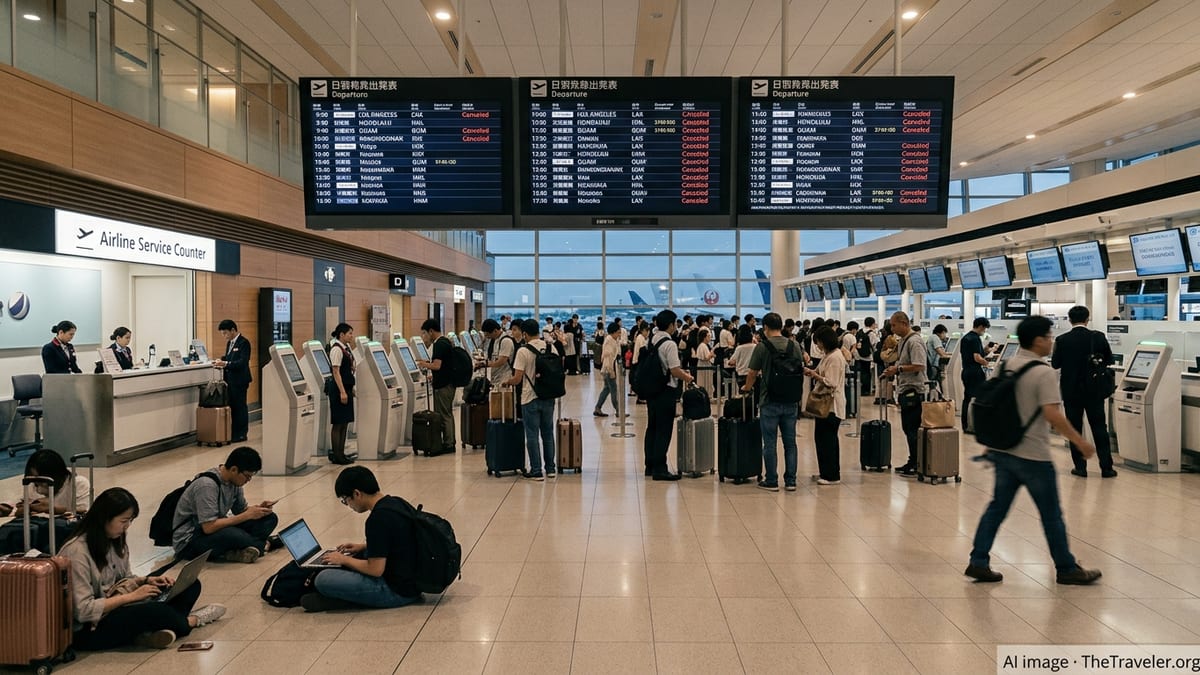
Fresh Wave of Cancellations Hits Transpacific and Regional Routes
Recent schedule adjustments and operational disruptions are affecting a cluster of flights that connect Japan with North America, the Middle East and key leisure destinations in the Pacific. Publicly available data from airline timetables and aviation trackers shows that around 20 flights operated or marketed by Delta Air Lines, El Al, United Airlines and partner carriers have been canceled or temporarily suspended across several days, concentrating the impact on some of the busiest corridors serving Tokyo and other Japanese cities.
The affected routes include services linking Tokyo with Los Angeles and Honolulu, along with flights that route passengers onward to Guam, Sapporo and Nagoya using a mix of international and domestic legs. On the long-haul side, select Japan–United States services have disappeared from near-term schedules, while some Japan–Hawaii and Japan–Guam flights are now listed as suspended during parts of the late March and April travel window.
These fresh disruptions are emerging at a time when demand for Japan remains strong among international visitors and outbound Japanese travelers, intensifying the strain on already busy alternative flights. Travel forums and social media posts highlight cases where passengers bound for US hubs or resort destinations have been rebooked via complex routings that add extra connections and overnight stops.
Tokyo Haneda Constraints Ripple Across Delta and United Networks
Tokyo Haneda Airport, a critical gateway for premium and business traffic between Japan and North America, appears to be a focal point of the latest changes. Travelers posting on public discussion boards in late March describe repeated cancellations on Delta’s Haneda services, citing airport maintenance notices and last minute schedule adjustments that forced multiple rebookings. These accounts align with gaps visible in some Haneda transpacific schedules on specific days.
United Airlines has also made selective cuts and substitutions on Japan-bound services in recent months, according to published coverage and schedule data, as carriers continue to juggle aircraft utilization and crew availability on long-haul routes. While many United flights between US gateways and Tokyo continue to operate, the removal of even a small number of frequencies can push more passengers onto remaining departures, especially around peak travel dates.
Because Haneda has limited slot availability and stringent curfew and capacity rules, even short-term runway or terminal constraints can cascade quickly through airline networks. When a Haneda departure is canceled, carriers often attempt to reroute customers via Narita or through other Asian hubs, which can lengthen overall travel time and reduce options for same-day connections onward to destinations such as Sapporo, Nagoya or Guam.
Japan–Hawaii and Guam Flights Face Targeted Suspensions
Flights linking Japan with Honolulu and Guam, long among the most popular leisure routes for Japanese travelers, are also experiencing a round of targeted suspensions. Japan-focused schedule documents for late March and April show that several Japan to Honolulu services from Tokyo, Kansai and Nagoya are planned to operate at sharply reduced frequencies, while some dates are marked as suspended entirely. Narita–Guam flights are also listed with fewer operating legs than originally scheduled over this period.
These reductions feed directly into the broader disruption picture because many US and Asia-bound passengers rely on Honolulu and Guam as connection points between Japan and the mainland United States or other Pacific islands. When nonstop Japan–Hawaii or Japan–Guam flights are dropped from the schedule, travelers are often shifted onto alternative routes via Los Angeles, San Francisco or other hubs, compressing seat availability and raising the likelihood of missed or tight connections.
For passengers booked on Delta or United itineraries that incorporate codeshare segments with Japanese carriers on these leisure routes, the operational pattern can be particularly confusing. A flight marketed by a US airline but operated by a Japanese partner may be suspended on select days, even while other services on the same city pair remain in operation. This can result in last-minute re-ticketing through different Japanese airports, including Sapporo and Nagoya, depending on where replacement seats can be found.
Routes to Tel Aviv Add Another Layer of Complexity
Connections between Japan and Tel Aviv have been under pressure since late 2023 due to ongoing regional security concerns and evolving risk assessments. Industry coverage indicates that many global airlines sharply scaled back or fully suspended direct flights to Israel, concentrating remaining capacity with carriers such as El Al and a small group of regional operators. In this constrained environment, even a limited number of cancellations can have outsized effects on itineraries originating in Japan.
Delta and United do not operate nonstop services from Japan to Tel Aviv, but their long-haul networks and alliance partners carry passengers on multi-leg itineraries linking Tokyo, Sapporo or Nagoya with Israel via European or US hubs. When El Al or a partner carrier adjusts frequencies, passengers holding tickets that include both Japan and Tel Aviv segments can be affected across the entire itinerary. Publicly available accounts from recent months show travelers needing to rebook Japan–Europe or Japan–US sectors to align with fewer available Tel Aviv departures.
Given the combination of security-driven schedule changes and the new wave of operational cancellations tied to Japan routes, travelers moving between Tokyo and Tel Aviv currently face a higher risk of disrupted journeys than on many other long-haul corridors. In some cases, routing through secondary gateways such as Athens or other European cities has been used as a workaround, adding further travel time and complexity.
What Travelers Should Expect and How to Plan Around Disruptions
With a patchwork of cancellations concentrated on about 20 flights, the overall air network serving Japan remains largely intact, but passengers booked on affected routes should be prepared for longer travel times and less flexibility. Published airline policies generally provide rebooking options without change fees when a flight is canceled, yet availability on alternative departures can be tight during busy periods and on high-demand leisure routes like Honolulu and Guam.
Travel experts quoted in public forums and media analyses emphasize the importance of monitoring reservations closely in the week leading up to departure, especially for itineraries involving Haneda, Honolulu, Guam, Sapporo, Nagoya or Tel Aviv. Same-day notifications through airline apps, email alerts and online check-in pages can provide the earliest indication that a flight has been removed from the schedule or downgraded to a different aircraft type with fewer seats.
Passengers with complex itineraries that mix multiple airlines or include stopovers in both Japan and third countries may find it helpful to allow longer connection times and to consider overnight stays at hub airports, particularly if traveling during the late March and April window when several Japan–Pacific services are reduced. Publicly available guidance also suggests that travelers who are flexible on dates or routings may benefit from proactively contacting their carrier to discuss alternative options before flights fill up, rather than waiting until day-of-departure queues form at airport service desks.