

More news on this day
Japan’s tourism rebound is colliding with a fast-evolving rail ecosystem, as a more expensive yet increasingly flexible Japan Rail Pass helps move record numbers of visitors faster and farther across the country.
Get the latest news straight to your inbox!
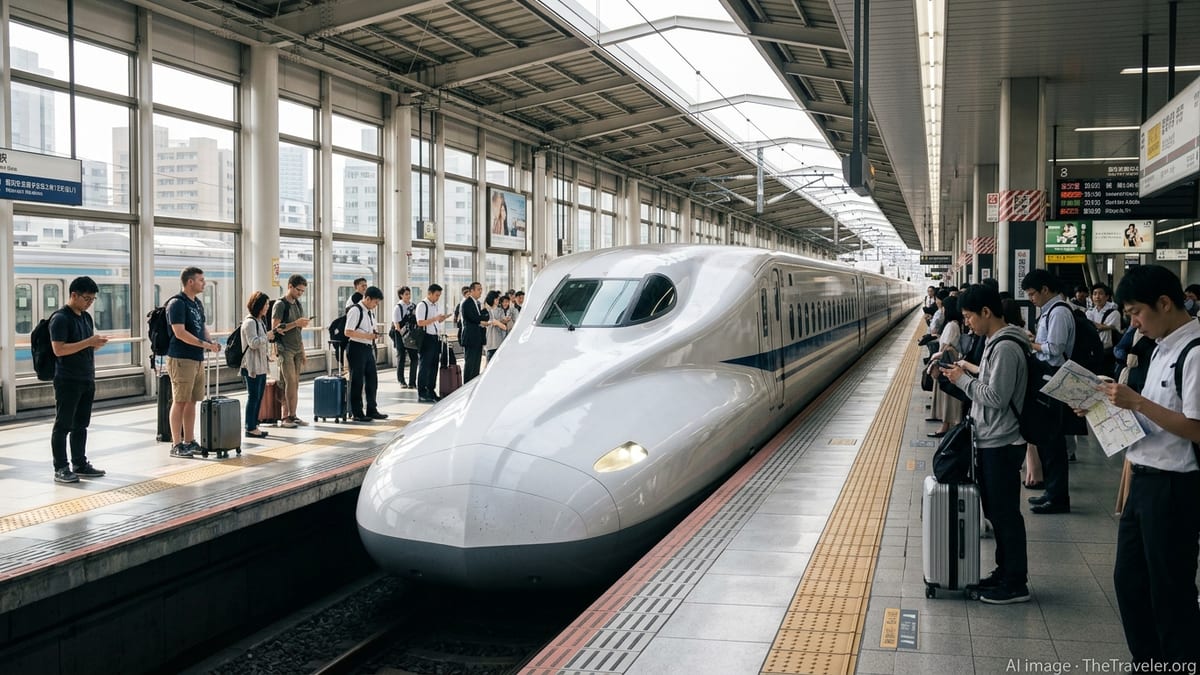
Record Visitor Boom Meets a High-Speed Rail Nation
Japan has entered a new phase as a rail-powered tourism powerhouse. Official statistics compiled by the Japan National Tourism Organization and other agencies show that inbound travel reached about 36.9 million visitors in 2024, surpassing the pre-pandemic peak in 2019. Subsequent estimates and transport ministry data indicate that arrivals climbed again in 2025 to roughly 42.7 million, placing Japan among the world’s busiest destinations and underscoring the central role of rail in absorbing this demand.
The country’s high-speed Shinkansen network has expanded and matured alongside this surge. Publicly available railway data show that Shinkansen services handled hundreds of millions of passenger journeys in 2024, with long-distance trains linking Tokyo to major cities such as Osaka, Fukuoka, Kanazawa and Hakodate in a matter of hours. As more travelers prioritize speed and reliability, the national rail grid has become the backbone that allows tourists to cover multiple regions within a single trip.
At the same time, Japan’s travel competitiveness rankings remain near the top globally, supported by extensive infrastructure, safety and service standards. Industry briefings suggest that tourism agencies and rail operators increasingly view inbound visitors not as occasional riders, but as a core customer segment whose needs now shape ticketing, service design and investment priorities.
For many of these travelers, the Japan Rail Pass and a growing family of regional passes remain the primary tools for navigating this dense, high-frequency network, even as pricing and product design shift.
Higher-Priced Pass, Still Central to Long-Distance Itineraries
The nationwide Japan Rail Pass underwent its most dramatic overhaul in October 2023, when JR Group operators implemented price increases of about 65 to 77 percent depending on duration. Coverage remained largely the same, offering unlimited travel on most JR-operated lines including the Tokaido, Sanyo and Kyushu Shinkansen routes, but the economics for many itineraries changed significantly.
Before the adjustment, the pass was widely regarded as a bargain that encouraged spontaneous long-distance hops, with travelers often riding Shinkansen services simply because the marginal cost felt close to zero. After the increase, travel experts and independent blogs began advising visitors to run detailed fare comparisons, noting that the pass still pays off for ambitious cross-country itineraries, such as multi-leg journeys linking Tokyo, Hiroshima and Kyushu, but is less compelling for slower-paced trips focused on just one or two regions.
Despite concerns that a steeper price might dampen demand, inbound visitor numbers continued to climb. Industry commentary attributes this resilience to a weak yen, pent-up travel demand and the enduring appeal of Japan’s rail network as an efficient, comfortable way to crisscross the archipelago. For many long-haul visitors, particularly from Europe, North America and Australia, the higher pass cost is often offset by favorable exchange rates and the ability to see more of the country in limited vacation time.
As a result, the Japan Rail Pass has shifted from a near-default purchase to a strategic tool. Travelers now tend to pair it with regional passes, discounted advance fares and local IC transit cards, choosing the national pass when they plan intensive Shinkansen use and relying on other options for shorter segments.
Regional Rail Passes Push Tourists Beyond the Golden Route
The rise of regional rail passes is altering where tourists go. JR companies in eastern, central and western Japan have progressively refined their area-specific products, targeting visitors who want to explore a particular region deeply rather than cover the whole country in a single trip. These passes typically combine reserved Shinkansen segments with unlimited use of local JR lines for a set number of days.
In eastern Japan, JR East has drawn attention with products such as the JR EAST PASS variants and, from 2026, a new full-line pass priced at around 35,000 yen for five consecutive days. Company information indicates that this product is designed so that a single round trip between Tokyo and far northern cities like Aomori can justify the cost, encouraging travelers to push into Tohoku’s hot spring towns, coastal areas and smaller cities that were previously secondary stops.
JR West and JR Kyushu have similarly promoted regional passes that bundle Shinkansen segments with local routes, aiming to spread visitors into destinations such as Hiroshima, Okayama, Fukuoka and Kagoshima. Railway group earnings briefings show that inbound ticket revenue for some private and regional operators has grown rapidly as they capitalize on increased international awareness and the convenience of multi-day passes.
This patchwork of options is gradually easing pressure on the classic “golden route” of Tokyo, Kyoto and Osaka. With rail passes that make side trips easier and more economical, travelers are more likely to add lesser-known stops, from Kanazawa and Toyama on the Hokuriku Shinkansen to Nagano’s mountain areas or coastal towns along the Seto Inland Sea.
Technology, Ticketing and the Move Toward Seamless Travel
Infrastructure upgrades and digital tools are reinforcing the impact of the Japan Rail Pass and its regional counterparts. Nationwide interoperability for Japan’s major IC transit cards, achieved across hundreds of operators by 2024, allows many visitors to tap and ride on local trains, subways and buses with a single stored-value card, reducing friction at ticket machines and simplifying transfers between JR and non-JR systems.
JR companies are also expanding online reservation and seat management systems, enabling pass holders to book Shinkansen and limited express seats in advance via dedicated platforms, then collect tickets at stations or, in some cases, use QR codes and automated gates. According to public notices from JR East, from April 2026 certain Japan Rail Pass reservations will be exchangeable at select ticket vending machines, shifting more of the process away from staffed counters.
The move toward contactless payments on private railways and regional lines is further integrating the network. Major operators, including those in the Kansai and Nagoya areas, have begun to roll out credit card and smartphone touch payments at ticket gates, a trend highlighted in corporate presentations aimed at inbound growth. While these systems are often separate from the Japan Rail Pass itself, they complement it by offering a predictable, familiar way for international travelers to bridge gaps where passes do not apply.
Together, these changes are steering Japan toward a model where tourists can plan, reserve and ride almost entirely through digital tools, using rail passes as flexible backbones supplemented by pay-per-ride services and local IC cards.
Balancing Growth, Regional Revitalization and Overtourism
Behind the evolution of the Japan Rail Pass is a broader policy push to balance rapid inbound growth with quality-of-life and sustainability goals. Government budget documents for the Japan Tourism Agency show that funding for tourism-related measures, including regional promotion and transport improvements, has risen to record levels for fiscal 2026. Part of this spending is earmarked for projects that encourage dispersal of visitors away from saturated hotspots and toward lesser-known areas accessible by rail.
Rail passes are a key instrument in this strategy. By pricing the nationwide Japan Rail Pass higher while offering competitive regional options, policymakers and rail operators are effectively nudging behavior. Long-distance, high-speed travel remains possible and attractive, but add-on passes and area-specific products increasingly guide visitors toward secondary cities, rural onsen resorts and cultural sites that can benefit from additional spending.
Industry analysis notes that rail-linked tourism consumption has become an important contributor to Japan’s balance of payments, with inbound visitor spending hitting record highs by 2025. As travelers use the rail network to reach more remote destinations, that spending can support local accommodations, restaurants and attractions that might otherwise struggle with aging populations and limited domestic demand.
At the same time, there is growing recognition that rail capacity, station facilities and nearby communities must adapt to surging visitor numbers. Planned station upgrades, multilingual information, crowd management measures and continued refinement of rail pass rules are all part of an ongoing effort to ensure that faster, easier and wider tourist movement benefits both visitors and residents across Japan’s extensive rail-connected regions.