

More news on this day
Japan is racing to boost the share of women in airline cockpits from a mere 2 percent in 2024 to 10 percent by 2035, as the country confronts an aging pilot workforce and prepares for a sustained rebound in global air travel.
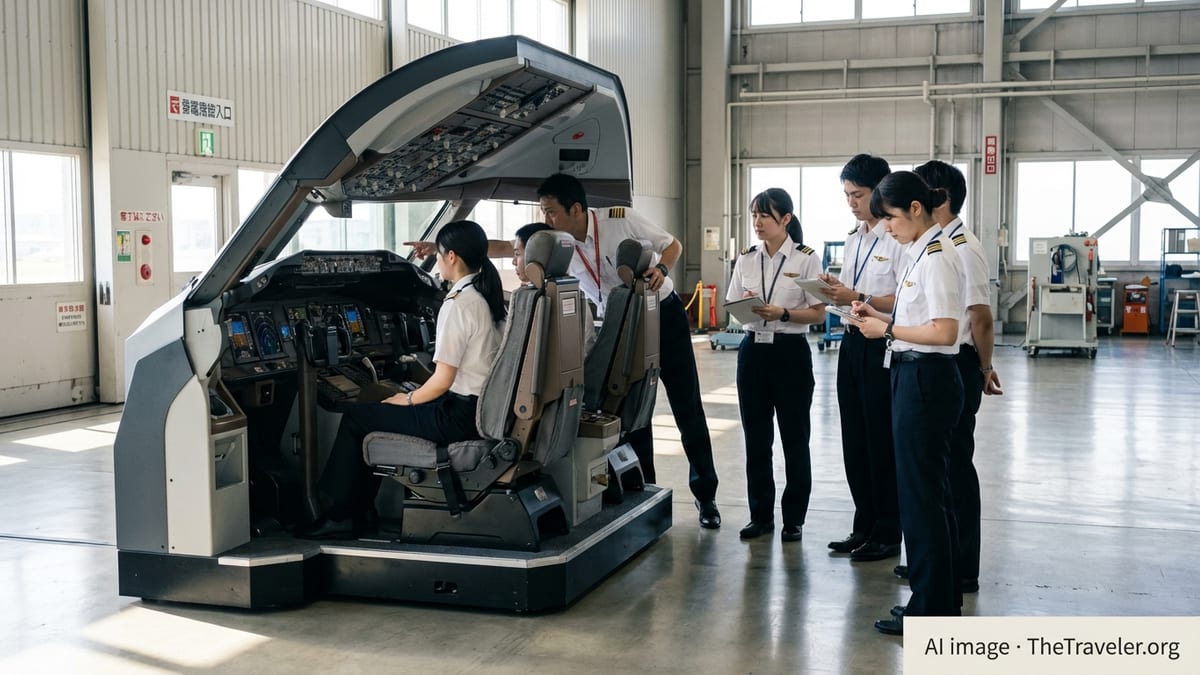
Ambitious Gender Target Meets Demographic Reality
The government’s new goal, unveiled by the transport ministry, is explicitly framed as both a gender-equality measure and a labor-market necessity. With the age profile of Japan’s pilots heavily skewed toward those in their 50s and early 60s, retirements are projected to accelerate from around 2030, just as Asian tourism and business travel are expected to expand.
Officials warn that without a broader talent pipeline, including many more women, airlines could struggle to maintain domestic and regional networks. Japan’s Female Labor Force Participation Rate has climbed in recent years, yet highly skilled professions such as commercial aviation still lag behind. While women now make up a significant share of cabin crew and airport staff, they remain rare in the cockpit, reflecting a legacy of restrictive entry requirements and limited recruitment.
The 10 percent target for 2035 is modest compared with some Western markets but represents a fivefold increase on today’s levels. Policy planners say it is designed to be stretching but attainable within a decade, provided training capacity, outreach and corporate hiring practices change in tandem.
Rewriting the Rules of Pilot Training and Admissions
Central to the strategy is a comprehensive overhaul of the Civil Aviation College, Japan’s only public pilot training institution and the source of roughly 40 percent of the country’s airline pilots. In consultation with the transport ministry, the college is stripping away some of the barriers that have historically discouraged or excluded women, starting with physical and academic entry rules that critics say bore little relation to piloting competence.
From the 2026 academic year, the college is removing its minimum height requirement of 158 centimeters from the entrance examination, a change widely interpreted as a response to long-standing complaints that smaller-framed applicants, often women, were screened out before they could demonstrate aptitude. From fiscal 2027, several advanced science subjects will be dropped from the written exam in favor of assessments more closely aligned with real-world piloting skills and modern cockpit technology.
The ministry also plans to introduce a new admission track centered on document screening and interviews rather than a traditional written test, tentatively scheduled to begin around fiscal 2027. Of 108 annual training slots, 30 would be filled through this pathway, with 20 places earmarked for women. Implementation of the quota has been pushed back to at least fiscal 2028, however, while the college works through delays in flight training linked to earlier capacity expansions and limited simulator time.
Officials say they are now reviewing how to balance targeted support for women with perceptions of fairness among all applicants. Industry observers note that similar schemes in other sectors have paired gender-focused recruitment with mentoring and academic support to ensure candidates succeed once admitted.
Airlines Modernize Training as Travel Demand Climbs
Japan’s major carriers are moving in parallel to upgrade their own training and recruitment frameworks as they prepare fleets for a busier, more competitive post-pandemic market. With Asia-Pacific air travel expected to be one of the fastest-growing segments globally over the next decade, demand for new pilots is forecast to remain intense across the region.
Japan Airlines has recently expanded its use of advanced training technology, including signing up for Airbus’s A350 Virtual Procedure Trainer to provide highly realistic, computer-based scenarios for crews learning to operate the wide-body jet. By using sophisticated simulation tools earlier in the training pipeline, airlines aim to accelerate skill development, improve safety and create more flexible pathways for cadets who may come from non-traditional backgrounds.
Industry analysts say such investments dovetail with the government’s diversity push. Modern training devices can shorten certain phases of instruction and reduce costs, making sponsored cadet programs more accessible to women who might otherwise be deterred by the high financial and time commitments associated with pilot qualifications. Airlines are also experimenting with outreach initiatives, from school visits to open days at training centers, designed to normalize the image of women in the cockpit.
At the same time, carriers must manage staffing carefully for both domestic and long-haul operations as veteran pilots retire. Some executives see the gender goal as a way to signal to investors and global partners that Japan is serious about aligning its aviation labor practices with international norms on diversity and inclusion.
Challenging Cultural and Structural Barriers
Beyond revising entrance exams and expanding simulator capacity, policymakers acknowledge that deep-seated cultural assumptions continue to limit women’s participation in aviation. For decades, Japanese girls who expressed interest in flying were more likely to be steered toward cabin crew roles than pilot careers. High-profile pioneers, such as the country’s first female captain at a domestic airline, helped shift perceptions, but their experiences often highlighted systemic hurdles including rigid recruitment criteria and a lack of role models.
Today, gender stereotypes intersect with broader societal issues such as long working hours, limited childcare support and expectations around caregiving. These factors can make a profession built on irregular rosters and long-haul duties particularly challenging. Government advisors argue that reaching the 10 percent target will require not only changes in aviation policy but also improvements in parental leave systems and flexible work options that make long-term careers viable for both women and men.
There are early signs of progress in corporate leadership that could filter through to cockpit culture. In 2024, Japan Airlines appointed its first female president and chief executive, a former flight attendant who rose through the ranks to lead the carrier. Advocates say such appointments send a powerful message to young women that aviation offers opportunities beyond traditional roles, whether in management, engineering or on the flight deck.
Still, industry veterans caution that numerical targets are only one piece of the puzzle. Achieving a sustainable shift will depend on how well airlines integrate new pilots, provide mentorship and ensure that women are represented not only among junior first officers but also in senior captain and training positions over time.
A Race Against Time to Secure Japan’s Aviation Future
With Japan’s population shrinking and its workforce aging, the drive to diversify the pilot corps is part of a broader national effort to keep critical infrastructure and export industries functioning at full strength. Air connectivity underpins inbound tourism, trade and business links across Asia and beyond, and any shortage of flight crews could ripple quickly through the wider economy.
Transport ministry officials openly acknowledge that relying predominantly on male recruits is no longer viable in a country where the pool of young men is steadily contracting. By opening training routes to more women and recalibrating admissions, they hope to tap a wider segment of the population at a moment when competition for technical talent is intensifying across sectors.
Aviation schools and airlines, in turn, are being urged to coordinate timelines so that newly trained pilots, including women entering through the revised pathways, are available in sufficient numbers before retirements peak in the early 2030s. If the policy measures work as intended, the cockpit of a Japanese airliner in 2035 could look noticeably different from today, with more women at the controls and a more resilient talent pipeline supporting the country’s travel ambitions.
For now, the 10 percent figure serves as both a benchmark and a public test of Japan’s resolve to reshape one of its most traditionally male-dominated professions. Whether the country can meet that goal will be closely watched across the global aviation industry, where many nations are grappling with similar demographic pressures and gender imbalances.