

More news on this day
Japan is positioning itself at the forefront of urban air mobility, with new government planning documents and regional initiatives indicating that commercial advanced air mobility services could begin operating across selected routes as early as 2027 to 2028.
Get the latest news straight to your inbox!
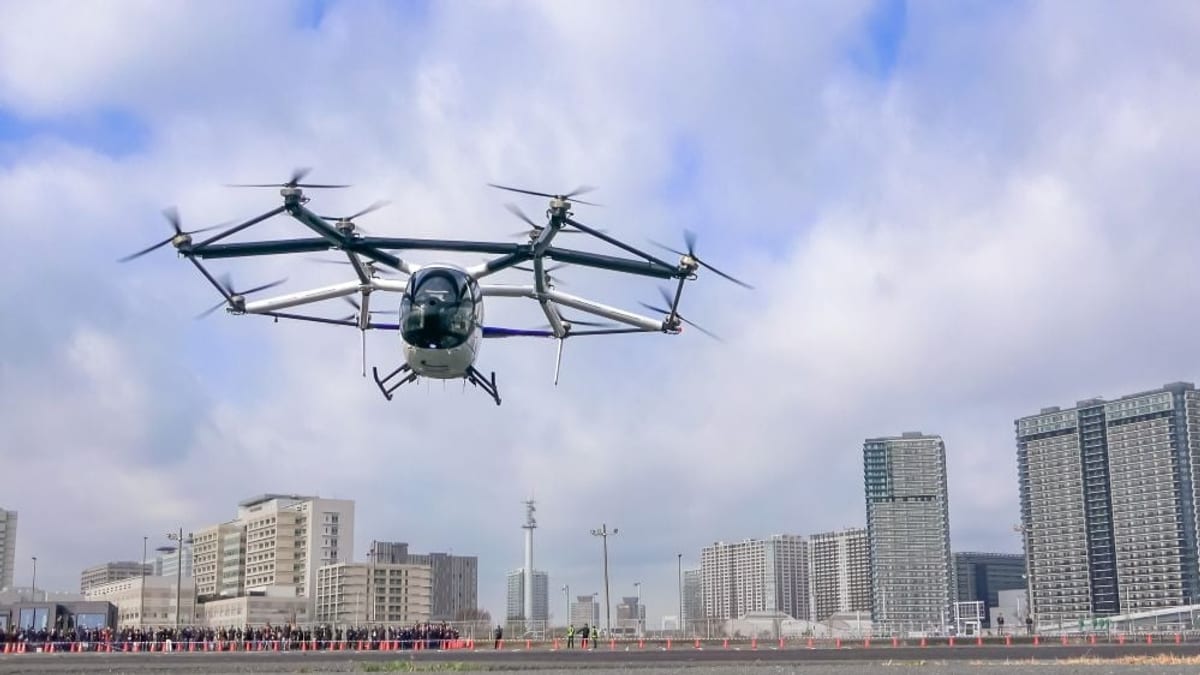
Image by AWN RSS by content source
From Expo Showcase to Everyday Transport
Advanced air mobility, often described as the next step after drones and conventional helicopters, is being treated in Japan as a strategic transport and tourism asset rather than a futuristic curiosity. Electric vertical take-off and landing aircraft have already featured in demonstration flights at Expo 2025 in Osaka, where visitors have been able to see early aircraft perform tightly controlled test operations over the Yumeshima island site.
Publicly available information from national and local authorities describes these Expo flights as a springboard rather than an endpoint. Local planning documents for Osaka outline a shared milestone of achieving practical flight operations for advanced air mobility during the Expo period, then using the experience gained to shift quickly toward regular services in the following years.
The Osaka and Kansai region is emerging as the main test bed for this transition. Regional roadmaps reference future passenger transport, tourism and leisure flights, emergency medical support and inter-city links as likely early use cases for advanced air mobility, particularly on congested or hard-to-serve corridors.
These trials are happening alongside broader smart-mobility initiatives around the Expo site, where new ground transport systems, hydrogen-powered buses and digital wayfinding tools are being deployed. Taken together, the projects are intended to showcase how visitors might move seamlessly between aircraft, rail, road and water transport in the 2030s.
A Four-Phase National Vision for AAM
Japan’s Ministry of Land, Infrastructure, Transport and Tourism has worked with other agencies and industry groups to develop a national roadmap for advanced air mobility. Earlier planning documents set broad goals for the introduction of electric vertical take-off and landing aircraft, but an updated vision compiled at a public private council meeting in August 2025 provides a clearer timeline and structure.
Reports on that meeting describe a four phase approach that moves from initial pilot projects through to what officials term full social implementation. Following demonstration flights and limited commercial activities around Expo 2025, the roadmap anticipates a transition toward wider commercialization in the late 2020s, with the first substantial phase of regional and urban services pencilled in for 2027 or 2028.
The same materials stress that creating demand is just as important as developing aircraft technology. The roadmap frames flying taxi services as a new transport industry that will require not only certified vehicles and traffic management systems, but also supporting infrastructure such as vertiports, digital reservation platforms and public acceptance campaigns.
Japan’s approach places emphasis on stepwise risk reduction. Initial commercial services are expected to run on carefully chosen routes, with tight integration into existing airspace management. Over time, the framework anticipates more operators, more routes and the gradual introduction of increasingly automated and eventually autonomous aircraft.
Osaka and Regional Tourism Routes in Focus
In practice, the path to commercial advanced air mobility in 2027 to 2028 is likely to run first through short, high-visibility routes. Osaka prefectural planning documents and industry statements point to potential air taxi connections between Kansai International Airport, central Osaka, nearby Kobe and coastal attractions as likely early corridors once regulations and infrastructure are in place.
Tourism is a central part of these scenarios. The Osaka Edition of the advanced air mobility roadmap highlights sightseeing flights and leisure travel alongside urban transport and medical missions. Regional authorities have described advanced air mobility as a way to enhance the visitor experience, offering aerial views of bays, mountains and cultural landmarks while easing pressure on busy rail and road links.
Beyond Kansai, other regions are positioning themselves for similar services later in the decade. Public information on Japanese eVTOL developer SkyDrive notes ambitions to connect destinations such as Beppu and Yufuin around fiscal 2028, using advanced air mobility to link hot spring resorts and rural areas more directly to regional hubs.
For international travelers, such services could eventually sit alongside shinkansen, regional flights and highway buses as another option for moving between airports, cities and resort areas. Industry advocates argue that Japan’s dense network of transport nodes and established tourism circuits make it an attractive test market for early commercial operations.
Airlines, Manufacturers and New Joint Ventures
Japan’s major aviation groups are already embedded in the emerging advanced air mobility ecosystem. All Nippon Airways has been working with United States based developer Joby Aviation, with demonstration activity at Expo 2025 forming part of a broader collaboration that envisages future commercial air taxi services on selected routes.
Japan Airlines has pursued a multi track strategy that includes participation in Tokyo metropolitan pilot projects and, through subsidiaries and partners, work on operational concepts and maintenance regimes tailored to advanced air mobility aircraft. Separate collaborations with overseas developers, including companies focused on autonomous flight, indicate that Japan is hedging its bets across different technological pathways.
At the same time, new joint ventures have been created to focus specifically on urban air taxi networks. Partnerships linking trading houses, transport operators and airlines are examining issues such as vertiport placement, passenger handling, pricing models and integration with existing public transport passes and tourism products.
For manufacturers, Japan’s regulatory clarity and the promise of early commercial operations make the country a showcase market. Several foreign eVTOL producers have highlighted Japan in investor materials as a priority geography, while domestic firms continue to refine their own aircraft designs for regional and inter-city missions later in the decade.
Regulatory, Safety and Community Challenges
Despite the momentum, significant challenges remain if Japan is to reach meaningful commercial advanced air mobility operations in 2027 or 2028. Certification pathways for new aircraft types must progress in parallel with the development of ground infrastructure and airspace management systems that can safely accommodate higher numbers of low altitude flights over urban areas.
Publicly available information about trials at Expo 2025 suggests that authorities are using the event to test early versions of unmanned traffic management systems that could eventually coordinate drones and advanced air mobility vehicles in shared corridors. Data from these trials is expected to inform national standards for service providers and operators.
Noise, privacy and visual impact are also under scrutiny, especially in densely populated cities. Regional action plans note the need for hearings, demonstration events and education campaigns to build social acceptance, particularly in neighbourhoods near planned vertiports or flight paths. The roadmap materials stress that community buy in will be essential for scaling beyond a handful of prestige routes.
For now, the officially signalled timeframe of 2027 to 2028 for the first substantial phase of commercial advanced air mobility in Japan remains ambitious but plausible. If regulators, industry and local governments can align on safety, infrastructure and market development, visitors arriving in Japan in the late 2020s may find flying taxis and short hop aerial shuttles starting to appear alongside more familiar modes of travel.