

More news on this day
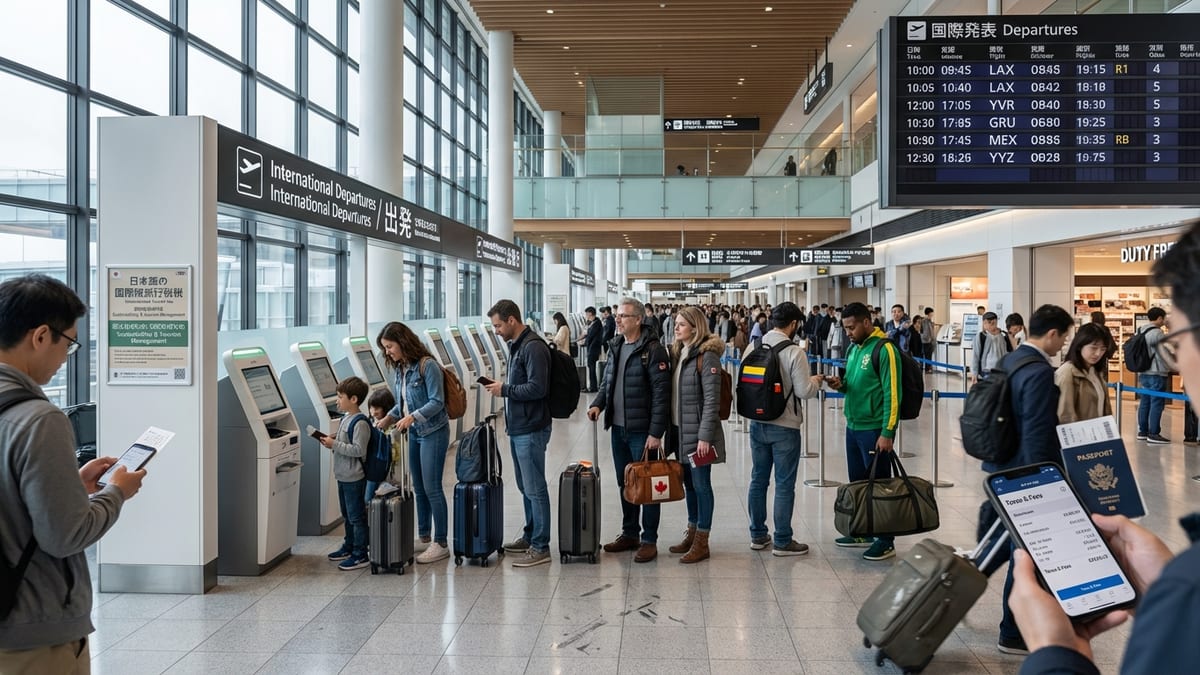
Japan is preparing a sweeping overhaul of how it taxes and manages international travel, a shift that will raise costs and tighten procedures for visitors from the United States, Canada, Brazil, Mexico, Chile, Peru, Colombia, Panama and many other key tourism markets.
From a tripled “sayonara” exit tax to sharply higher visa fees and new sustainability-driven charges, the changes are designed to tackle overtourism and climate pressures, but they also mean travelers will need to budget and plan more carefully for trips from 2026 onward.
More News
- Caribbean Travel to U.S. Upended by New Visa Freezes and Expanded Bans
- Mexico Restores E-Visas for Brazilians, Paving the Way for Borderless Tourism
- Philippine Airlines Joins Regional Carriers Powering Southeast Asia’s Tourism Boom
New Exit Taxes: The “Sayonara” Fee Gets Much More Expensive
Since 2019, everyone leaving Japan by air or sea has paid a flat 1,000 yen international tourist tax, commonly dubbed the “sayonara” tax, bundled into airline and ferry tickets. Starting in July 2026, that levy will triple to 3,000 yen per person for travelers aged two and above. Authorities say the higher charge is meant to bring Japan closer to international norms and to generate dedicated funding for tourism management and infrastructure as visitor numbers hit record highs.
For most individual travelers, the higher fee will be a modest line item on a long-haul ticket. For a family of four from the United States or Canada, however, the departure tax alone will add roughly the equivalent of 80 US dollars to the cost of leaving Japan. The charge applies regardless of nationality, so North and South American visitors, Japanese citizens and other international travelers will all face the same exit bill when they depart.
Crucially, the departure tax is usually invisible until you look closely at the breakdown of airline surcharges. It is collected automatically at the time of ticket purchase and does not require any separate paperwork at the airport. That convenience will not change in 2026, but the higher total may come as a surprise to budget-conscious travelers who booked Japan on the assumption of pre-2026 price levels.
Officials argue that the revenue is essential for crowd-control measures at popular sites, upgrades to transport hubs, and environmental conservation in heavily touristed regions such as Tokyo, Kyoto, Osaka, Hokkaido and Fukuoka. As Japan leans into a “high value, low impact” tourism strategy, the departure tax is becoming a powerful policy lever rather than a minor afterthought.
Visa Fees Headed Sharply Higher For Many Nationalities
Alongside the exit tax hike, Japan is preparing one of its largest visa fee increases in decades. For now, a standard single-entry visa costs about 3,000 yen and a multiple-entry visa 6,000 yen, rates that have barely budged since the late 1970s. The government has confirmed plans to raise these fees in fiscal 2026, signaling that they will be brought closer to levels charged by other G7 economies.
Exact figures have not yet been finalized, but policy briefings and media reports point to a potential fivefold jump or more in some categories. Benchmarks under study include the United Kingdom’s standard visitor visa, Canada’s visitor visa and the Schengen short-stay visa, all significantly pricier than Japan’s current tourist visa. For travelers from countries that do not enjoy visa-free entry, including many in Latin America, this could turn the visa application step into a far more expensive hurdle than in the past.
The impact will be unevenly felt across the Americas. Citizens of the United States and Canada are currently able to visit Japan visa-free for short stays and therefore would not pay higher tourist visa fees, at least under current rules. By contrast, many travelers from Brazil, Colombia, Peru and other parts of Latin America still require visas and could face notably steeper upfront costs once the revised fee table is formally adopted.
Japan is also simultaneously planning massive hikes in immigration-related fees for foreign residents, such as students and workers, with some renewal and residency procedures set to rise by 500 to 900 percent around fiscal 2026 and 2027. While those changes affect longer-term stays rather than typical vacations, they underscore a broader push to ensure foreigners, whether visiting or residing, shoulder more of the administrative and social costs associated with Japan’s unprecedented tourism and migration boom.
Electronic Pre-Screening On The Horizon For Visa-Free Visitors
Perhaps the most consequential change for US and Canadian travelers, as well as for many Latin American nationals who gain visa waivers through regional programs or special agreements, will be the introduction of an electronic travel authorization system later this decade. Japan is developing the Japan Electronic System for Travel Authorisation, or JESTA, planned for rollout around 2028.
JESTA will function in a similar way to the United States’ ESTA program or Europe’s upcoming ETIAS scheme. Visitors from visa-exempt countries will need to apply online in advance, submit personal and passport data, and pay a service fee that early proposals peg in the low thousands of yen. Once approved, the authorization would likely be valid for multiple trips within a set period, but travelers who previously could simply arrive with a passport will face a new layer of bureaucracy and cost.
For American and Canadian tourists, this marks a significant shift in how “visa-free” travel to Japan works. It will remain easier than applying for a full consular visa, but the days of completely frictionless short-term entry are numbered. Latin American countries that have successfully negotiated visa waivers for their citizens will see similar obligations, bringing Japan in line with a growing global trend of pre-screening travelers via digital systems.
Japan’s motivation is twofold. Officials cite security benefits, including enhanced data-sharing with partner countries, as well as better forecasting of arrivals to manage overtourism. The system is also expected to generate additional revenue that can be funneled into tourism and sustainability projects, further integrating travel management with fiscal policy.
Green Fees, Hotel Taxes And Sustainability-Driven Pricing
Japan’s new exit and visa measures are unfolding against a broader backdrop of sustainability-focused travel fees worldwide, including in North and South America. Hawaii, for example, has approved a first-of-its-kind “green fee” structure for tourists, raising hotel and accommodation taxes starting in 2026 to fund climate resilience and environmental protection. That kind of climate-linked taxation provides a useful lens for understanding where Japan could be headed.
Within Japan, local and regional authorities are experimenting aggressively with their own sustainability and overtourism tools. Kyoto has announced sharp increases to its accommodation tax from March 2026, particularly targeting high-end hotels where nightly taxes can reach levels unprecedented in Japan. The goal is to ensure that visitors, rather than local residents alone, pay a greater share of the cost of managing congestion, protecting cultural heritage districts and upgrading public amenities.
Elsewhere, destinations such as Mount Fuji have introduced entry fees specifically framed as measures to protect fragile ecosystems and fund safety infrastructure. The national government openly links the higher departure tax and planned visa fee increases to the same sustainability and management agenda, framing tourists as partners in preserving Japan’s landscapes and cities rather than passive beneficiaries.
For travelers from the United States, Canada and across Latin America, these shifts mirror policies at home. From Hawaii’s climate surcharges to new conservation levies in Central and South American hotspots, the expectation that visitors will help pay for environmental stewardship is taking root. Japan’s latest changes signal that long-haul trips across the Pacific are now part of this global move toward “pay more, tread lighter” tourism.
How This Affects Travelers From The US, Canada And The Americas
For US citizens, the most immediate effect of Japan’s rollout of new travel barriers will be higher all-in prices rather than new paperwork, at least in the near term. Flights to and from Japan will incorporate the tripled departure tax starting July 2026, and hotel stays in cities like Kyoto may come with noticeably higher nightly levies tied to room rates. Looking further ahead, Americans will likely need to obtain and pay for a JESTA authorization before boarding flights once that system goes live.
Canadian visitors will face a similar landscape, with the same departure and hotel taxes and, eventually, the same pre-screening requirements as other visa-exempt nationals. Given the strength of the US and Canadian dollars against the yen in recent years, many North American travelers may still find Japan relatively good value, but the era of unusually cheap entry and exit fees is ending.
In Latin America, the picture is more mixed and, in some cases, more challenging. Depending on bilateral visa rules, citizens of Brazil, Colombia, Peru, Chile, Panama and other countries may continue to require full visas to enter Japan, meaning any major jump in visa issuance fees will fall directly on them. For long-haul travelers already facing high airfares and limited direct connections, a multi-hundred-dollar visa fee could become a serious deterrent or at least force a rethink of how often Japan fits into their travel plans.
Travel agents and tour operators across the Americas are already advising clients to factor in additional costs of 10 to 20 percent on top of current estimates for trips that occur after mid-2026. That buffer reflects not only the confirmed tax changes but also the likelihood of dual pricing at select attractions and the introduction of new “tourist premium” surcharges in crowded districts. While none of these measures individually break the bank, together they push Japan a step closer to the premium-tier destination bracket.
Strategic Planning: What Travelers Should Do Now
With Japan’s policy changes phasing in over several years, travelers still have time to adjust plans. Those aiming to visit before prices climb substantially might consider trips before mid-2026, when the departure tax hike and some of the most aggressive municipal hotel taxes take effect. Early 2026 could offer a last window to experience Japan under the current, relatively low exit-fee regime, though availability at popular cherry blossom and autumn foliage periods will remain tight.
For trips scheduled after July 2026, budgeting will be key. Prospective visitors from the United States and Canada should build the higher exit tax and potential attraction surcharges into their cost estimates, while Latin American travelers who require visas should monitor official consular announcements about new fee tables. Applying for visas and making bookings as soon as feasible once details are published could help avoid backlogs and lock in lower introductory prices where transitional rules exist.
Travelers should also pay close attention to sustainability-related conditions linked to tourism taxes. Some regions may offer discounts or incentives for visiting outside peak seasons or for using certified eco-friendly accommodations and transport options. In future, Japan could follow destinations such as Hawaii in directing “green” portions of taxes explicitly to conservation projects, giving environmentally minded visitors more confidence that their higher payments are funding tangible improvements.
Finally, staying informed will matter more than ever. As governments in Japan, North America and Latin America continue recalibrating tourism policy, travelers who track official announcements and consult experienced agents will be best placed to navigate shifting requirements. With exit taxes, visa fees and sustainability charges all in motion, Japan is no longer a set-and-forget destination when it comes to border rules and budgets.
FAQ
Q1. When will Japan’s higher departure tax take effect, and how much will it be?
Japan is scheduled to triple its international departure tax in July 2026, raising the fee from 1,000 yen to 3,000 yen per person for anyone aged two or older leaving the country by air or sea.
Q2. Will US and Canadian travelers have to pay the higher departure tax?
Yes. The departure tax applies to all travelers regardless of nationality, including US and Canadian citizens, and is automatically included in airline or ferry tickets purchased for international departures from Japan.
Q3. Are visa fees going up for everyone visiting Japan?
Japan plans to raise official visa issuance fees in fiscal 2026, particularly for travelers who currently need tourist visas. However, citizens of visa-exempt countries, such as the United States and Canada for short stays, will not pay tourist visa fees but may face new electronic travel authorization charges later in the decade.
Q4. How will travelers from Brazil, Colombia, Peru and other Latin American countries be affected?
Many Latin American nationals still require visas to visit Japan, so they are likely to be directly impacted by higher visa fees once the new schedule is finalized. They will also pay the higher departure tax and may encounter dual pricing at attractions and higher hotel taxes in popular cities.
Q5. What is JESTA, and will I need it as a US or Canadian tourist?
JESTA, the Japan Electronic System for Travel Authorisation, is a planned online pre-screening system for visitors from visa-waiver countries. Once implemented, likely around 2028, US and Canadian travelers will need to apply online, pay a modest fee and receive approval before flying, similar to the US ESTA or Europe’s ETIAS.
Q6. How do Japan’s new measures relate to sustainability and overtourism?
Authorities explicitly link higher departure and visa fees, as well as new hotel and attraction surcharges, to managing overtourism, funding infrastructure and supporting environmental conservation in heavily visited regions. The policies reflect a shift toward making visitors contribute more directly to the costs of maintaining popular destinations.
Q7. Will I see these extra charges itemized when I book my trip?
Some fees, like the departure tax, are typically bundled into airfares and may only appear as part of the taxes and surcharges summary. Hotel and local tourism taxes are often itemized on booking confirmations or final bills, while future electronic authorization fees such as JESTA will be paid separately through an official application platform.
Q8. Is it cheaper to visit Japan before 2026?
In many cases, yes. Travelers who visit before mid-2026 will avoid the tripled departure tax and some of the higher local accommodation taxes scheduled to begin that year. However, demand around peak seasons remains strong, so early planning is still essential.
Q9. Are other countries in the Americas doing something similar with tourism taxes?
Yes. Hawaii, for example, has approved increased accommodation taxes tied to climate and environmental funding starting in 2026. Across the Americas, more destinations are introducing or raising tourist and “green” fees to balance economic benefits with environmental and social pressures.
Q10. What practical steps should I take if I am planning a Japan trip from the US, Canada or Latin America?
Travelers should check current visa requirements for their nationality, monitor official announcements about new fee levels and start budgeting for higher exit taxes and local surcharges from 2026 onward. Booking flights and accommodation early, avoiding peak travel dates and working with experienced agents or reputable tour operators can help manage both costs and compliance with evolving rules.