

More news on this day
Japan’s tourism boom is running into unexpected turbulence in early 2026, as escalating tensions with China trigger large-scale flight cancellations and a steep fall in Chinese visitors, raising new questions for travelers planning trips in the months ahead.
Get the latest news straight to your inbox!
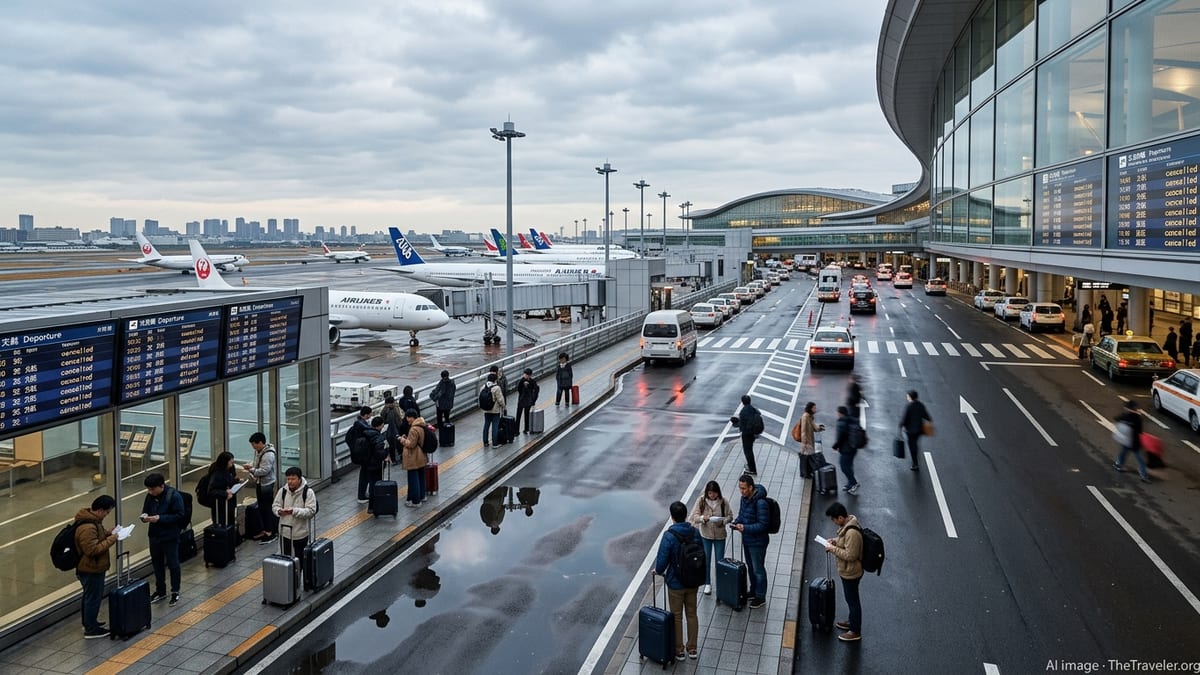
How Diplomacy Turned Into Disrupted Flight Schedules
The latest disruption to Japan travel is rooted in a diplomatic crisis that intensified in late 2025, after public remarks in Tokyo about a potential conflict over Taiwan hardened attitudes in Beijing. According to widely reported analyses of the standoff, China responded by discouraging travel to Japan and signaling that the bilateral relationship had entered a more volatile phase.
By November and December 2025, travel and aviation data cited across international media showed a sharp pullback in China Japan air capacity. Industry trackers reported that hundreds of thousands of airline tickets from China to Japan were canceled in a matter of weeks, representing a substantial portion of total bookings on the route. Cancellations were concentrated on routes linking major Chinese coastal cities with Tokyo and Osaka, traditionally the backbone of China Japan leisure travel.
Reports on the aviation market indicate that Chinese regulators then asked airlines to keep flight capacity to Japan reduced through March 2026. This policy led to the scrapping of thousands of flights and left dozens of city pairs with little or no direct service for extended periods. For travelers, the impact has been most visible in sharply reduced options and rising fares on remaining routes involving mainland China.
The broader backdrop is a still-robust regional aviation recovery after the pandemic. However, while flights between many Asian hubs have normalized or surpassed 2019 levels, China Japan routes are moving in the opposite direction, with cancellations and reduced frequencies creating a noticeable gap in the network that previously carried millions of passengers a year.
Tourism Numbers Reveal a Sudden Hole in Japan’s Visitor Mix
Japan entered 2026 with record recent momentum. Official figures for 2025 show about 42.7 million international arrivals, surpassing pre pandemic peaks and underscoring the country’s popularity among travelers from across Asia, Europe, North America, and Oceania. Within that headline, though, the role of Chinese visitors had already started to shift.
Research published in early 2026 notes that while total inbound travel rose strongly in 2025, Chinese visitor numbers began to cool in the final months of the year. Data cited by Japanese and international outlets indicates that Chinese arrivals fell sharply in December 2025, and growth almost stalled in November as travel advisories and flight cuts took effect. Forecasts from Japanese travel industry analysts now point to a decline of about 3 percent in total inbound visitors for 2026, driven largely by weaker demand from mainland China and Hong Kong.
The turning point has become clearer in the first official statistics of 2026. Publicly available figures for January show around 3.6 million international arrivals, down roughly 5 percent from a year earlier despite strong growth from several other markets. Within that total, tourists from China dropped by around 60 percent year on year. Preliminary February data reported in Japanese media suggest a similar pattern: record or near record overall arrivals, but a decline of more than 40 percent in Chinese visitors compared with February 2025.
For the travel economy, this shift is about more than headcount. Chinese tourists have traditionally ranked among the highest spenders per trip, particularly in major shopping districts in Tokyo, Osaka, and regional hubs such as Hokkaido and Kyushu. Industry commentary now highlights a visible softening in hotel rates and retail traffic in areas heavily dependent on Chinese group tours, even as other segments of the market remain busy or near capacity.
What Flight Cancellations Mean for Your 2026 Trip
For travelers holding tickets between China and Japan, the immediate effect of the crisis has been widespread disruption. Posts on flight tracking platforms and traveler forums since late 2025 describe a wave of cancellations affecting both stand alone China Japan journeys and multi leg itineraries that use Chinese hubs as connections between Japan and Europe, the Middle East, or other parts of Asia. In some cases, passengers have reported that only one sector of a through ticket was canceled, forcing rebooking or rerouting of the entire journey.
Aviation data cited by regional media and analysts indicates that by early 2026 thousands of China Japan flights scheduled for the winter season had been withdrawn from sale. Some routes now show zero scheduled services for weeks at a time, while others operate at a much lower frequency than in previous years. Remaining seats on popular dates can be scarce, and prices on indirect routings that bypass mainland China have risen as demand is squeezed onto alternative corridors through Seoul, Taipei, Singapore, or Bangkok.
Travelers planning Japan trips that do not involve mainland China are feeling more indirect effects. Reduced competition on certain routes can push up fares more broadly, and schedule changes may increase connection times or require overnight stops. At the same time, airlines based in Japan, South Korea, and Southeast Asia are adjusting capacity and schedules, adding flights on some intra Asian routes where demand remains strong or is even growing as travelers divert from China Japan itineraries.
For those with firm plans in the first half of 2026, the practical takeaway is that flight conditions are less stable than usual on any itinerary touching Chinese airports. Publicly available airline notices and booking platform updates show that carriers continue to tweak schedules in response to evolving regulations and demand. Travelers are being advised by consumer associations and travel advisers to monitor bookings closely, ensure contact details with airlines are up to date, and consider flexible or refundable tickets where budgets allow.
How the Visitor Slowdown Is Changing the On the Ground Experience
Despite the chill from China, Japan itself remains extremely popular. Recent tourism statistics and industry commentary emphasize that visitors from South Korea, Taiwan, the United States, and several European countries continue to grow, in some cases hitting record monthly highs. South Korea in particular has emerged as Japan’s largest single source of tourists, with more than 1.2 million arrivals in January 2026 alone.
This changing mix is reshaping what travelers encounter on the ground. In major cities and marquee destinations, crowding at peak times is still common, but some retailers and hotels that once catered heavily to Chinese group tours are experimenting with new marketing and pricing strategies to attract visitors from other countries or domestic travelers. Reports from regional tourism offices note that foreign arrivals to less visited prefectures have been rising, partially offsetting weaker demand from China in classic shopping and sightseeing zones.
One emerging theme is value. Analysts at banks and think tanks have pointed out that a softer yen and steady demand from non Chinese markets are helping to keep overall visitor numbers high, but the drop in high spending tour groups is nudging some businesses to compete more aggressively on price. Travelers may find a wider range of deals on mid range accommodation in certain cities, occasional last minute discounts on tours, and slightly less pressure on reservations in places that previously booked out months ahead for large Chinese groups.
At the same time, local concerns about overtourism have not disappeared. National travel surveys and media coverage continue to highlight congestion in popular neighborhoods of Kyoto, Tokyo, and other hotspots. The current downturn in Chinese arrivals is being viewed by some commentators as a temporary reprieve rather than a long term solution, especially if diplomatic conditions eventually improve and pent up demand from China returns.
Planning a Japan Trip in an Uncertain 2026
For international travelers looking at Japan in 2026, the key message from publicly available data is that the country remains open, busy, and generally welcoming, even as one of its most important source markets contracts sharply. Forecasts from Japanese tourism research bodies suggest a modest decline in overall inbound numbers this year, but still at historically high levels. That means popular attractions, especially during cherry blossom and autumn foliage seasons, are likely to remain crowded.
Practical planning now requires closer attention to air routes and potential chokepoints. Travelers starting in North America, Europe, Oceania, or Southeast Asia may wish to route directly into Japan or via alternative hubs instead of relying on connections through mainland China during the current diplomatic chill. Those already holding tickets via Chinese airports should check their reservations regularly, build in contingency time for rebookings, and be aware that last minute route changes are possible.
On the ground, visitors can expect a travel environment that is still vibrant but subtly changed by the absence of large numbers of Chinese group tours. Some shopping districts may feel quieter, certain luxury retailers might offer more individualized service, and hotels that once relied on package tours are courting independent travelers more actively. For many visitors, that could translate into slightly better availability and, in select markets, more competitive pricing.
Looking ahead to late 2026 and beyond, most economic and tourism forecasts frame the current crisis as a significant but potentially temporary shock rather than a permanent rupture. Much will depend on how quickly diplomatic ties between Tokyo and Beijing stabilize and whether flight capacity is restored. Until then, travelers planning a trip to Japan are navigating a split reality: a destination that is as appealing as ever, but reached through an air network and regional climate that are noticeably more fragile than they appeared just a year ago.