

More news on this day
Japan has sharply tightened its travel guidance for the Gulf, urging citizens to avoid trips to Saudi Arabia, Qatar, the United Arab Emirates, Bahrain, Oman and Kuwait as regional conflict, missile strikes and airport disruptions spread across the Middle East.
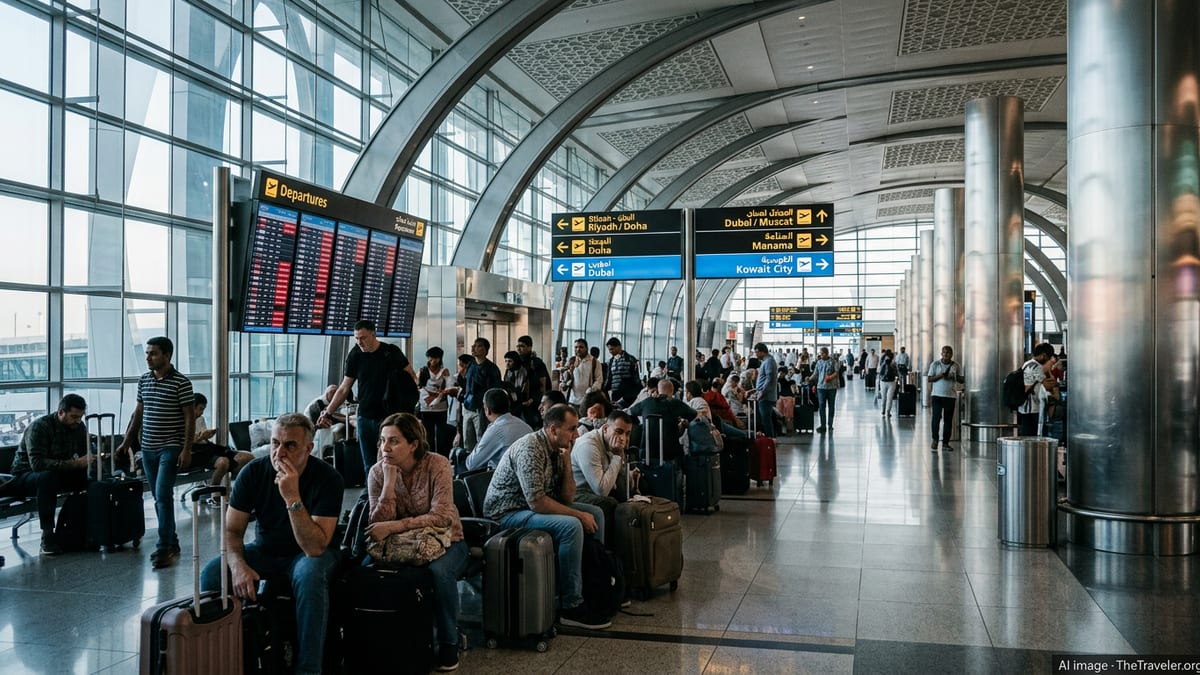
Japan Raises Gulf Risk Level Amid Escalating Conflict
Japan’s Foreign Ministry this week raised its travel advisory to one of its highest warning tiers for six Gulf Cooperation Council states, reflecting mounting concern over missile and drone threats as well as sudden airspace closures. As of March 5, officials are calling on Japanese nationals to avoid nonessential travel to the United Arab Emirates, Qatar, Saudi Arabia, Bahrain, Kuwait and Oman, and to prepare for the possibility of emergency evacuation if conditions deteriorate further.
The move follows a rapid escalation of the wider Middle East conflict after coordinated strikes by the United States and Israel on Iran triggered retaliatory attacks across the region. Japanese risk assessments now treat the Gulf hubs, long regarded as secure transit points, as exposed to spillover from the confrontation, including potential attacks on critical infrastructure and foreign diplomatic facilities.
Tokyo’s decision places the six Gulf countries in the same risk band as some of the region’s most volatile destinations, a striking shift for states that have spent years branding themselves as safe, high-connectivity gateways for business and leisure travel. It also aligns Japan more closely with a growing number of governments that are moving quickly from cautionary messages to explicit do-not-travel style guidance for much of the Middle East.
Charter Evacuations Signal New Phase of Crisis
In a clear sign of how seriously it views the threat, Japan is organizing charter flights from Saudi Arabia and Oman to repatriate its nationals and their families. The flights, scheduled to begin operating from major Gulf airports, are intended to offer a controlled exit route for residents and visitors as regular commercial schedules fragment under security pressure.
Officials have indicated that the government will absorb much of the cost of these charter services, a step typically reserved for the most acute crises. Priority seating is being given to citizens living near high-profile military, energy or diplomatic sites that could become targets in the event of further escalation between Iran and Western or Gulf forces.
The charter plan mirrors actions by several other countries that have begun accelerating repatriation from the wider Middle East war zone. Analysts say the clustering of such operations around key Gulf hubs underscores the extent to which traditional safe harbors such as Riyadh, Doha, Dubai and Muscat are now seen as sitting on the front line of a fast-moving regional confrontation.
Airspace Closures and Flight Cancellations Ripple Through the Gulf
The heightened Japanese advisory comes as Gulf aviation, a critical artery for global travel, is buffeted by abrupt airspace restrictions and large-scale flight cancellations. Carriers serving Qatar, Bahrain and Kuwait have suspended or sharply curtailed operations after nearby airspace was targeted by Iranian missiles and drones, while airlines in Oman, Saudi Arabia and the United Arab Emirates are selectively canceling routes and rerouting traffic to avoid conflict zones.
Regional logistics and travel bulletins show a patchwork of suspensions, with some national airlines grounding all inbound and outbound flights and others operating limited services subject to rapid-change security assessments. The result for passengers has been mounting disruption, including extended layovers, last-minute diversions and, in some cases, long queues of stranded travelers at Gulf airports awaiting scarce outbound seats.
Travel risk consultancies now warn that routings which overfly the northern Gulf or pass near the Strait of Hormuz carry elevated operational and insurance risk. Even when airports remain open, operators caution that sudden missile alerts or security incidents could lead to ground stops, forcing delays or cancellations with little warning for airlines and travelers alike.
Gulf Tourism and Business Travel Face Sudden Reversal
Japan’s tougher guidance is a fresh blow to tourism and corporate travel in the six Gulf economies, which have spent heavily on new attractions, mega-events and relaxed visa regimes to diversify beyond oil. The region has been positioning itself as a stopover playground and conference hub for Asian and European travelers, with unified Gulf visa plans and streamlined border controls aimed at boosting multi-country itineraries.
Travel planners say the new wave of high-level advisories is already prompting multinational firms to postpone meetings, relocate regional gatherings and pull nonessential staff from offices in the Gulf. High-spending leisure visitors, especially from East Asia and Europe, are reconsidering itineraries that include stays in Dubai, Abu Dhabi, Doha or Riyadh, even when airlines continue to sell tickets into those markets.
Hotels and tourism boards in key Gulf cities are bracing for cancellations just as high season traditionally peaks. Industry executives warn that if the perception of the Gulf as a secure transit and leisure hub is badly damaged, the impact could outlast the immediate conflict, slowing investment and complicating long-term diversification plans.
What Japan’s Advisory Means for Global Travelers
While Japan’s warning is formally aimed at its own citizens, travel experts say it carries broader implications for international visitors using Gulf hubs as gateways to Europe, Africa and the wider Middle East. The elevated risk designation is likely to influence corporate travel policies, insurance coverage decisions and airline scheduling far beyond the Japanese market.
Many international insurers may now classify trips to Saudi Arabia, Qatar, the United Arab Emirates, Bahrain, Oman and Kuwait as higher risk, potentially limiting coverage for nonessential tourism or routing passengers away from affected transit points. Some employers are already tightening approval processes for any travel that involves layovers in the Gulf, even on journeys where the final destination lies outside the conflict zone.
For individual travelers, the main practical effects are likely to be reduced route options, shorter booking horizons and the possibility of abrupt itinerary changes if tensions spike. Advisers recommend that anyone with upcoming trips involving Gulf airports monitor official advisories from their own government, maintain flexible tickets where possible and register contact details with consular services so they can be reached quickly if evacuation or shelter-in-place directives are issued.