

Japan and South Korea sit just a short flight apart, yet they offer strikingly different travel experiences. Both countries combine deep-rooted tradition with fast-paced modern life, both have efficient public transport and legendary food, and both are drawing record numbers of international visitors. Deciding which is better for your next trip depends less on which country is objectively superior and more on the kind of journey you want to have.
Cultural Vibes: Timeless Tradition vs High-Energy Pop Culture
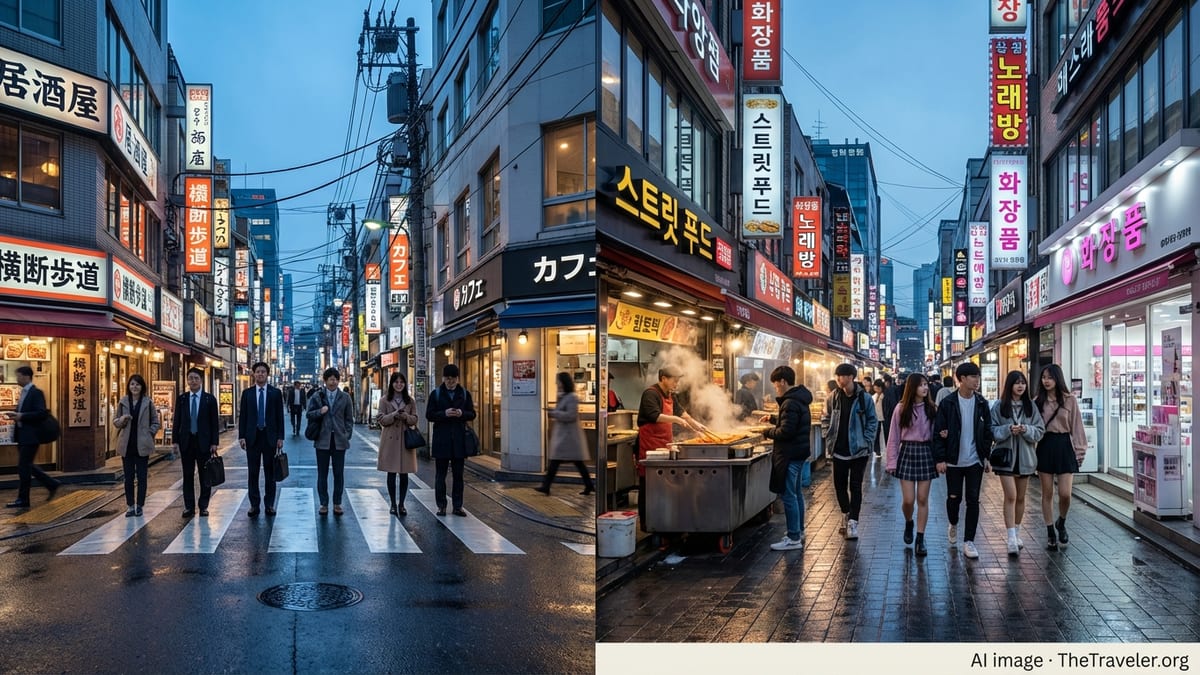
Japan and South Korea share elements of East Asian heritage, but the feel on the ground is quite different. In Japan, even its biggest cities often feel surprisingly quiet and orderly. Shinto shrines and Buddhist temples sit tucked behind neon streets, and rituals like handwashing at shrine basins or bowing at altars are woven into daily life. Visitors often describe an atmosphere of restraint and subtlety, where etiquette and respect underpin most social interactions.
South Korea, by contrast, tends to feel louder and more extroverted. Seoul’s historic palaces and hanok villages provide a sense of continuity with the past, but much of the country’s global appeal now flows from contemporary culture. K-pop, Korean dramas and beauty trends shape everything from fashion to themed cafes, and many travelers come specifically to visit filming locations, music agency districts and K-style shopping streets.
If your ideal trip is slow and contemplative, with long walks through temple districts and traditional gardens, Japan may suit you more. If you thrive on pop culture, nightlife and high-energy neighborhoods where shops and eateries stay open late into the night, South Korea can feel instantly addictive. Many travelers split their time between both, but for a single-country trip, your personality and pace of travel are key deciding factors.
It is also worth considering how each country manages the surge in visitors. Japan has seen international arrivals and spending climb to record levels, which has helped fund preservation of cultural sites but has also increased crowding in famous districts. South Korea is seeing its own boom, fueled in part by K-content, but is positioning itself more as a value-focused, casual destination. Those differences subtly shape the overall travel vibe in each place.
Landscapes, Cities and Seasonal Highlights
Japan offers extraordinary geographic variety across its long north-south stretch. Visitors can island-hop in subtropical Okinawa, ski deep powder in Hokkaido, soak in hot springs ringed by snowy mountains or walk volcanic coastlines. Classic itineraries often combine Tokyo with Kyoto and Osaka, but more travelers are now pushing into lesser-known regions, from the art islands of the Seto Inland Sea to rustic villages in the Japanese Alps. Seasonal spectacles such as cherry blossom and autumn foliage are major draws, and many rural towns host centuries-old festivals that reward those who venture off the main routes.
South Korea is more compact, which has its own advantages. A fast train from Seoul reaches the southern city of Busan in a matter of hours, and domestic buses and intercity trains connect national parks, coastal towns and historic cities like Gyeongju. Mountain landscapes are accessible even on day trips from the capital, and well-marked hiking trails make it easy for visitors to join local hikers. Jeju Island, with its volcanic peak, beaches and lava tubes, feels like a separate world and is a major domestic and international holiday spot.
In terms of climate and seasons, both countries experience hot, humid summers, crisp autumns and chilly winters, though Japan’s length means wider variation. Cherry blossom viewing has become a global obsession in both nations, but Japan’s sakura season tends to draw larger international crowds, particularly to Tokyo, Kyoto and Osaka. Autumn in both countries is splendid, with fiery foliage in temple and palace grounds and cooler temperatures ideal for walking.
For many travelers, the question is whether they value depth or convenience. Japan rewards slower, region-focused itineraries where you dwell in one area for several days and explore surrounding towns. South Korea’s smaller size makes it easier to sample multiple regions, mountains and coasts within a shorter trip. If you have limited time and prefer to base yourself in one or two cities, South Korea’s geography may feel more manageable. If you have longer and want to experience contrasting regions within a single country, Japan provides more diversity.
Costs, Value and Practical Travel Logistics
Costs have shifted in both countries in recent years, and currency swings matter. Japan’s tourism spending has surged along with higher accommodation prices in major hubs, while South Korea has increasingly been described as a value destination thanks in part to a weaker local currency, which has boosted purchasing power for foreign visitors. While neither country is truly budget in the sense of the cheapest Southeast Asian destinations, South Korea often comes out slightly cheaper on everyday items such as casual meals, taxis and some mid-range hotels.
Japan’s accommodation now spans everything from hostels and capsule hotels to luxury ryokan with elaborate meals. In popular cities, especially at peak times, prices can feel steep, and new measures such as higher accommodation taxes in busy cities reflect efforts to manage overtourism and fund infrastructure. South Korea’s hotel scene is similarly varied, but visitors often find mid-range and business hotels at lower nightly rates, especially outside prime districts. Guesthouses and serviced residences add more affordable options for longer stays.
Transport is another major factor. Japan’s rail network is world-famous for punctuality and coverage, with high-speed shinkansen trains connecting major regions. Rail passes can offer good value for multi-city itineraries, but fares and pass prices have risen, so planning and rough budgeting in advance is important. In South Korea, the KTX high-speed rail system, extensive subway networks and buses make cross-country and intra-city travel straightforward, and ticket prices are often relatively gentle on the wallet compared with similar-quality systems elsewhere.
Visa and entry rules for many travelers are relatively straightforward in both countries, although they are periodically adjusted. Citizens of the United States and many European countries can typically enter Japan visa-free for short-term tourism stays of up to around 90 days. South Korea has run temporary schemes that allowed some nationalities, including US citizens, to enter without completing separate electronic travel authorizations for a fixed period, and it continues to offer short-term visa-free stays to many visitors for tourism. As rules can shift with little notice, especially in response to political or economic trends, travelers should always verify current entry requirements with official government sources before booking.
Food Culture: Where to Eat Better and What to Expect
For many travelers, food alone is reason enough to visit Japan or South Korea, and neither country disappoints. Japanese cuisine tends to emphasize seasonality, precision and clean flavors. Even simple dishes like convenience-store onigiri or a bowl of udon are often executed with care. Visitors can explore sushi counters, ramen shops, izakaya pubs, yakitori grills and regional specialties like Hiroshima-style okonomiyaki or Hokkaido seafood. Department store food halls and small neighborhood joints provide a spectrum of prices and atmospheres.
South Korean food is bold, spicy and communal. Barbecued meats cooked at the table, bubbling stews, kimchi in countless varieties and shared platters define many meals. Street food culture is especially lively, with night markets and alleyways offering tteokbokki, hotteok, kimbap and skewers late into the evening. Korean fried chicken and craft beer, dessert cafes and themed eateries all appeal to younger travelers and those who like to eat out at all hours.
Dietary restrictions may be a deciding factor for some visitors. In Japan, vegetarian and vegan options have improved in major cities but can still be challenging in smaller towns, where fish-based broths are common even in dishes presented as vegetable-based. South Korea can be similarly difficult for strict vegetarians, given the prevalence of meat and seafood in many dishes and side plates. In both places, major cities now have dedicated plant-based restaurants and more awareness of food allergies, but navigating menus can take research and patience.
In terms of cost, everyday meals in South Korea are often slightly cheaper, especially hearty local spots that cater to office workers and students. Japan’s casual dining ranges widely, but convenience store food and chain restaurants offer good value for those watching their budget. At the higher end, both countries have acclaimed fine-dining scenes, from omakase sushi counters and kaiseki in Japan to modern Korean tasting menus in Seoul. Ultimately, the better food destination will depend on whether you prefer delicate, minimalist dishes or punchy, fermented and spicy flavors.
Nightlife, Shopping and Youth Culture
Japan and South Korea both offer dynamic urban nightlife, but in distinctive ways. Tokyo and Osaka have legendary entertainment districts filled with bars, arcades, karaoke rooms and late-night eateries. Many experiences in Japan lean toward the quirky and intimate: tiny counter bars, retro game centers, jazz basements and themed spaces. Drinking culture is robust, but there is also plenty to do for those who are not interested in alcohol, from late-opening bookstores to nocturnal ramen adventures.
In South Korea, nightlife is more overtly social. Seoul’s neighborhoods combine clubs, cocktail bars, street drinking zones and 24-hour restaurants in dense clusters. Young locals often move between multiple venues in a single night, and the energy levels in hot spots like Hongdae or Itaewon can be intense. Karaoke here is also a major pastime, but private rooms are frequently paired with bar-style service and late-night snacks, making them feel like small parties.
Shopping enthusiasts will find reasons to visit both destinations. Japan excels in niche subcultures, from anime districts and vintage fashion to specialty stationery and high-end electronics. Many visitors come with specific shopping missions, whether it is audio gear, outdoor equipment or artisanal crafts. South Korea is renowned for beauty and skincare products, fast fashion and K-pop merchandise. Large complexes and underground malls make it easy to spend hours browsing, and pop-up collaborations with drama and music franchises keep the scene fresh.
If you are drawn to youth culture, trends and the latest digital experiences, South Korea may feel more current and fast-moving. If you enjoy subcultures, design, craftsmanship and retro curiosities, Japan might appeal more. Both countries are safe by global standards for going out at night in busy districts, although visitors should still take the usual precautions with belongings and late-night transport.
Language, Etiquette and Ease of Getting Around
Language and social expectations can shape how comfortable a country feels. In both Japan and South Korea, English proficiency improves in younger generations and in major cities, but visitors can still find language barriers, particularly in smaller towns and with older residents. That said, transport networks, ticket machines and key tourist information are increasingly labeled in English, Chinese and other languages, making basic navigation manageable for first-time visitors.
Japanese etiquette tends to emphasize quiet, orderly behavior in public spaces. Conversations on trains are often subdued, queues are clearly observed and there is a strong norm against loud phone calls in enclosed spaces. This can be refreshing for travelers seeking calm, but it can also feel intimidating for those nervous about accidentally committing a faux pas. South Korea, on the other hand, can feel more relaxed and spontaneous in public. Noise levels on trains, streets and in restaurants are generally higher, and social interactions can feel quicker to warm once a conversation starts.
In practical terms, both countries excel in public transport. Japan’s train and subway systems are famously punctual but can be complex, with numerous private operators and fare structures. South Korea’s networks, particularly around Seoul and Busan, are extensive but often slightly simpler to navigate thanks to unified payment systems and real-time translation apps that integrate closely with station maps. In both places, contactless cards and mobile payment options make riding public transport smooth once you understand the basics.
If you prefer a very structured environment with clear rules and visible systems, Japan may feel reassuring. If you enjoy a bit more spontaneity and a slightly looser approach to etiquette, South Korea may be more comfortable. In either case, learning a handful of local phrases, such as greetings and simple restaurant vocabulary, goes a long way toward smoother interactions and warmer responses.
Safety, Crowds and Overtourism Concerns
Both Japan and South Korea consistently rank as safe destinations by global standards, with relatively low rates of violent crime and generally high levels of trust in public spaces. Solo travelers, including women, often report feeling comfortable walking in central districts at night, especially in well-lit and busy areas. Petty theft does occur, particularly in crowded tourist zones, but it is less common than in many other major global hubs.
The more pressing issue in recent years has been the sheer number of visitors. Japan has reached record-breaking levels of international arrivals and spending, which has benefited businesses but put pressure on neighborhoods, transport and popular attractions. Residents in historic districts such as central Kyoto have voiced concerns about congestion and behavior, and authorities have responded with targeted measures like accommodation taxes, visitor guidance and campaigns encouraging travelers to explore lesser-known regions and travel in off-peak seasons.
South Korea is also experiencing record visitor numbers, particularly in Seoul and Jeju Island, though the perception is somewhat different. With the national tourism agency actively promoting the country as a welcoming, value-oriented destination, officials are focused on spreading travelers beyond Seoul and encouraging more diverse itineraries. At the same time, there is growing discussion inside the country about balancing visitor numbers with local quality of life, especially in popular neighborhoods where nightlife and tourism intersect with residential life.
For travelers, crowd levels and local attitudes are worth considering. If you plan to visit the most iconic Japanese temples, shrines and city districts during peak cherry blossom or autumn foliage, you should expect significant crowds and plan early morning or evening visits. In South Korea, major palaces and markets can also be busy, but the overall feel may be slightly less intense outside the very biggest festivals and holiday periods. If your tolerance for crowds is low, shoulder seasons and lesser-known regions in either country will likely provide a better experience.
The Takeaway
Choosing between Japan and South Korea is less about declaring a winner and more about matching a destination to your travel style. Japan offers extraordinary geographic diversity, a strong sense of ritual and refinement, and a deep reservoir of traditional culture that remains visible even in its largest cities. It is an excellent choice for travelers who enjoy meticulous design, quiet neighborhoods, historic districts and efficient but sometimes complex transport systems. The trade-off is higher average costs in peak areas and more intense overtourism at world-famous landmarks.
South Korea, by contrast, shines in its vibrant urban energy, accessible nature, and pop culture that feels closely aligned with global youth trends. It is often slightly kinder to the budget, particularly for everyday food and mid-range accommodation, and its compact size makes multi-region itineraries easier in a short timeframe. The atmosphere is more extroverted, nightlife is abundant and social, and the learning curve for getting around can feel a touch gentler, especially if you gravitate toward Seoul and Busan.
If you crave tranquil gardens, ancient temples, hidden alleys and meticulous craftsmanship, start with Japan. If you are drawn to late-night street food, K-pop and K-drama neighborhoods, coastal cities and group-oriented nightlife, South Korea is likely the better fit. For many travelers, the ideal solution is not either-or but when: visiting one country with focus this year, then planning a contrasting trip to the other the next. Both nations reward repeat visits, and each new journey reveals another layer beneath the first impressions.
FAQ
Q1. Is Japan or South Korea cheaper to visit overall?
In general, everyday spending such as casual meals and some mid-range hotels tends to be slightly cheaper in South Korea, while Japan can feel more expensive in major tourist cities, especially at peak times. Actual costs vary widely by itinerary, season and personal travel style.
Q2. Which country is better for first-time visitors to East Asia?
Both countries work well for first-timers. Japan is highly structured and very safe, which many new visitors appreciate, while South Korea’s compact size and straightforward transport can feel easier to manage in a short trip. The better choice depends on whether you prefer a quieter, ritual-focused culture or a more social, pop-culture-driven experience.
Q3. Do I need a visa to visit Japan or South Korea for a short holiday?
Many travelers from countries such as the United States and much of Europe can usually enter both Japan and South Korea visa-free for short tourism stays, often up to around 90 days. However, visa policies and electronic authorization requirements change over time, so you should always check the latest rules with official government sources before booking.
Q4. Which destination is better for food lovers?
Food-focused travelers will find exceptional cuisine in both countries. Choose Japan if you are drawn to sushi, ramen, kaiseki, meticulous presentation and seasonal subtleties. Choose South Korea if you love bold flavors, spicy dishes, street food, barbecue and communal dining. Many visitors ultimately rate them equally but for different reasons.
Q5. Is it easy to get around without speaking the local language?
In both Japan and South Korea, major transport systems, signs and key tourist information are available in multiple languages, including English. You can usually navigate cities and trains using translation apps, ticket machines with language options and clear station signage. In smaller towns, language barriers increase, but basic phrases and non-verbal communication generally work.
Q6. Which country has better public transport for travelers?
Japan has an exceptionally extensive rail network, including famous high-speed trains that reach many regions, though the system can feel complex. South Korea offers excellent subways in major cities, high-speed rail and a well-organized bus network, typically with simple, integrated payment systems. For coverage and variety, Japan has the edge; for ease and simplicity, South Korea may feel more approachable.
Q7. Where should I go for nature and hiking?
Japan offers great variety, from alpine regions and volcanic trails to coastal walks and forested pilgrimage routes. South Korea has national parks with well-marked hiking paths, accessible mountains near major cities and scenic areas like Jeju Island. Serious hikers might favor Japan’s diversity, while those wanting easy day hikes from big cities may find South Korea ideal.
Q8. Which place is better for nightlife and shopping?
For high-energy nightlife, clubbing and youth-oriented districts, South Korea, especially Seoul and Busan, usually feels more intense and social. Japan’s nightlife can be equally engaging but often leans toward smaller bars, game centers and intimate venues. For shopping, Japan excels in niche hobbies and craftsmanship, while South Korea stands out for beauty products, fashion and K-pop-related items.
Q9. How many days do I need to see the main sights?
In either country, a week gives time for a good introduction, while 10 to 14 days allows a more balanced itinerary. In South Korea, a week can cover Seoul plus one or two other regions comfortably. In Japan, distances and the number of possible stops often make a slightly longer stay more rewarding, especially if you want to combine several regions.
Q10. If I can only visit one this year, which should I choose?
If you dream of temples, traditional gardens, historic districts and carefully preserved rituals alongside futuristic cityscapes, lean toward Japan. If your imagination is captured by K-pop, dramas, street food, late-night socializing and compact but varied city and nature experiences, South Korea is likely the better fit. Either way, you are unlikely to be disappointed, and many travelers eventually visit both.