

More news on this day
Japan has issued an urgent global travel alert tied to rapidly escalating conflict in the Middle East, warning citizens that sudden airspace closures, airport shutdowns and security incidents could disrupt flights and threaten safety across the region and beyond.
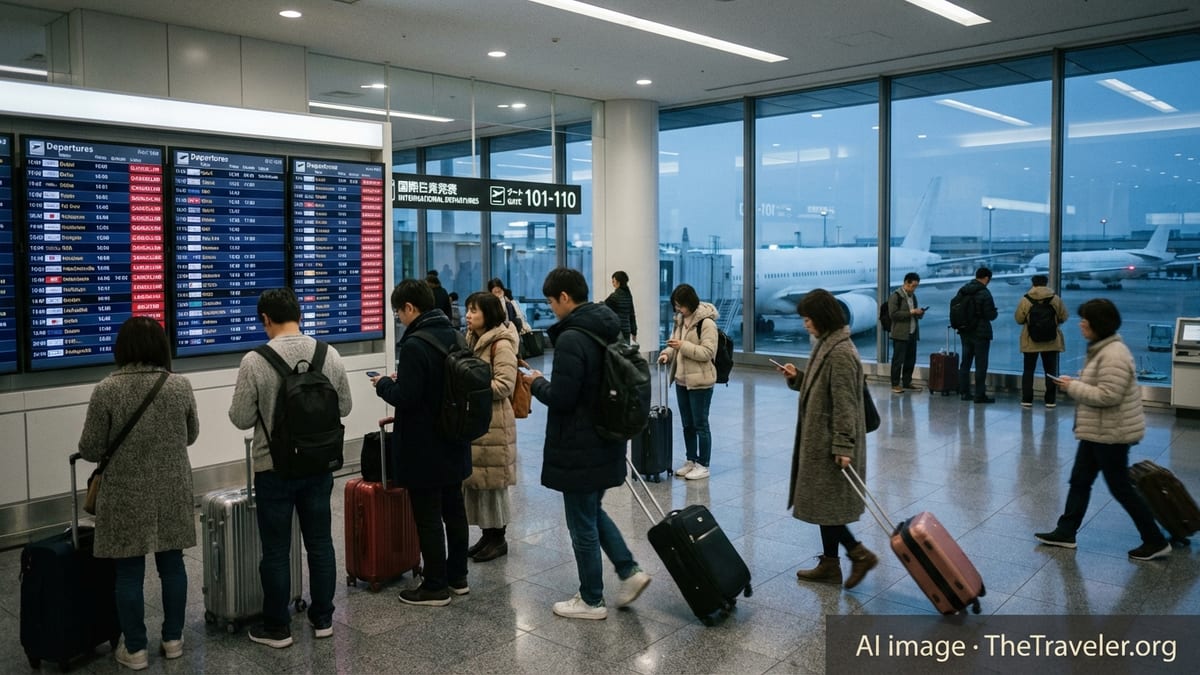
Tokyo Raises Alarm Over Escalating Middle East Crisis
Japan’s Ministry of Foreign Affairs has moved to a markedly more urgent tone as the security situation in the Middle East deteriorates following United States and Israeli strikes on Iran and retaliatory attacks across the Gulf. In a statement issued in late February, officials warned of the “possibility of a sharp change” in conditions affecting not only traditional conflict zones but also nearby hubs that serve as key transit points for Japanese travelers.
The advisory, updated as airspace closures spread over the weekend, urges Japanese nationals to defer non-essential travel to parts of the Middle East and to prepare for extended disruptions if they must transit the region. Authorities stress that even trips not directly bound for conflict zones may be affected as airlines reroute or cancel services through major Gulf hubs.
Japan’s warning comes as governments worldwide race to respond to the new phase of hostilities, with embassies issuing security alerts, airlines scrambling to redraw flight paths and aviation regulators focusing on the risk of miscalculation in crowded skies. For Japanese travelers accustomed to using the Gulf as a bridge between East Asia, Europe and Africa, the upheaval may reshape itineraries for weeks or longer.
Airspace Closures Ripple Across Key Gulf and Levant Routes
The trigger for Japan’s latest advisory has been the rapid closure of airspace across much of the Middle East. Iran, Israel, Iraq, Jordan, Qatar, Bahrain, Kuwait and the United Arab Emirates have all announced full or partial shutdowns to civilian traffic, while Syria has restricted airspace in the south along its border with Israel. Flight-tracking data shows large gaps over these countries where commercial aircraft typically crisscross between Europe and Asia.
These closures have forced airlines into lengthy detours around the Arabian Peninsula, adding hours of flying time, fuel costs and congestion over remaining open corridors, particularly above Saudi Arabia and parts of the eastern Mediterranean. Regulators warn that the presence of air defense systems, missiles and military aircraft heightens the risk of misidentification or spillover incidents involving civilian jets operating near conflict zones.
For Japanese passengers, the impact is immediate on popular one-stop routes to Europe that rely on Middle Eastern hubs. The Foreign Ministry notes that airspace decisions can occur at short notice, leaving aircraft already en route facing diversions and passengers stranded in third countries while airlines rework schedules.
Japanese and Global Airlines Cancel, Reroute and Suspend Services
Airlines serving Japan have begun to adjust operations in line with the government’s risk assessment. Japan Airlines has cancelled at least one Tokyo to Doha rotation and its corresponding return sector as Qatari airspace joined the list of closures, according to industry reports tracking the evolving situation. The carrier is reviewing additional routings that would normally pass through affected skies to reach Europe, Africa and South America.
Other Asian and Middle Eastern carriers central to Japanese travel patterns are making similar moves. Emirates, Etihad and Qatar Airways, which together funnel thousands of Japan-bound passengers through Dubai, Abu Dhabi and Doha every day, have temporarily halted or sharply reduced operations as their home airports scale back or suspend flights. Turkish Airlines, a popular one-stop option between Japan and Europe, has cancelled services to multiple Middle Eastern destinations and is avoiding several high-risk airspaces.
European and Indian airlines are also reacting, creating a domino effect for Japanese travelers connecting outside their home country. Carriers such as British Airways, Lufthansa, Air France-KLM and a range of low-cost operators have suspended or diverted services to Tel Aviv, Beirut, the Gulf and Iran, while India’s civil aviation regulator has advised its airlines to avoid numerous Middle Eastern flight information regions until early March. The combined result is a patchwork of cancellations and abrupt schedule changes that can disrupt even carefully planned itineraries.
Foreign Ministry Urges Heightened Security Awareness and Flexible Plans
Beyond aviation logistics, Japan’s advisory carries strong language on personal security for nationals currently in or near the Middle East. The Foreign Ministry is urging citizens to avoid areas around foreign military facilities, particularly those used by the United States, which analysts see as potential targets for retaliatory strikes. Crowded public places, government buildings and transport hubs are also highlighted as higher-risk locations during periods of heightened tension.
Officials recommend that Japanese travelers register their whereabouts through consular services, monitor multiple information sources for rapid changes and maintain communication with family or employers in Japan. Those already in affected countries are advised to follow local authority guidance, identify nearby shelters, and keep travel documents and essential supplies ready in case of sudden evacuation orders or curfews.
The ministry underscores that even countries outside the immediate conflict zone, including parts of Europe and North America, may experience security incidents or demonstrations linked to events in the Middle East. As a result, the advisory stresses a global posture of increased caution, reflecting concerns that the current crisis could trigger copycat attacks or lone-actor violence far from the front lines.
What Japanese Travelers Should Do Right Now
For travelers preparing to depart Japan in the coming days, the government’s message is to build flexibility into every stage of the journey. Officials encourage avoiding routings that depend on Middle Eastern hubs wherever alternatives exist, even if that means longer or more expensive itineraries via East Asia, North America or non-Gulf European gateways.
Passengers already holding tickets through the region are urged to contact airlines or travel agents as soon as possible to confirm whether flights are operating and to explore rebooking options. With many carriers waiving change fees or offering free date changes on affected routes, early action may improve the chances of securing alternative seats before remaining capacity fills.
Japan’s advisory also serves as a reminder of the value of comprehensive travel insurance that covers war-related disruptions, emergency medical evacuation and extended delays. While policy terms vary widely, experts note that standard coverage may exclude active conflict zones, making it crucial for travelers to read fine print before departure.
With the military trajectory of the crisis still uncertain and aviation authorities warning that closures could persist, Japanese citizens are being told to prepare for a prolonged period of instability in Middle Eastern airspace. For now, the safest strategy for many will be to stay informed, stay flexible and, where possible, stay out of the region’s skies altogether.