

More news on this day
Japan’s 2026 cherry blossom season has officially begun, bringing a fresh wave of visitors just as the country balances record tourism gains, softer growth forecasts and new measures aimed at managing overtourism in its most popular destinations.
Get the latest news straight to your inbox!
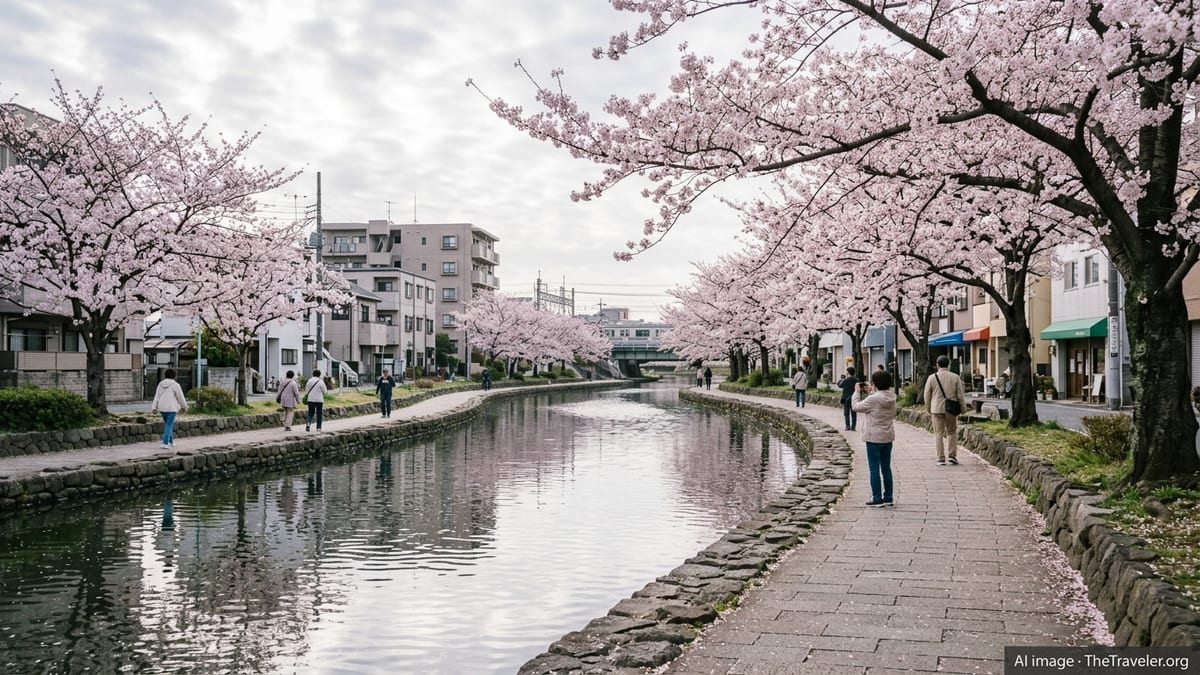
Early Blossoms Signal Another Accelerated Sakura Season
Reports from national meteorological observers in Japan indicate that benchmark cherry trees in Kochi, Gifu and Yamanashi recorded their first official blossoms on March 16, 2026, marking the formal start of this year’s sakura season. In Kochi, flowering arrived six days earlier than the long-term average, while Gifu and Yamanashi were roughly nine days ahead, continuing a pattern of earlier blooms seen in recent years.
The early start largely aligns with forecasts released in January by private meteorological companies, which projected accelerated flowering for the popular Somei Yoshino variety in many areas. Those outlooks suggested that cities along the Pacific side of Honshu, including Tokyo, Osaka and Nagoya, would see blossoms open in the second half of March, with full bloom generally expected in late March and very early April, depending on local conditions.
Climate analysts in Japan have pointed to a combination of mild winter temperatures, lower rainfall and longer sunshine hours as factors driving earlier flowering. While year-to-year timing still fluctuates, publicly available bloom records show that the typical “sweet spot” for peak viewing in major cities has been drifting forward by several days compared with historical averages, a trend that is making precise trip planning more challenging for international travelers.
For visitors already on the ground, the official declaration that sakura season has started often triggers a surge in domestic travel and hanami picnics in parks and riverside spaces. Local media coverage shows crowds beginning to build around early-blooming spots, while tourism agencies are urging travelers to monitor short-range forecasts closely as the bloom front moves north from Kyushu and Shikoku toward Tohoku and Hokkaido.
Tourism Near Record Highs, But 2026 Growth Looks Uneven
The start of the 2026 blossom season comes on the heels of a record-setting year for Japan’s inbound tourism industry. Data compiled from official statistics and industry analyses indicate that the country welcomed roughly 42.7 million international visitors in 2025, surpassing previous highs and generating an estimated 9.5 trillion yen in spending. That performance solidified inbound tourism as a significant contributor to Japan’s economy and encouraged continued investment in hotels, regional transport and visitor services.
Yet outlooks for 2026 suggest a more complex picture. A major Japanese travel agency has projected that inbound visitor numbers could edge down by around 3 percent from last year’s estimate, to just over 41 million travelers. Analysts attribute much of the expected softening to weaker demand from China, historically one of Japan’s largest tourism sources. Recent diplomatic frictions and travel advisories have corresponded with slower growth in Chinese arrivals since late 2025, even as visitor numbers from South Korea, Southeast Asia and parts of Europe and North America remain robust.
Early 2026 data from the Japan National Tourism Organization also point to a modest dip in overall arrivals in January, with a reported year-on-year decline of just under 5 percent. At the same time, South Korea set a new record as more than 1.1 million travelers from the country visited Japan in a single month for the first time, underscoring how regional demand is increasingly diversified even as some markets cool.
For the cherry blossom period, this dynamic is expected to translate into continued high occupancy rates on popular travel corridors such as Tokyo–Kyoto–Osaka, although some industry forecasters anticipate slightly less intense crowding than last year in certain urban hotspots. Regional destinations that have been attracting more first-time visitors, including parts of Tohoku, Shikoku and Kyushu, are forecast to see steady growth, particularly later in the season as the bloom front moves north.
New Costs and Rules Shape Spring Travel Decisions
Travelers arriving for the 2026 sakura season are also confronting a changing policy landscape. National and local authorities have been gradually reshaping tourism-related fees and regulations, with the stated goal of securing funds for infrastructure and better managing the impacts of large visitor volumes on everyday life in host communities.
One of the most widely discussed changes is a planned increase to Japan’s international departure tax starting in 2026. According to business and travel media, the levy, which has been set at 1,000 yen since its introduction in 2019, is due to be tripled, affecting both foreign tourists and Japanese residents leaving the country. While the exact implementation timetable and final structure are still being clarified in public reporting, analysts say that for most long-haul visitors the higher fee is unlikely to be a major deterrent given its relatively small share of overall trip costs.
Local governments in popular destinations are also experimenting with new charges. In Kyoto, one of the country’s most visited cities during cherry blossom season, reports highlight an expanded accommodation tax structure designed to ensure that overnight guests contribute more directly to the costs of crowd management, street cleaning and preservation of historic neighborhoods. Similar debates are emerging in other destinations that experience seasonal strain on public services, from Kamakura near Tokyo to parts of Hokkaido during ski season.
For international travelers, these measures add to a broader backdrop of rising costs. Online travel communities comparing recent itineraries to pre-pandemic trips note higher airfares, hotel rates and restaurant prices during the late March and early April peak. Industry observers say that while Japan remains widely perceived as offering good value compared with some European destinations, price sensitivity is increasing, particularly among younger visitors and repeat travelers who now weigh off-peak visits more seriously.
Ongoing Overtourism Concerns Around Iconic Sakura Spots
The combination of early blossoms, strong visitor numbers and concentrated demand on a handful of locations has kept overtourism in the spotlight. Communities living near some of Japan’s best-known cherry blossom sites have, in recent years, raised concerns about crowding, noise, litter and inappropriate behavior during peak weeks. Publicly available reports cite complaints from residents near riverside promenades in Tokyo and historic districts in Kyoto, where narrow streets can quickly become gridlocked when tour buses and large groups converge.
In response, the national government has expanded the number of areas designated for special overtourism countermeasures. Recent policy announcements show the list growing from 47 to around 100 zones, spanning not only major cities but also smaller heritage towns and scenic nature sites. Measures in these areas range from increased signage and crowd flow controls to pilot schemes that restrict large tour buses at certain times or encourage staggered visiting hours.
Some municipalities have also stepped up gentle enforcement around popular sakura parks, promoting rules on trash disposal, noise at night and the use of plastic tarps on lawns. Travel advisories and local tourism websites increasingly encourage visitors to explore less congested parks and riversides, emphasizing that cherry trees are widespread and that quieter viewing experiences can be found away from the busiest central locations.
Industry analysts note that these initiatives are part of a broader effort to reposition inbound tourism as a “core strategic industry” that must still remain compatible with local quality of life. For spring visitors, the changes are most visible in the form of clearer guidance, more staff in key parks and stations during peak weekends, and occasional requests to respect photography etiquette in residential neighborhoods that have become popular on social media.
Shift Toward Regional and Off-Peak Sakura Travel
While Tokyo, Kyoto and Osaka remain fixtures on most first-time itineraries, data gathered from tourism agencies and regional governments show that more international travelers are venturing beyond the classic circuit, particularly during blossom season. Inbound statistics for 2025 indicated a double-digit increase in visits to regional areas year on year, reflecting both targeted promotion by local authorities and strong interest in quieter, nature-oriented experiences.
Destinations such as the Tohoku region in northern Honshu, the Japan Sea coast of Hokuriku and castle towns like Hirosaki in Aomori Prefecture have seen rising profile in foreign-language media and travel planning forums. These areas typically reach full bloom later in April, making them attractive to travelers who arrive after the main urban peak or who missed early blossoms further south. As trains and low-cost domestic flights make it easier to cover longer distances within a single trip, more visitors are structuring itineraries that follow the northbound progression of the sakura front.
Tourism planners say this shift is gradually helping to smooth seasonal and geographic imbalances. Hotel operators in secondary cities report healthier occupancy in late April and early May, while some urban properties in Tokyo and Kyoto are experimenting with incentives to draw visitors slightly earlier or later than the heaviest blossom weekends. Public messaging from national tourism bodies continues to highlight the idea of “dispersed travel,” encouraging flexible itineraries and longer stays that include both marquee sights and lesser-known locales.
For travelers considering Japan in late spring 2026 or beyond, the emerging pattern suggests that beautiful blossom viewing is increasingly possible outside the most crowded time and place combinations. With cherry trees lining suburban rivers, small-town streets and rural rail lines across the archipelago, the narrative around sakura travel is shifting from a race to catch a single perfect week in a single city to a more varied exploration of timing, geography and local culture.