

More news on this day
Japan is entering 2026 with inbound tourism at historic highs, as record visitor numbers, a weak yen and new regional initiatives converge to transform travel patterns from Tokyo and Kyoto to Hokkaido and lesser-known corners of the country.
Get the latest news straight to your inbox!
Record-Breaking Visitor Numbers Set the Tone for 2026
Publicly available data from Japan’s tourism authorities and industry analysts show that inbound travel has surpassed all pre-pandemic benchmarks, with 2024 and 2025 establishing new annual records for foreign arrivals. Estimates for 2025 point to around 40 to 43 million international visitors, outpacing the previous peak of 2019 and underscoring the scale of the rebound.
Monthly figures through late 2025 and early 2026 indicate that this momentum is carrying into the new year. Visitor counts above 3 million per month have become increasingly common, including new records for traditionally quieter winter months. Reports from February 2026 highlighted more than 3.4 million foreign arrivals, a record for that month and a signal that demand remains strong even outside peak seasons.
The yen’s prolonged weakness continues to be a central driver. International travelers are finding that hotels, dining and shopping in Japan compare favorably with other major destinations, pushing up both arrival numbers and total spending. Economic analyses suggest that inbound travel has contributed a notable share of Japan’s recent GDP growth, reinforcing tourism’s role as a strategic pillar of the wider economy.
At the same time, forecasts for the full year 2026 are more nuanced. Projections from think tanks and travel research groups point to a potential moderation in growth rates due to currency movements, regional geopolitical tensions and capacity constraints in major cities. However, even with a slight deceleration, the baseline volume of visitors is expected to remain at or near record territory.
Tokyo and Kyoto Balance Demand with Management Measures
Tokyo and Kyoto remain at the heart of the inbound tourism boom, drawing a high proportion of first-time and repeat visitors. Tokyo’s appeal is being amplified by immersive attractions, large-scale events and pop culture experiences, which continue to pull younger travelers and families. High-profile installations and digital art museums in the capital have reported millions of visitors annually, ranking among the most searched and visited attractions in Asia.
Kyoto, long seen as the cultural jewel of the so-called Golden Route, is experiencing intense pressure from the surge in demand. Streets in popular districts such as Higashiyama and Arashiyama are again crowded with tour groups and independent travelers during peak hours. Reports from early 2025 onward detail how the city has been testing and expanding measures to manage “tourism pollution,” including higher lodging taxes, new signage and pilot schemes to steer crowds away from the most fragile sites.
By January 2026, some indicators suggested the first year-on-year decline in arrivals for Tokyo and Kyoto in several years, following successive record-breaking periods. Industry coverage interprets this not as a collapse in demand but as a sign that growth is starting to plateau in the most saturated districts. Room rates and booking data point to an ongoing shift: while occupancy remains high, travelers are increasingly looking for alternative neighborhoods, day-trip bases and off-peak time slots to avoid congestion.
Local and national initiatives are now focusing on spreading visitors more evenly through both cities. In Tokyo, campaigns emphasize lesser-known districts and waterfront redevelopment areas, while in Kyoto, tourism messaging highlights northern and rural parts of the prefecture, encouraging longer stays and deeper engagement beyond the standard temple circuits.
Hokkaido Emerges as a Four-Season Magnet
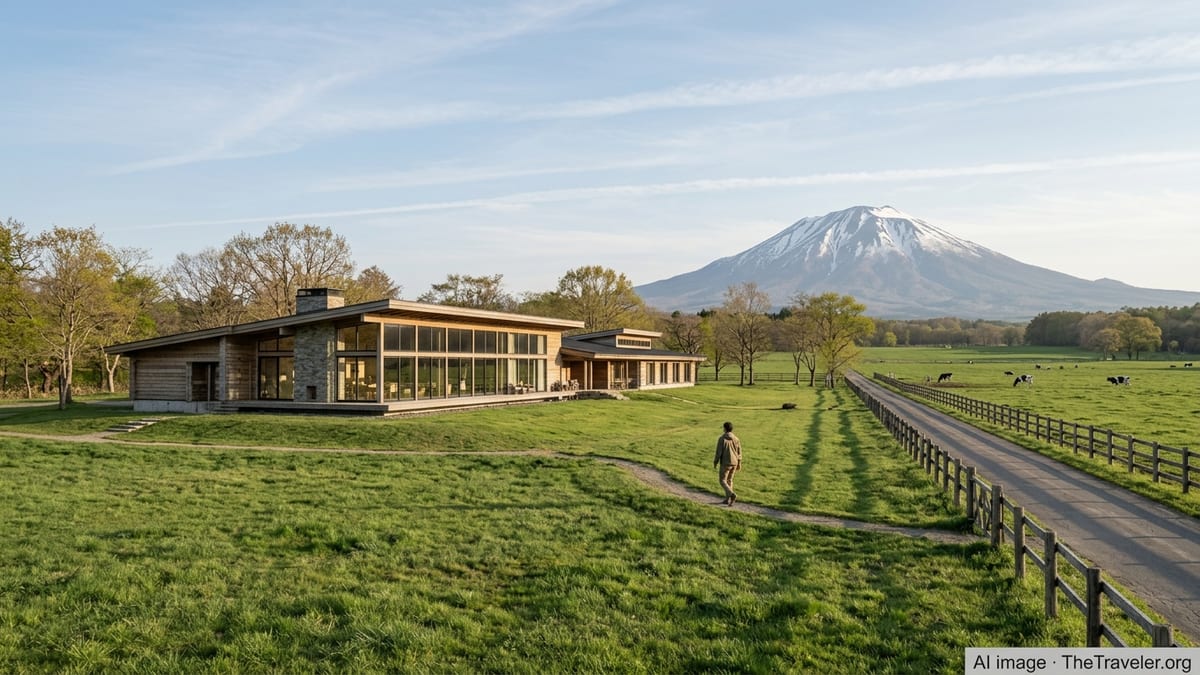
Hokkaido, historically renowned for winter sports and powder snow, is solidifying its position as a year-round international destination in the current tourism cycle. Visitor statistics for 2024 and 2025 show strong growth in arrivals from markets such as Australia and Southeast Asia, particularly during the ski season, with some analyses noting that Australian arrivals alone surpassed the one million mark in 2025.
Tourism boards and airlines are capitalizing on this momentum. Domestic and international carriers have expanded seasonal routes to New Chitose Airport and regional airports, linking Hokkaido more closely with Tokyo, Osaka and overseas hubs. Package data and booking patterns indicate rising interest in shoulder seasons, with spring flower festivals, summer hiking and autumn foliage drawing travelers who once visited only between December and February.
Hokkaido is also being positioned as a pressure valve for crowding in the Golden Route. Promotional campaigns highlight spacious landscapes, onsen towns and lesser-trafficked national parks as a contrast to the busy streets of central Tokyo or Kyoto. Travel specialists report that more itineraries now combine a short stay in the major cities with extended time in Sapporo, Niseko or smaller coastal and rural communities.
However, the rapid growth brings its own challenges. Local governments are beginning to discuss sustainable capacity for resort towns and ski areas, particularly regarding seasonal labor, housing and environmental impact. The current policy debate centers on how to keep Hokkaido attractive and accessible while avoiding the over-saturation that has strained older destinations.
Hidden Gems and Regional Campaigns Gain Traction
Beyond the headline destinations, a defining feature of Japan’s 2026 tourism landscape is the surge of interest in so-called hidden gems. National and regional initiatives encourage travelers to go “beyond the Golden Route,” spotlighting smaller cities and rural areas with strong cultural and natural assets but comparatively modest visitor numbers.
Promotional materials from the Japan National Tourism Organization and partner prefectures now regularly feature places such as Kanazawa on the Sea of Japan coast, the art islands of the Seto Inland Sea, the mountain towns of the Japan Alps and coastal regions of Kyushu and Shikoku. These areas report double-digit year-on-year growth from overseas markets, although from a lower base than Tokyo or Osaka, suggesting ample room for expansion.
Airlines and rail operators are supporting this shift through targeted fare products. One high-profile initiative, launched by a major Japanese carrier in cooperation with tourism authorities, offers complimentary or discounted domestic segments to international travelers through January 2026. The scheme makes it easier and cheaper to add regional hops to an itinerary, opening up destinations that would otherwise be skipped due to cost or complexity.
Private-sector travel brands are also responding. Online agencies and specialist tour operators now bundle multi-stop journeys that thread together a major gateway city with quieter islands, countryside hot spring resorts and small heritage towns. Marketing language emphasizes authenticity, local food and manageable crowd levels as selling points, appealing especially to repeat visitors who have already seen the main icons.
Policy Headwinds and a More Complex Outlook
Despite the headline boom, the outlook for Japan’s inbound tourism in 2026 is not uniformly positive. Diplomatic tensions with China in late 2025 and early 2026 have already translated into a notable drop in Chinese arrivals, historically one of Japan’s largest source markets. Government statistics released in January 2026 show that visitors from China fell by more than half compared with the previous year for that month, even as total arrivals hit new records driven by other markets.
Analysts caution that this rebalancing may leave Japan more reliant on travelers from South Korea, Taiwan, the United States, Europe and Australia to sustain growth. Airlines and tourism boards are responding by deepening marketing in these regions, adjusting route networks and tailoring campaigns to specific seasonal interests, from cherry blossoms and autumn foliage to winter sports and food tourism.
Currency trends represent another source of uncertainty. While a weak yen has clearly supported the recent boom, research from economic institutes suggests that a sharp appreciation could temper demand by eroding Japan’s price advantage. Forward-looking scenarios for 2026 anticipate robust arrivals even under less favorable exchange rates, but with slower growth and more pronounced competition among domestic destinations for visitor spending.
In this environment, the focus is shifting from headline visitor counts to quality, distribution and sustainability. Policy discussions increasingly revolve around managing crowding in Tokyo and Kyoto, capturing higher-value segments, and ensuring that smaller communities from Hokkaido to Kyushu share in the benefits. With major events such as Expo 2025 in Osaka feeding into 2026 travel plans, Japan’s challenge is no longer to attract visitors, but to shape how and where they explore the country’s expanding tourism map.