

More news on this day
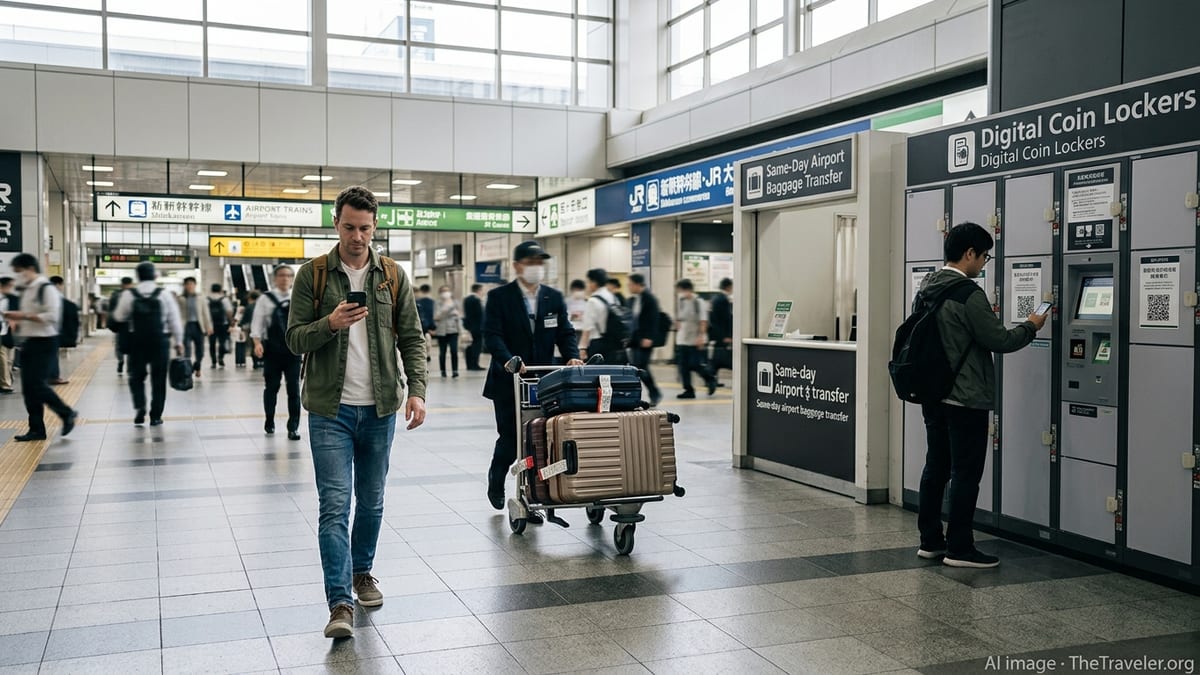
Japan is moving quickly to make heavy suitcases a thing of the past, combining nationwide luggage delivery, station-to-airport bag transfers and emerging smart suitcase technology into a 2026 travel ecosystem built around hands-free sightseeing.
Get the latest news straight to your inbox!
From Coin Lockers to Integrated Hands-Free Tourism
Hands-free travel in Japan has long meant coin lockers at stations and left-luggage counters at major hubs, but recent developments indicate a shift toward a more coordinated, nationwide system. Publicly available information from the Japan Tourism Agency highlights “hands-free tourism” as part of its wider strategy to create high-value, visitor-friendly destinations, supported by increased core and supplementary budgets for fiscal 2025 that prioritize crowd control and smoother visitor flows.
In practice, this is translating into expanded storage options in key gateways. Recent airport guidance for 2026 notes that Narita and Haneda continue to offer extensive coin lockers and staffed storage desks, but travelers are being nudged toward pre-booked services and digital tools rather than last-minute locker hunting. This emphasis on predictability is particularly important ahead of and beyond the Osaka Kansai Expo 2025, when visitor volumes and same-day transit between cities are expected to remain high into 2026.
At the same time, station operators and airport companies are introducing more flexible storage formats. Integrated reports from airport and rail groups describe new types of lockers, including tax-free pickup lockers and contact-free storage, that are designed for travelers who may conduct their shopping and check-in entirely without visiting a staffed counter. These elements lay the groundwork for a 2026 environment in which visitors can move between city neighborhoods and airports with minimal need to handle luggage themselves.
Same-Day Station-to-Airport Delivery Becomes a Game Changer
One of the clearest signs of change is the spread of same-day station-to-airport delivery services. Recent travel coverage points to new offerings at central Tokyo rail hubs, such as Keisei Ueno Station, where travelers can now drop bags in the morning and collect them the same evening at Narita Airport. These services sit alongside long-established hotel-to-airport delivery providers, but they are tailored to the growing number of visitors who stay in multiple accommodations or plan a full final day of sightseeing before a late flight.
According to Japanese transport and tourism news outlets, rail groups are also experimenting with logistics models that connect station lockers directly to delivery networks. Internal group reports show that when customers leave a suitcase in designated lockers, affiliated logistics companies can route those bags onward, removing the need for separate arrangements at hotel desks or airport counters. This type of integration is gradually extending from Tokyo terminals toward regional cities connected by Shinkansen and limited express services.
These developments align with tourism policy goals that encourage visitors to spread out beyond major hotspots while reducing congestion in stations and on local streets. With more travelers able to send luggage ahead or hand it off once in the morning, authorities aim to reduce bottlenecks caused by crowds maneuvering large suitcases through busy ticket gates and narrow sidewalks. For visitors, the result is a tangible “travel hack” for 2026, turning transfer days into extra sightseeing time rather than lost hours spent guarding bags.
Smart Lockers, Apps and AI-Powered Navigation
Behind the scenes, a range of digital tools is making hands-free travel more seamless. Recent announcements from major railway companies outline upgrades to mobile transit apps, including plans to integrate e-tickets and stored-value cards with wayfinding tools that guide users through complex stations. As these apps expand, they are increasingly incorporating information on locker locations, baggage counters and delivery deadlines, allowing travelers to plan their routes and bag drop-offs in a single interface.
Rail group sustainability and innovation reports describe “smart logistics” initiatives that link station lockers to delivery networks and station retail. In some pilot schemes, travelers deposit bags in multi-function lockers that can trigger onward shipping or coordinated pick-up, reducing the time spent queuing at counters. While many of these services are still concentrated in Greater Tokyo, the model is designed to scale across intercity corridors in the coming years.
AI-assisted mobility is also beginning to touch luggage and wayfinding. A high-profile example is the “AI suitcase” navigation robot being trialed at the Osaka Kansai Expo, developed for travelers with visual impairments. Public information from the project outlines a suitcase-sized device that uses sensors and mapping data to guide users safely through crowded venues. Although the current demonstrations are limited to a controlled environment, the technology points toward a future in which luggage can both carry belongings and help travelers navigate unfamiliar transport hubs and sightseeing districts.
Airport and Expo Innovations Point to 2026 Travel Patterns
Japan’s major airports are positioning themselves as key nodes in this emerging hands-free ecosystem. Recent integrated reports from the operator of Haneda Airport describe newly introduced tax-free lockers that allow for contact-free pickup of duty-free purchases, reflecting a broader shift toward services that do not require extended face-to-face transactions. Combined with existing luggage delivery counters, coin lockers and staffed storage, these features allow travelers to pass through the airport with fewer items in hand until just before security or boarding.
At Narita, recent traveler guidance for 2026 emphasizes the range of luggage storage and forwarding services available, from classic coin lockers to next-day delivery of suitcases to hotels across Tokyo and beyond. Commentators note that for a typical visitor, the most efficient pattern in 2026 may be to send large bags directly from the airport to a first hotel, then rely on station delivery counters or hotel desks to move luggage between cities while carrying only a light day bag on trains.
The Osaka Kansai Expo is serving as a testing ground for many of these concepts. Official materials on the Expo’s mobility showcase highlight robots, autonomous navigation devices and frictionless transport payments as key themes. As Expo-related projects roll out through 2025, the expectation among industry observers is that successful pilots, such as navigation-assisting suitcases and app-based routing of travelers and bags, will influence mainstream tourism infrastructure nationally as Japan prepares for sustained high visitor numbers in 2026.
What 2026 Visitors Can Expect on the Ground
For travelers planning Japan trips in 2026, these developments are starting to translate into concrete choices. Luggage delivery companies are expanding English-language interfaces and online booking tools, making it easier to schedule hotel-to-hotel or hotel-to-airport transfers before arrival. Travel media reports that prices remain competitive with previous years, but services are increasingly framed as everyday utilities rather than premium add-ons, especially for those covering multiple regions in a short visit.
On the hardware side, international attention on smart and rideable suitcases has prompted regulatory clarification in Japan, particularly around where motorized luggage can operate. Earlier coverage noted new rules that treat these devices similarly to small personal mobility vehicles when used outside airports. As hands-free and smart luggage concepts evolve, visitors are being encouraged to rely on station and airport infrastructure, as well as delivery networks, rather than ride-on devices in public streets or conventional platforms.
Overall, publicly available information suggests that by 2026 Japan will offer a more layered mix of options than ever before: conventional coin lockers for quick storage, staffed counters for oversized items, same-day station-to-airport transfers for final-day sightseeing, next-day delivery between cities and, in select environments, AI-assisted navigation through suitcases and robots. For travelers willing to engage with these services, the traditional image of dragging a heavy bag through crowded stations is steadily being replaced by a lighter, more flexible way to explore the country.