

More news on this day
Japan is preparing to overhaul how millions of short-stay, visa-free visitors enter the country, with a new digital entry clearance system targeted for fiscal 2028 that will require most tourists to secure approval before boarding their flight.
Get the latest news straight to your inbox!
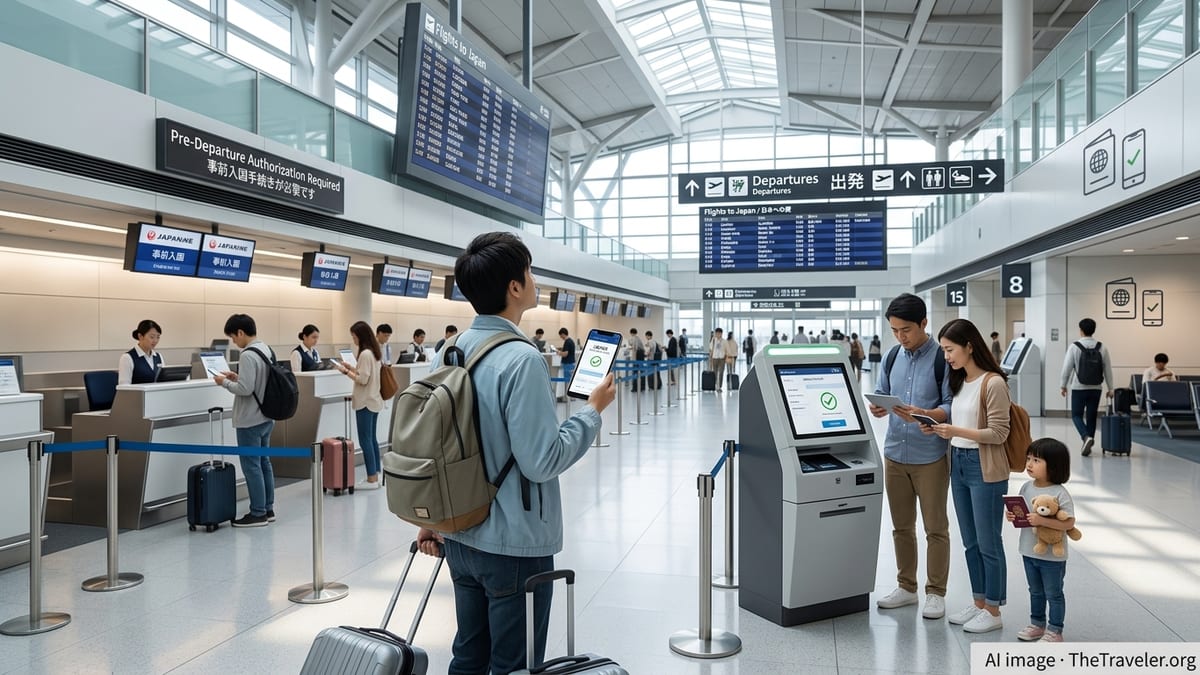
From Visa-Free Arrival to Mandatory Pre-Clearance
Publicly available policy documents and media coverage indicate that Japan is developing its own electronic travel authorization, widely referred to as the Japan Electronic System for Travel Authorization, or JESTA. The program is planned to cover travelers from dozens of countries and regions that currently enjoy visa-free entry for short stays, including many in Europe, North America, and parts of Asia and Latin America.
Reports describe JESTA as an online pre-screening tool that must be completed before departure, similar to the United States ESTA system or Canada’s eTA. Instead of simply arriving at Narita, Haneda, Kansai or other gateways and facing immigration checks on the spot, eligible visitors will first submit biographical and travel information online and receive a decision electronically.
Coverage of the plan notes that Japan originally discussed a later roll-out but has since accelerated its digital border strategy, targeting fiscal 2028 as the key milestone. The move aligns Japan with a broader global trend in which visa-waiver access is increasingly paired with mandatory advance authorization and data sharing.
The new structure does not replace formal visas. Travelers who already need a visa today are expected to continue using traditional consular channels, while JESTA is positioned as an added layer for those who previously only needed a passport and return ticket.
How the 2028 Digital Entry Rule Is Expected to Work
Although many detailed regulations are still in development, published analyses of Japan’s border modernization agenda sketch an outline of how the digital entry clearance may operate. Visa-free travelers would complete an online application before buying or finalizing flights, providing information such as passport details, planned dates of stay, destination in Japan, and answers to security and admissibility questions.
Approval would be electronically linked to the traveler’s passport, allowing airlines and Japanese border systems to verify status before boarding. In practice, this means passengers who have not obtained clearance in advance may be denied check-in or boarding for flights bound for Japan, similar to procedures already familiar to travelers to the United States and other destinations.
Current digital tools such as the Visit Japan Web platform, which already lets travelers pre-register immigration, customs and quarantine information, provide a preview of the direction of travel. Reports suggest that future systems will increasingly integrate these services so that pre-clearance, arrival declarations and even e-gate usage can be handled through a unified digital profile.
Processing fees have not been finalized publicly, but comparisons with comparable systems abroad suggest that travelers should anticipate a modest charge per authorization and a validity period that may span multiple trips over several years, subject to passport validity and rule changes.
Security, Overstayers and the Push for Smarter Borders
Japan’s digital entry clearance initiative is closely tied to concerns about rising visitor numbers and overstays. Government statistics summarized in recent immigration briefings show that refusals of entry and cases where the declared purpose of travel is questioned have increased since borders fully reopened, placing pressure on frontline staff and airport infrastructure.
Analytical papers and law firm commentary on the policy emphasize that pre-travel risk assessment lies at the heart of the new approach. By moving more screening upstream, Japan aims to identify travelers who may intend to work illegally or who present security concerns before they ever reach a boarding gate. That, in turn, is expected to reduce the number of costly last-minute refusals at airports.
At the same time, authorities plan to leverage automation to make travel smoother for those deemed low risk. The JESTA concept is linked in public documents to wider use of automated e-gates, facial recognition, and integrated databases that track movements from entry to exit. Digital customs declaration gates already installed at several major airports hint at how a fully networked border might function for tourists in the late 2020s.
Observers note that Japan’s Digital Agency and immigration authorities are also under pressure to harmonize border technology with global partners. Aligning with systems used by the United States, Canada and the European Union is framed as a way to improve information sharing and make compliance more intuitive for frequent travelers.
What Visa-Free Tourists Will Need to Do Differently
For individual tourists, the most noticeable shift in 2028 will be the need to think about immigration earlier in the trip-planning process. Instead of treating the passport check as a final formality on arrival, travelers from visa-waiver countries will likely have to apply for digital clearance several days, or even weeks, before departure to avoid last-minute surprises.
Travel industry analyses warn that airlines will be expected to verify JESTA approval at check-in. That could mean denied boarding for passengers who arrive at the airport without valid authorization, even if they previously traveled to Japan without such requirements. Travel agents and online booking platforms are already starting to flag upcoming changes so that itineraries factor in the new step.
The anticipated system is also expected to reshape how people prepare their documentation. Visitors may need to have accommodation details, return or onward travel, and a clear statement of purpose prepared before submitting an application. Changes to plans after approval, such as extending a stay or altering destinations within Japan, may trigger additional checks depending on the final rules.
Families and group travelers will need to pay close attention to application rules for minors, payment methods, and shared itineraries. Experience from other countries with electronic authorizations suggests that mismatched data between family members can cause delays at boarding or arrival, even when each individual is otherwise eligible to enter.
Countdown to 2028: Preparing for a New Era of Travel to Japan
With tourism to Japan hitting fresh records and major cities such as Tokyo, Osaka and Kyoto bracing for even larger visitor flows, the shift toward mandatory digital entry clearance is increasingly portrayed in local and international coverage as a practical necessity rather than a speculative experiment. Industry observers expect that the system will be introduced in stages, with pilot programs, soft launches and overlapping paper-based procedures before full enforcement.
Travel media and specialist immigration advisories are already urging frequent visitors and first-timers alike to follow updates from official Japanese government channels as fiscal 2028 approaches. Rules on who must apply, how far in advance to submit, and what types of trips are exempt may be adjusted as authorities test and refine the framework.
For now, tools such as Visit Japan Web remain optional for many travelers but offer a valuable way to get used to digital formalities. Using existing online platforms to store itineraries, pre-fill customs information and navigate e-gates can provide a realistic sense of how border crossings could look once JESTA or similar systems become part of the standard checklist.
By the time the 2028 deadline arrives, entering Japan as a visa-free visitor is likely to feel very different from the largely paper-based procedures of the past decade. For travelers who plan ahead, however, the transition promises a combination of tighter security controls and a faster, more predictable arrival experience in one of the world’s most popular destinations.