

More news on this day
As Japan posts record-breaking visitor numbers and sets its sights on 60 million arrivals by 2030, the country is rolling out a new generation of sustainable tourism policies designed to protect fragile landscapes, safeguard cultural heritage and keep local communities at the center of the travel economy.
Get the latest news straight to your inbox!
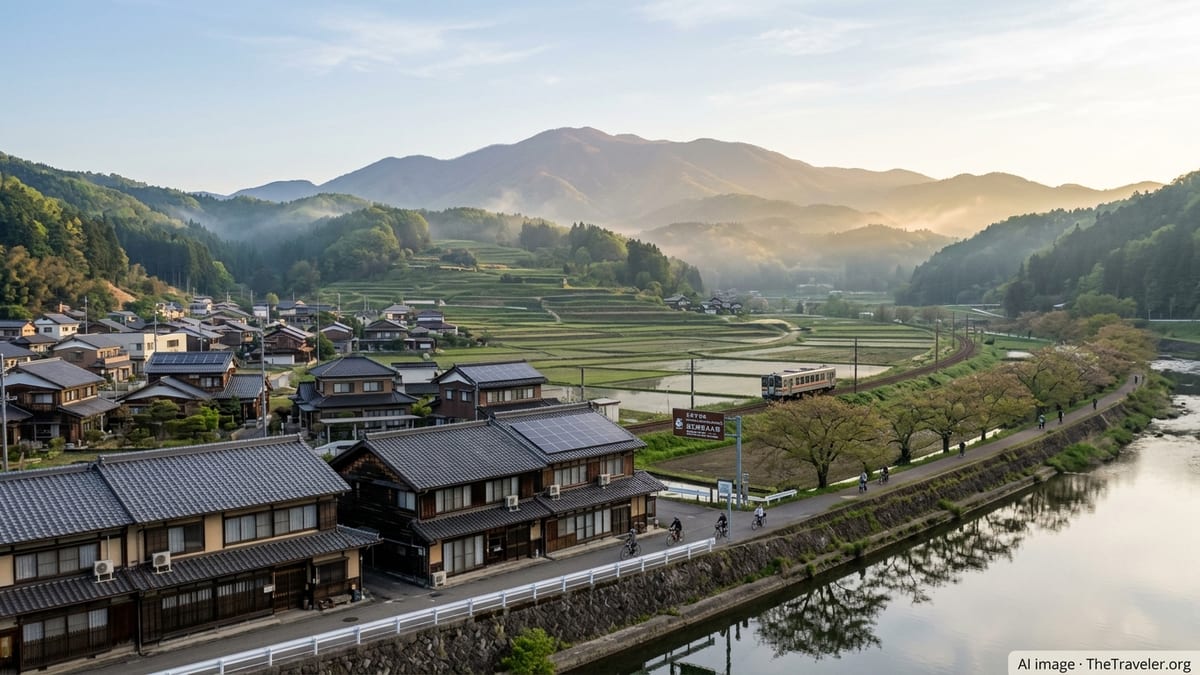
Record Growth Forces a Rethink of Japan’s Tourism Model
Japan’s tourism boom has returned with unprecedented speed. Visitor arrivals surpassed pre-pandemic levels in 2024 and continued to climb through 2025, with spending by foreign travelers rising above 2019 figures and tourism emerging as one of the country’s most dynamic export earners. Publicly available figures from the Japan National Tourism Organization and recent industry coverage show that the country has already exceeded previous annual records and is now working toward a government-backed target of 60 million visitors by 2030.
This rapid growth has sharpened the focus on sustainability. Reports from policy forums and economic studies note that the tourism surge is reshaping land prices, labor markets and housing in popular destinations, from heritage cities such as Kyoto to resort islands like Okinawa. Municipalities are increasingly under pressure to capture the benefits of tourism while limiting crowding, environmental degradation and displacement of residents.
Recent commentary from research institutes and business media indicates that national and local authorities now frame tourism as a pillar of regional revitalization that must be managed within strict environmental and social guardrails. The new approach emphasizes quality over volume, longer stays, higher local spending and a more even distribution of visitors across seasons and regions.
At the same time, industry players are retooling their strategies. Major travel groups and airlines are integrating environmental, social and governance priorities into core business plans, piloting projects that link route development and destination marketing with decarbonization, rural regeneration and cultural conservation.
Decarbonizing Nature Travel and Building “Zero-Carbon Parks”
Japan’s drive toward net-zero greenhouse gas emissions by 2050 is increasingly visible in its tourism policies, particularly around national parks and nature-based travel. Information from the Ministry of the Environment highlights a flagship initiative to turn leading national parks into “zero-carbon parks,” where transport systems, visitor centers and accommodation are progressively electrified or powered by renewable energy, and where new infrastructure is evaluated against strict climate and biodiversity criteria.
Under the ministry’s long-running project to enhance enjoyment of national parks, authorities are working with private partners to improve trails, signage and visitor services while reducing environmental impact. Press materials and official outlines describe an emphasis on low-impact mobility, including shuttle buses, cycling routes and walking trails that encourage slower travel and reduce car dependence in sensitive mountain, coastal and island ecosystems.
These park-focused initiatives are closely linked to Japan’s broader climate and biodiversity strategies. Government submissions to international climate bodies and nature-positive policy papers reference tourism as a sector that must align with national biodiversity plans, including the “30 by 30” goal to conserve 30 percent of land and sea areas by 2030. In practice, this is translating into stricter impact assessments, caps on development in protected zones and new partnerships with local communities to provide guided experiences, conservation volunteering and environmental education for visitors.
On the ground, long-distance nature trails created in cooperation with local governments and residents, such as coastal routes in the Tohoku region, are promoted as models for low-impact, community-centered tourism. These projects link ecotourism with disaster recovery, environmental restoration and rural livelihoods, illustrating how climate goals and regional development strategies are being combined in concrete destinations.
Tackling Overtourism Through Visitor Management and Regional Dispersal
The debate over overtourism has intensified as iconic locations struggle with crowding. Recent coverage of seasonal festivals and famous viewpoints, particularly around Mount Fuji and cherry blossom hotspots, describes mounting concern over traffic, litter and pressure on local services. Some municipalities have begun canceling or redesigning major events and tightening access rules in response, signaling a more interventionist approach to visitor management.
Policy papers and consultancy reports on Japan’s tourism strategy show a strong push to move beyond a handful of “superstar” destinations. National plans now stress regional dispersal, with campaigns that promote lesser-known rural areas, secondary cities and off-peak travel. This is supported by targeted transport initiatives, including regional rail passes and aviation campaigns that encourage travelers arriving on international flights to add domestic legs to outlying prefectures.
According to recent analyses of tourism and land prices, managing visitor flows is not only about comfort and safety but also about economic stability. High-intensity tourism has been linked with surging rents and rapid land value changes in some coastal and island communities, prompting local governments to explore zoning tools, accommodation caps and stricter licensing for short-term rentals. At the same time, destinations that diversify their visitor base and encourage longer stays spread spending more evenly and are less exposed to boom-and-bust cycles.
Industry partners are aligning with this shift. Large tour operators and online agencies have been rolling out “under-tourism” or “hidden gems” campaigns that package lesser-known historical towns, agricultural regions and island communities as alternatives to overcrowded corridors. These initiatives are presented not only as marketing experiments but also as contributions to spreading economic benefits and easing pressure on overstretched sites.
Preserving Cultural Heritage While Welcoming More Visitors
Japan’s tourism policies increasingly link sustainability with cultural preservation. Heritage-rich cities and historic districts have been testing new rules to protect traditional townscapes, limit nuisance behavior and ensure that residents can continue daily life despite swelling visitor numbers. Public information from city-level decarbonization and cultural asset plans indicates that some municipalities are investing simultaneously in energy retrofits for old buildings and in stricter design guidelines for new hotels and shops in conservation zones.
Kyoto has been highlighted in government climate submissions as a leading example, with projects to reduce emissions from cultural sites and surrounding neighborhoods while maintaining their architectural character. Similar efforts are under way in smaller castle towns and historic ports, where restored warehouses, townhouses and shrines are repurposed as inns, galleries and community spaces under public-private partnerships that require long-term maintenance and community oversight.
Workshops and knowledge-sharing programs run with international partners have showcased Japanese examples of urban regeneration that embed sustainability principles into the revival of old merchant quarters and riverfronts. Case studies from regional cities describe how resident-led initiatives, small businesses and local authorities co-design tourism offerings that celebrate traditional crafts, seasonal food and festivals, with explicit limits on group sizes, opening hours and signage.
These measures are complemented by growing efforts to educate visitors. Tourism organizations promote codes of conduct that encourage respectful behavior in temples, shrines and residential alleys, while destination marketing increasingly emphasizes learning, participation and cultural exchange over checklist sightseeing. The stated goal is to ensure that rising footfall translates into support for artisans, performers and heritage custodians rather than accelerating the erosion of local identity.
Local Communities at the Heart of Japan’s Tourism Future
A defining feature of Japan’s emerging tourism policies is the central role given to local communities. Activity reports from regional partnerships and international workshops describe how small cities and rural towns are piloting governance models that tie tourism revenues directly to community priorities, such as restoring town centers, upgrading public transport or funding environmental projects.
In Ehime Prefecture, for example, program documentation points to landscape preservation and resident-led regeneration as core elements of tourism development, with stakeholders working to restore historic streetscapes and create new accommodation within existing building stock. Similar approaches are being recorded on islands where tourism is being developed as part of broader sustainable industry strategies, integrating agriculture, fisheries and creative industries rather than relying solely on short-stay beach tourism.
Major private-sector players are also experimenting with new forms of collaboration. Sustainability reports from leading travel groups outline projects that bring together local governments, businesses and residents to co-design itineraries, manage carrying capacity and monitor environmental and social indicators. These collaborations often include training for local guides, support for community-owned lodgings and mechanisms for channeling a portion of visitor spending into conservation and cultural activities.
Analysts of Japan’s tourism trajectory argue that these community-centered experiments will shape how the country balances growth with conservation over the next decade. With world attention focused on Japan through high-profile events and its ongoing tourism boom, the success or failure of these policies is likely to influence sustainable tourism debates far beyond its borders.