

More news on this day
Japan’s next headline-grabbing luxury train will begin gliding from central Osaka into the cedar-clad mountains of Wakayama in April 2026, as Nankai Electric Railway readies its new GRAN Tenku service to Mount Koya with panoramic windows, curated dining and a clear mandate to draw more visitors into one of the country’s most storied spiritual landscapes.
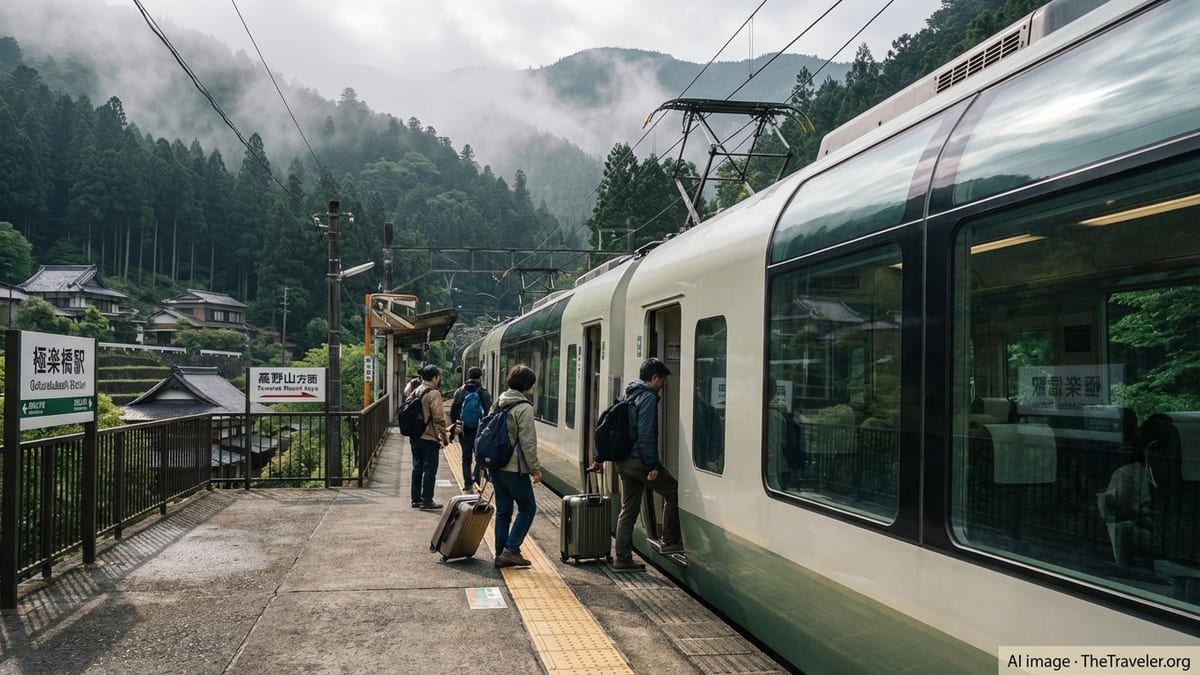
New Era of Luxury Rail to a Sacred Mountain
Nankai Electric Railway has confirmed that its new GRAN Tenku sightseeing train will begin operations on April 24, 2026, running between Osaka’s busy Namba terminal and Gokurakubashi Station, the rail gateway to Mount Koya. Branded as a “journey to sacred Koyasan,” the four-car train is positioned as a premium alternative to the existing Limited Express Koya and local services that climb into the Kii Mountains.
The project marks the next stage in Nankai’s long-running strategy to turn the journey toward the UNESCO-listed monastic town of Koyasan into an experience in its own right. Since 2009, the company has operated the Tenku sightseeing train on the upper section of the Koya Line, a two-car set with large windows and observation-style seating. GRAN Tenku will replace that service while extending the premium experience all the way into central Osaka, making it easier for overseas and domestic travelers to step directly from the city into a slower, more contemplative mode of travel.
With the launch date falling just as Japan’s spring travel season peaks, the train is expected to capture demand from cherry blossom visitors in Kansai who are increasingly looking to pair urban stays with deeper cultural excursions. Industry observers note that the timing, branding and service concept place GRAN Tenku firmly in the growing category of Japanese luxury and excursion trains that blur the line between transport and destination.
Designing Scenic Comfort Between Namba and the Clouds
Nankai has released imagery and concept statements that emphasize GRAN Tenku’s role as a moving observatory between the dense urban skyline of Osaka and the forested ridges of the Koya range. The train’s name blends the English “gran,” signaling grand stature, with the Japanese word “tenku,” meaning sky or heavens, underscoring its route from the lowland metropolis into what pilgrims have long called a realm above the clouds.
The four-car formation allows each car to be differentiated by seating style and atmosphere. Wide picture windows and one-direction or “one-view” seating draw the eye outward toward terraced villages, river valleys and steep mountain slopes. Materials and color palettes take cues from the region’s natural environment and craft traditions, with warm woods, textured fabrics and soft lighting meant to convey a lounge-like calm rather than a conventional commuter interior.
While detailed seat maps and full pricing have yet to be disclosed, Nankai has repeatedly framed GRAN Tenku as a premium product targeting travelers willing to pay for extra comfort and ambience. The company has indicated that all seats will be reserved, with layouts designed to support both couples and small groups, and to provide enough personal space for passengers to relax, dine or simply gaze at the passing scenery for the roughly 90-minute trip from Namba to Gokurakubashi.
Cultural Immersion Before Reaching Koyasan
Beyond physical comfort, GRAN Tenku is being promoted as a bridge into the history, beliefs and artistry associated with Mount Koya, the headquarters of Shingon Buddhism founded by monk Kukai in the early ninth century. Nankai’s official materials describe the train as a place where “city skylines and mountain whispers” meet, promising that the cultural narrative will begin as soon as passengers board in Osaka.
In-principle plans include multilingual announcements and narrative-style commentary that introduce travelers to key concepts in Koyasan’s religious heritage, as well as to the towns and landscapes along the Koya Line. Interior motifs are expected to reference elements such as temple architecture, mountain flora and regional craftsmanship, subtly embedding cultural cues into the design rather than relying on overt displays.
The company has also flagged opportunities for onboard retail and informational corners showcasing local products, from Wakayama’s famed agricultural goods to traditional sweets served in temple lodgings, known as shukubo. Travel planners say this approach echoes a broader trend in Japanese rail tourism, where trains increasingly serve as moving showcases for local culture, helping to spread visitor spending across a wider geography rather than concentrating it solely at the final destination.
Elevated Dining with Local Ingredients
A key pillar of GRAN Tenku’s concept is gastronomy. Nankai has announced that meals served onboard will be supervised by chef Atsushi Motokawa, known for his work at the restaurant Genji, signaling an intention to compete with established luxury trains on culinary quality. Menus will feature ingredients from along the Koya Line and broader Wakayama region, elevating everyday produce into bento-style courses tailored to the train environment.
The operator plans to offer advance-reservation meal plans that can be paired with specific seat types or travel packages, allowing passengers to secure a full course or themed bento before departure. While final pricing has not yet been published, industry analysts expect a tiered structure, with basic seat-only tickets supplemented by add-ons for curated meals and possibly special seasonal menus tied to events such as autumn foliage or temple festivals on Koyasan.
Attendants on board will provide table service in designated cars, a departure from the self-service kiosks or trolley carts found on many conventional limited express trains. Nankai has highlighted the role of hospitality staff as part of the experience, positioning them not only as servers but as hosts who can answer questions about the route, local specialties and onward access to temples and lodgings once passengers disembark.
Boosting Regional Tourism Beyond Osaka and Kyoto
The launch of GRAN Tenku comes as local governments and railway operators in Kansai seek to spread visitor flows beyond perennial favorites such as central Osaka and Kyoto. Wakayama Prefecture, where Mount Koya is located, has been actively promoting spiritual and nature-based tourism, from the Kumano Kodo pilgrimage routes to coastal hot springs. A high-profile luxury train dedicated to Koyasan dovetails neatly with these efforts by positioning the mountain as a must-see stop on broader Kansai itineraries.
By starting the journey at Namba, one of Osaka’s most connected transport hubs, Nankai is effectively shortening the psychological distance between international arrival points and the region’s rural heartlands. The line connects easily with trains and airport services from Kansai International Airport, making it feasible for visitors on tight schedules to experience a temple stay on Koyasan without complex transfers.
Tourism officials and travel agencies see GRAN Tenku as an opportunity to package two- or three-day excursions that combine nights in Osaka or Kyoto with spiritual retreats in the mountains. The train itself becomes both a marketing hook and a logistical backbone, giving operators a fixed, premium-quality product around which to build themed tours that highlight everything from Buddhist heritage to local cuisine and hot springs.
Continuing Japan’s Luxury Train Boom
GRAN Tenku is the latest entrant in a wave of high-end excursion trains that has reshaped Japan’s rail tourism landscape over the past decade. Flagship products such as JR West’s Twilight Express Mizukaze and JR Kyushu’s Seven Stars in Kyushu established a model in which onboard design, hospitality and storytelling are as central as the destinations themselves. More recently, new and revamped sightseeing trains have proliferated across regions, from Hanaakari in western Japan to coastal services in Tohoku and Shikoku.
Compared with multi-day cruise trains that include overnight accommodation, GRAN Tenku represents a more accessible entry point into this genre. Its journeys are short enough to fit into standard sightseeing schedules, and it connects directly to a single, clearly defined destination in Mount Koya. Travel specialists suggest this “day-trip luxury” model will appeal to younger travelers and international visitors who may admire but not book ultra-premium cruise trains with limited departures and high price tags.
The focus on panoramic windows, curated interiors and regionally focused cuisine places the train squarely in the emerging niche of “experience-first” mobility, where transportation providers look to add value beyond simple speed and convenience. As Japan prepares for further tourism growth in the latter half of the decade, operators are betting that such immersive rail products will help differentiate regional offerings in an increasingly competitive global travel market.
From Tenku to GRAN Tenku: A Strategic Upgrade
Nankai’s decision to retire its long-serving Tenku train in favor of GRAN Tenku underscores how expectations for rail-based sightseeing have evolved since the late 2000s. The original Tenku, introduced in 2009, adapted existing rolling stock with large windows, observation decks and special seating, focusing primarily on the most scenic upper stretch of the Koya Line between Hashimoto and Gokurakubashi.
While popular among rail enthusiasts and repeat visitors, that service required passengers to transfer from regular trains at Hashimoto, adding friction for first-time travelers and those managing luggage. By contrast, GRAN Tenku’s end-to-end run from Namba eliminates that break in the journey, turning the climb into the mountains into a seamless narrative that begins in the heart of Osaka.
The new train’s four-car configuration and elevated service level also give Nankai more flexibility to segment its product line. The company can maintain conventional limited express services at more affordable price points while offering GRAN Tenku as an aspirational upgrade. This mirrors patterns seen on other private and regional railways, where special sightseeing sets coexist with standard commuter fleets, allowing operators to test new concepts without compromising core transport functions.
What Travelers Can Expect from April 2026
From April 24, 2026, travelers departing Namba for Koyasan on designated GRAN Tenku services can expect a markedly different experience from a typical rush-hour train. The boarding process will emphasize reserved seating and advance bookings, and passengers who have pre-ordered meal plans will find their courses served at their seats as the train clears the Osaka suburbs and begins its ascent.
As the line traces rivers and ravines toward Gokurakubashi, broad windows will frame glimpses of rural stations, small factories, tea fields and mountain villages that many visitors would otherwise pass without noticing. Soft lighting, quiet cars and staff trained in both hospitality and basic tourism guidance aim to create a calm, reflective atmosphere that sets the tone for temple stays and forest walks awaiting at the summit of Koyasan, a short cable car ride beyond the rail terminus.
With its blend of scenic comfort, cultural immersion and regional development goals, GRAN Tenku is poised to become one of the defining new travel experiences in Japan’s Kansai region from spring 2026 onward, offering a fresh way to reach one of the country’s most atmospheric highland sanctuaries.