

More news on this day
Japan’s Shinkansen bullet trains are entering a new phase, combining high-speed passenger services with emerging freight operations and regional tourism drives that are redefining how visitors explore the country.
Get the latest news straight to your inbox!
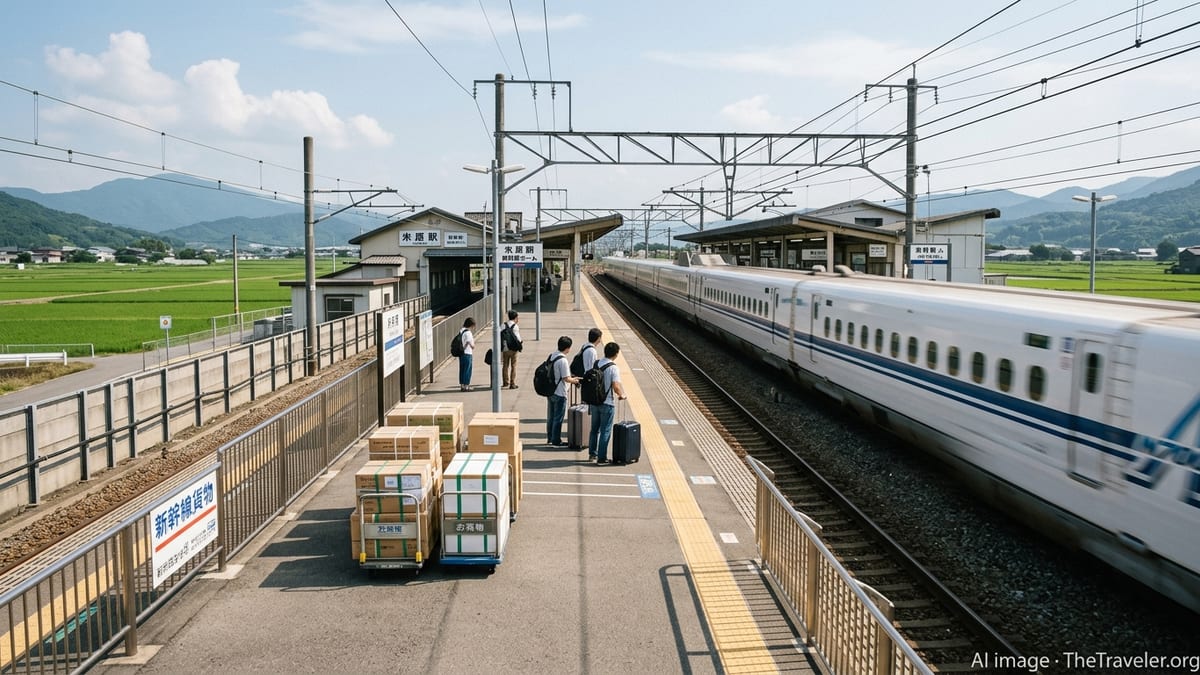
High-Speed Freight Joins the Bullet Train Story
Japan’s iconic Shinkansen network is evolving beyond passenger travel as operators move to formalize high-speed freight services. Publicly available information on East Japan Railway’s Hakobyun offering shows that dedicated cargo spaces on select Shinkansen trains already move priority parcels, fresh produce, and other time-sensitive goods at bullet train speeds between major cities and regional hubs. Industry reports indicate that JR East is now preparing to scale this model, with capacity plans for multiple tonnes of freight per train on some routes.
This shift is being framed as a way to use overnight or off-peak capacity more efficiently while keeping passenger comfort unchanged. The approach allows cargo handlers to capture the reliability, punctuality, and speed associated with Shinkansen services without building a separate freight-only network from scratch. Analysts suggest that, as high-speed freight becomes more visible, it could influence logistics choices for tourism-related sectors such as hospitality, event management, and regional food producers looking to serve urban visitors quickly.
Recent collaboration between rail and air carriers points to a broader multimodal strategy. A new one-stop service announced by JALCARGO and JR East integrates Shinkansen segments with international air freight, reducing transit times for premium cargo. Such initiatives underscore how Japan’s high-speed rail is being woven into a wider transport ecosystem that supports both residents and the growing volume of international tourists.
While these freight developments remain relatively modest compared with passenger volumes, they signal a long-term pivot. By monetizing existing capacity and enhancing resilience in domestic logistics, operators aim to support tourism economies that increasingly rely on fast, predictable delivery of everything from local specialties to luggage forwarding services.
Record Tourism Meets a Supercharged Rail Network
Japan’s tourism boom provides the backdrop to the Shinkansen’s new role. Data compiled from government and industry analyses shows that the country welcomed around 36.9 million international visitors in 2024 and surpassed 40 million in 2025, setting all-time records. A weaker yen, expanded air connectivity, and pent-up post-pandemic demand have combined to push inbound travel to historic highs.
Within this surge, Shinkansen routes have emerged as the spine of long-distance movement. Presentations and financial results from major rail operators point to strong leisure demand on high-speed lines, with tourist-heavy regions such as Hokuriku and Tohoku outperforming some business-focused corridors. During peak periods such as Golden Week and school holidays, load factors on popular Shinkansen services have approached or exceeded pre-pandemic levels, reinforcing the trains’ status as the default mode for domestic and international travelers covering medium and long distances.
Tourism planners highlight that this reliance on high-speed rail is central to current national strategies. Policy documents and travel industry briefings emphasize shifting visitors beyond the classic Tokyo–Kyoto–Osaka triangle toward secondary cities and rural areas, where Shinkansen access can quickly transform a destination’s fortunes. As inbound numbers climb, the network’s extensive reach across Honshu, Kyushu, and Hokkaido is being leveraged to disperse crowds and distribute tourism spending more evenly.
At the same time, the intensification of Shinkansen use brings new challenges, from crowding at major hubs to pressure on station facilities. In response, operators have been rolling out digital ticketing, expanded reserved seating periods, and advance reservation tools aimed at smoothing demand. These operational shifts, although less visible than new tracks or trains, are becoming crucial to keeping the system attractive for both daily commuters and visiting adventure seekers.
New Extensions and Regional Adventure Gateways
Recent and upcoming Shinkansen extensions are reshaping Japan’s adventure map. The Hokuriku Shinkansen’s 2024 extension to Tsuruga, on the Sea of Japan coast, has provided faster links to Fukui and neighboring prefectures known for rugged coastlines, hot springs, and outdoor activities. Local data reported by regional media and tourism agencies indicates a noticeable rise in overnight stays in Fukui following the extension, outpacing national growth rates.
These improvements effectively turn regional stations into gateways for hiking, cycling, winter sports, and coastal exploration. Travel coverage highlights how visitors can now reach areas such as the Hokuriku region in a few hours from Tokyo, then transfer to local trains, buses, or rental cars for last-mile access to fishing villages, ski resorts, and national parks. For international travelers planning multi-stop itineraries, this connectivity makes it easier to combine classic urban sightseeing with lesser-known outdoor destinations.
Operators and local governments are also promoting themed excursion trains and coordinated campaigns timed with new infrastructure. Materials released by JR East, for example, describe regional campaigns along the Tohoku and Hokkaido Shinkansen corridors, tying together attractions from coastal onsen towns to mountain trekking routes. These initiatives seek to position high-speed rail not just as a means of getting from city to city, but as the backbone of curated regional journeys.
As reconstruction continues in areas hit by recent natural disasters, Shinkansen services are being highlighted as a catalyst for recovery. Government tourism programs encouraging travel to the Hokuriku region after the 2024 Noto Peninsula earthquake, supported by discounted stays and promotional efforts, explicitly reference the role of the extended Hokuriku line in bringing visitors back to affected communities.
From City Hopping to Immersive Rail Adventures
The way travelers use the Shinkansen is also changing. Travel industry blogs and booking platforms report growing interest in itineraries that string together multiple high-speed segments as part of longer, rail-focused trips. Rather than simply riding once between Tokyo and Kyoto, visitors increasingly use Shinkansen connections to build multi-region journeys that might include Tohoku’s coastal landscapes, Kanazawa’s traditional districts, or Kyushu’s volcanoes and hot springs.
Changes to national rail pass pricing have prompted closer scrutiny of route planning, but they have not dampened enthusiasm for long-distance rail. Commentators note that, for many visitors, the appeal of seamless station-to-station travel, scenic views, and the cultural cachet of riding a bullet train still outweighs the higher cost, particularly when itineraries cover several regions. Supplementary regional passes and limited-time discounts continue to encourage exploration off the main tourist circuit.
Rail operators are meanwhile experimenting with new onboard experiences aimed at leisure travelers. Recent corporate reports and promotional materials describe upgraded car interiors, family-friendly seating areas, and improved connectivity services that support remote work or trip planning while on the move. Dedicated tourism-oriented trains, some with panoramic windows or specially designed interiors, further blur the line between transportation and attraction.
These shifts align with broader lifestyle trends identified in operator surveys, which suggest passengers want to treat travel time as personal or experiential time. In this context, the Shinkansen is increasingly marketed as part of the adventure itself, not simply a high-speed bridge between destinations.
Logistics, Sustainability and the Future of High-Speed Travel
The emerging freight role of the Shinkansen has implications for sustainability and regional economies. By moving high-value or perishable goods from trucks onto electrified high-speed rail, operators and policymakers aim to cut highway congestion and emissions while maintaining rapid delivery times. Environmental and corporate responsibility reports from JR East reference the potential of services like Hakobyun to support more sustainable logistics across multiple Shinkansen corridors.
For tourism, more efficient freight capacity can translate into better availability of local products in big-city hotels, airport shops, and tourism districts, while giving rural producers reliable access to urban markets. Travel coverage increasingly highlights regional food and craft experiences that depend on these supply chains, from seasonal seafood in Tokyo that was landed along the Sanriku coast hours earlier to specialty sweets shipped from traditional towns on Shinkansen lines.
Looking ahead, planned upgrades and related rail projects around major gateways such as Tokyo and Haneda Airport are expected to tighten the integration between international flights and high-speed trains. Future access lines and station enhancements, as described in planning documents, aim to shorten transfer times and make it easier for arriving visitors to board Shinkansen services minutes after clearing immigration.
Together, these developments suggest that Japan’s bullet trains are entering a new phase. As freight and passenger roles converge and regional tourism pushes outward from the big cities, the Shinkansen is poised to remain the defining experience of modern travel in Japan, carrying not just people but the goods and stories that fuel the country’s next wave of adventure tourism.