

More news on this day
From historic castles to new theme parks, a growing number of attractions in Japan are adopting dual pricing systems that charge overseas visitors more than residents, reflecting record tourist arrivals, a weak yen and mounting pressure to shield local communities from overtourism.
Get the latest news straight to your inbox!
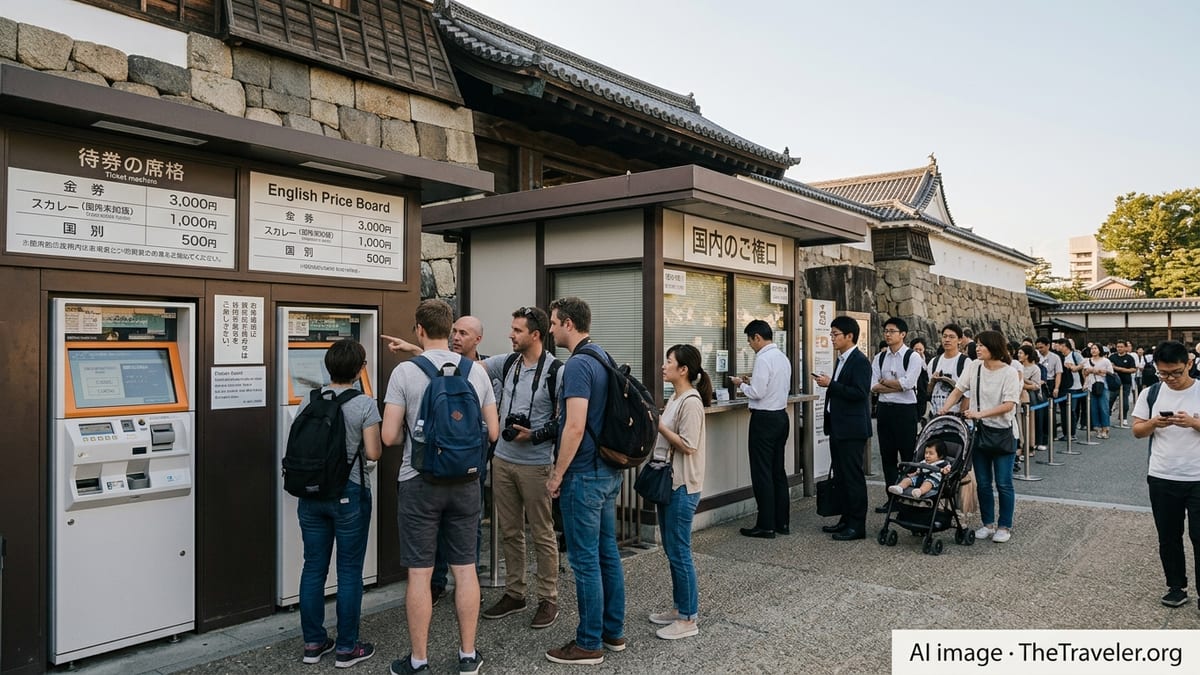
National Museums Set to Formalize Two-Tier Admission
Japan’s Culture Affairs Agency has signaled a significant shift by announcing plans to roll out dual pricing at national museums over the coming years. Under the proposal, residents of Japan would continue to pay current or moderately adjusted admission fees, while overseas visitors would be charged higher rates intended to better reflect international travel budgets and rising operational costs.
According to recent domestic coverage, the system is to be introduced in stages through March 2031, giving major institutions time to upgrade ticketing infrastructure and clarify eligibility rules. The move aligns museum policy with broader debates on how to capture more revenue from inbound tourism without excluding local audiences from cultural facilities they subsidize through taxes.
The announcement has drawn attention because national museums often set benchmarks for regional galleries and heritage sites. Observers expect that once a framework is in place at flagship institutions in Tokyo, Kyoto and other major cities, smaller facilities will feel more confident adopting similar structures tailored to their visitor mix.
Advocates argue that additional income from foreign visitors could fund conservation work, special exhibitions and multilingual services. Critics, however, warn that if price gaps are perceived as opaque or discriminatory, Japan’s reputation as a welcoming destination could suffer just as the country surpasses its pre-pandemic tourism records.
Castles and Temples Turn to Tiered Ticketing
Historic landmarks are emerging as early adopters of dual pricing. Himeji Castle, one of Japan’s most visited feudal-era sites and a UNESCO World Heritage property, introduced higher ticket prices for international visitors in March 2026 after local authorities had trailed the change for more than a year. Published information indicates that the adult rate for non-residents now significantly exceeds the standard charge for residents, while young visitors from Japan can often enter at heavily discounted rates or for free.
Supporters of the policy frame it as a way to channel tourism revenue directly into the upkeep of aging stone walls, wooden keeps and surrounding gardens. With maintenance and seismic reinforcement costs rising, local governments argue that relying on flat fees risks underfunding preservation at sites experiencing unprecedented visitor numbers.
Smaller religious sites have also experimented with foreigner-only fees. Reports from Fukuoka Prefecture describe a temple that began charging overseas visitors a modest entrance fee to cover cleaning, security and crowd control after social media popularity led to a spike in group tours. The temple reportedly kept access free for local residents and domestic pilgrims, while stressing that the new charge was limited to non-resident tourists.
These moves illustrate how dual pricing is being shaped by local circumstances. At some sites, the primary concern is physical wear and tear; at others, community complaints over noise, litter and congestion are pushing administrators to seek financial tools that can both manage demand and fund mitigation measures.
Theme Parks Showcase How Tourist Premiums Work in Practice
The clearest example of formalized dual pricing so far has come from Junglia Okinawa, a large-scale nature and adventure theme park that opened in July 2025 in the subtropical north of Okinawa Island. Publicly available ticket tables show that a standard one-day adult pass costs 6,930 yen for residents of Japan, compared with 8,800 yen for overseas visitors, a difference of about 27 percent.
The operator distinguishes between domestic and overseas guests using ID checks and residence status, rather than nationality, and foreign residents of Japan can access local rates if they provide documentation. Commentators note that this approach mirrors variable pricing models used elsewhere in Asia, where theme parks and resorts segment customers by residency in order to keep prices acceptable for local families while capturing higher spending from international travelers.
Japan’s broader leisure sector has already been raising prices as operating costs climb. A 2025 survey of major amusement and leisure facilities found that nearly 40 percent increased entrance fees compared with the previous year, highlighting how dual pricing is emerging on top of a general upward trend. In that context, charging tourists a premium is seen by some park operators as a more politically acceptable alternative to across-the-board hikes that would hit domestic visitors just as hard.
Industry analysts suggest that other large attractions, including popular illumination events and seasonal parks, are watching the Okinawa case closely. If Junglia sustains strong inbound demand without facing significant backlash, similar pricing structures could spread to other resort destinations where local wages remain relatively low compared with tourist spending power.
Public Opinion and Overtourism Shape Policy Debate
Data from recent opinion research indicates that many Japanese residents support differentiated pricing for inbound travelers, particularly at cultural facilities and nature conservation areas. One national survey conducted by a major loyalty program operator found that close to 70 percent of respondents agreed with setting higher prices for overseas visitors, especially where fragile environments or historic assets are at stake.
Respondents in that survey emphasized transparency as a key condition. Clear explanations of how additional revenue would be used, and open disclosure of the criteria for eligibility, ranked among the top concerns. Comment sections and social media discussions around dual pricing proposals frequently echo these points, with many local residents calling for detailed communication on maintenance costs, trail restoration budgets and community programs funded by tourist surcharges.
The debate is unfolding against the backdrop of record-breaking inbound tourism and a prolonged period of yen weakness, which has made Japan feel unusually affordable to visitors paying in dollars or euros. As crowds swell in Kyoto, Tokyo and regional hotspots such as Hokkaido and Okinawa, reports describe residents struggling with packed buses, rising rents and restaurant queues that make everyday errands more difficult.
Policy papers and industry briefings on overtourism increasingly list dual pricing alongside measures such as visitor caps, reservation systems and targeted tourist taxes. Proponents argue that price differentiation can discourage the most price-sensitive trips while channeling higher-spending visitors toward facilities that can handle the load. Skeptics, however, worry about the administrative burden of verifying residency and the risk that poorly implemented systems could spark accusations of unfair treatment.
What Travelers Can Expect as Dual Pricing Expands
For international visitors planning trips in 2026 and beyond, the rise of dual pricing means that admission costs advertised in Japanese may not always match those shown on English-language pages or booking platforms. In many cases, overseas tourists will see higher listed prices by default, while residents of Japan may access lower rates by purchasing through domestic channels or presenting ID on site.
Travel commentators advise that museums, castles and theme parks are likely to continue experimenting with this model, especially in destinations that receive high volumes of foreign guests relative to local populations. Travelers may encounter explicit “resident” and “non-resident” categories, time-limited promotions for local pass holders, or bundled tickets that combine transport and attraction entry at preferential rates for those living in Japan.
Some regional governments are pairing higher tourist-facing prices with discounts or free access for local school groups and elderly residents, in an effort to demonstrate that tourist spending directly benefits the community. This trend is visible in heritage sites that waive fees for young residents while charging international adults more, framing the system as a way to keep culture accessible at home even as attractions globalize their audiences.
Japan’s national discussion on dual pricing remains fluid, and not all attractions are expected to adopt the model. Yet recent policy announcements, new theme park practices and changing public attitudes suggest that two-tier pricing will become an increasingly common feature of the country’s tourism landscape, reshaping how both visitors and locals experience some of its most famous sites.