

More news on this day
Stronger air links between Kuwait and Egypt, led by a ramp-up in Jazeera Airways services, are helping to fuel a fresh wave of hotel and resort demand in key tourism hotspots from Cairo to the Red Sea coast, according to recent airline schedules and sector data.
Get the latest news straight to your inbox!
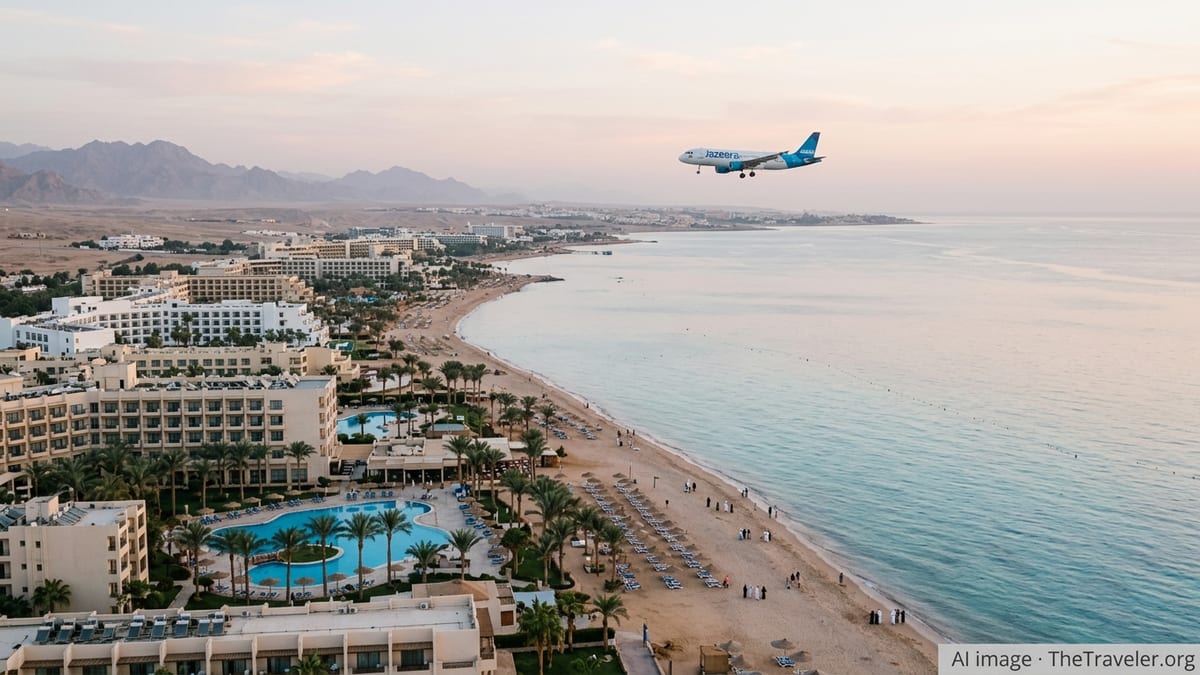
Kuwait–Egypt Capacity Rises as Leisure Demand Strengthens
Jazeera Airways has steadily expanded its footprint in Egypt over the past two years, building out a network that now links Kuwait City to a growing roster of Egyptian cities. Industry route data shows the carrier operating regular services to leisure hubs such as Sharm El Sheikh and Hurghada, as well as to the newer Giza Sphinx airport that serves Greater Cairo, in addition to more established gateways. This pattern reflects a deliberate pivot toward high-demand holiday and city-break destinations for travelers from Kuwait and the wider Gulf region.
Published schedules and promotional material indicate that Sharm El Sheikh and Hurghada feature prominently in Jazeera’s seasonal programming, particularly around summer and key holiday periods. These Red Sea points cater directly to Kuwaiti and Gulf travelers seeking short-haul beach escapes, with flight timings tailored for long-weekend trips and school breaks. As frequencies increase and routes mature, travel platforms are registering more Kuwait-origin bookings into Egypt’s coastal resorts, reinforcing the air corridor between the two countries.
Analysts tracking the Gulf outbound market note that Kuwait consistently ranks Egypt among its most popular regional destinations. Trade research released in 2025 on GCC and Egypt travel patterns highlights Egypt’s appeal for value-focused family travel, all‑inclusive resort stays, and culturally oriented city tourism. With Jazeera Airways offering competitively priced, point‑to‑point services, observers say the airline is capturing a growing share of this traffic and channeling it into Egypt’s hotel sector.
Red Sea Resorts See Occupancy Lift From Gulf Arrivals
The Red Sea coast, anchored by Sharm El Sheikh and Hurghada, remains at the center of Egypt’s tourism growth strategy and is emerging as a key beneficiary of increased Kuwait–Egypt air connectivity. Hospitality market reports for 2024 and 2025 describe consistently high occupancy levels in the Red Sea region, with many resorts reporting near‑peak utilisation during major holiday periods. The influx of visitors from Gulf markets, including Kuwait, is helping to balance seasonal fluctuations and support year‑round operations.
Publicly available tourism data shows that Egypt welcomed around 15.7 million visitors in 2024, with government targets aiming to nearly double annual arrivals by 2030. To meet that goal, authorities have prioritised Gulf markets through relaxed visa rules, marketing campaigns, and the encouragement of new and expanded flight links. Routes operated by carriers such as Jazeera Airways from Kuwait into Sharm El Sheikh and Hurghada slot into this strategy by delivering reliable, short‑haul access to large integrated resort zones.
Hotel groups active in Egypt report rising interest from families and group travellers from Kuwait, who typically favour full‑service and upscale beachfront properties. Travel industry feedback indicates that many of these guests opt for package deals combining air transport on regional low‑cost or hybrid carriers with stays at established Red Sea resorts. As capacity between Kuwait and Red Sea airports expands, local tourism businesses are adjusting by extending operating seasons, adding Arabic‑speaking staff, and tailoring dining and entertainment options to Gulf preferences.
Cairo and Giza Sphinx Airport Benefit From Network Diversification
Beyond the Red Sea, Jazeera Airways’ route into Giza Sphinx International Airport has been a notable development for urban tourism and short city breaks. The airport, situated on the western side of the capital region near key archaeological sites, offers an alternative gateway to Cairo’s congested main hub. Airline schedule trackers show Kuwait–Giza services operating with narrow‑body aircraft, targeting both leisure visitors and diaspora traffic seeking convenient access to Greater Cairo.
Tourism and investment reports underscore Cairo’s role as a year‑round anchor market for Egypt’s hospitality industry, with strong demand for midscale and upscale rooms driven by business travel, conferences, and cultural tourism. The addition of more direct links from the Gulf region, including Kuwait, is helping to disperse arrivals across multiple airports and districts. In turn, this supports occupancy not only in central Cairo but also in emerging hotel clusters around the Giza plateau and along the Cairo–Alexandria and Cairo–Fayoum corridors.
Developers and operators are reacting to this shift by accelerating projects close to new and upgraded transport nodes. Industry analysis of Egypt’s hotel pipeline for 2025 identifies Cairo and Giza among the leading markets for upcoming branded properties, with a mix of business hotels and lifestyle‑oriented offerings. Consistent airlift from carriers such as Jazeera Airways is cited in sector commentary as a key factor in de‑risking these investments and sustaining average daily rates in an inflationary environment.
Hotel Pipeline Expansion Tracks Growing Gulf Demand
Egypt currently leads Africa in terms of hotel pipeline volume, with sector research indicating more than 140 hotels and roughly 34,000 rooms under development for 2025, up sharply from the previous year. Many of these projects are concentrated in coastal zones along the Red Sea and Mediterranean, including the North Coast and areas south of Hurghada. Authorities have also unveiled dozens of new investment opportunities expected to add tens of thousands of rooms across key tourism regions.
These hospitality investments are closely tied to the rapid growth of air capacity from Gulf markets, where short‑haul leisure travel continues to expand. Kuwait features prominently in regional travel trend reports, with outbound departures to nearby destinations such as Egypt projected to rise steadily over the rest of the decade. As more middle‑income travellers look for affordable resort stays within a three‑hour flight radius, Egypt’s combination of large‑scale integrated resorts and historic attractions positions it as a natural beneficiary.
Developers are increasingly designing properties with Gulf visitors in mind, focusing on family‑sized rooms, extensive pool and beach facilities, and year‑round entertainment. The ability of airlines like Jazeera Airways to provide frequent point‑to‑point services from Kuwait City supports these concepts by ensuring predictable demand outside traditional peak months. Hospitality consultants note that this dynamic helps justify larger resort footprints and encourages international brands to commit to secondary and emerging destinations along Egypt’s coasts.
Strategic Synergy Between Aviation Growth and Tourism Targets
The alignment between Egypt’s tourism targets and Jazeera Airways’ regional growth strategy is becoming more visible as new flight options come online. Government plans call for increasing hotel room capacity from just over 220,000 rooms today to around 500,000 by 2030, a goal that will require a sustained pipeline of visitors from nearby source markets. Robust air links from the Gulf, including from Kuwait, are viewed in industry analysis as essential to filling this expanded inventory.
At the same time, aviation market studies covering the GCC and Egypt highlight strong growth prospects for both air travel and online hotel bookings through 2030. Kuwait’s high level of digital adoption supports a rapid shift toward online trip planning and dynamic packaging, where flights on low‑cost or hybrid carriers are bundled with resort stays and ground services. Jazeera Airways’ model, built around competitive fares and efficient turnarounds at its Kuwait base, aligns closely with these evolving booking behaviours.
As 2026 progresses, observers expect the Kuwait–Egypt corridor to tighten further, with airlines refining schedules and capacity to match peak leisure demand. For Egypt’s tourism industry, the continued expansion of Jazeera Airways services is emerging as a significant catalyst, helping to spread visitor flows beyond traditional European source markets and deepening the country’s integration with Gulf travel patterns. The outcome is a reinforcing cycle of air connectivity and hotel investment that is reshaping Egypt’s coastal and urban tourism landscape.