

More news on this day
Kuwait-based Jazeera Airways is accelerating a regional expansion that increasingly relies on Saudi Arabia’s eastern hub of Dammam to connect Kuwait with popular destinations in Egypt, India, Georgia and beyond, reflecting how Gulf carriers are reshaping networks to support post-pandemic tourism and business travel across the Middle East and South Asia.
Get the latest news straight to your inbox!
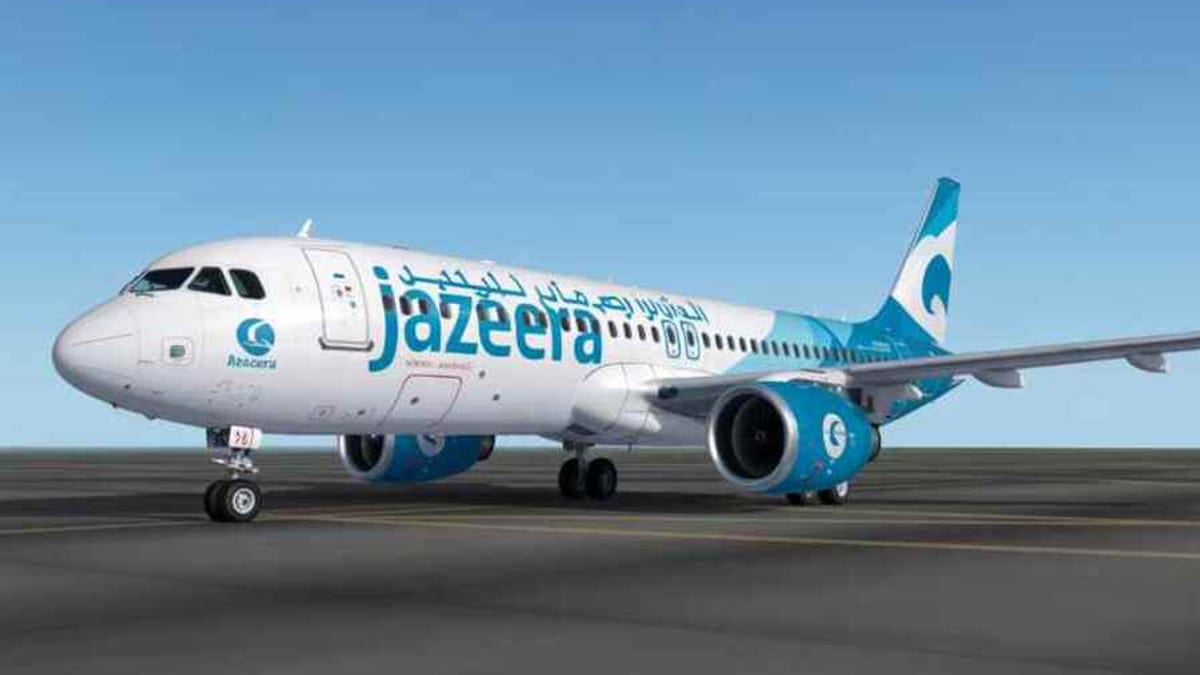
Image by Latest International / Global Travel News, Breaking World Travel News
Dammam Emerges as a Strategic Bridge Between Kuwait and Key Markets
Recent schedule changes and regional aviation coverage indicate that Jazeera Airways is using Saudi Arabia’s eastern region as a growing bridge between Kuwait and high-demand markets such as Egypt, India, Georgia, Jordan, Sri Lanka, Turkey and the United Arab Emirates. Dammam, already a major industrial and energy hub, is increasingly positioned as a convenient midway point for passengers whose journeys begin or end in Kuwait City.
Reports on Gulf travel patterns show that airlines have been routing more Kuwait-origin passengers through Saudi Arabia to maintain reliable connections to major tourism and labor corridors. Jazeera Airways has joined other regional carriers in tapping this east Saudi gateway, aligning its network with shifting airspace dynamics while continuing to serve core destinations in North Africa and the Indian subcontinent.
Industry analysis suggests that using Dammam and nearby Saudi airports allows carriers to keep traffic flowing even when direct routes are disrupted or constrained. For Kuwait travelers heading to large expatriate and tourism markets such as Egypt and India, a short hop into Saudi Arabia followed by onward service is emerging as a practical alternative to traditional nonstop patterns.
With this strategy, Jazeera Airways joins a broader wave of Gulf and South Asian airlines that have expanded frequencies into Dammam and neighboring Saudi airports, making the region a critical hinge between Kuwait, major Indian metros, cultural centers in Egypt and emerging leisure destinations such as Georgia’s Black Sea coast.
Strengthening Kuwait’s Links to Saudi Arabia, Egypt and India
Publicly available information on Jazeera Airways’ network shows a sustained focus on routes that tie Kuwait to Saudi Arabia and onward to Egypt and India, three of the region’s most important travel markets for both tourism and migrant labor. The carrier already serves multiple Egyptian cities directly, and recent route resumptions via Saudi Arabia add flexibility for passengers moving between Kuwait, the Nile Valley and Upper Egypt.
Travel trade coverage notes that Jazeera Airways has expanded services that connect Kuwait with Indian cities such as New Delhi, Mumbai, Bengaluru, Chennai, Hyderabad and Kochi, often using Saudi airports as intermediate points. This creates additional options for the sizeable Indian community living and working in Kuwait, as well as for Indian travelers using Kuwait as a springboard to destinations across the Gulf.
In Saudi Arabia, Jazeera’s presence complements a wider push to boost inbound tourism to regions like Aseer, Abha and Hail, while at the same time providing Kuwait residents with new leisure choices. Seasonal and year-round flights give Kuwaiti travelers access to cooler mountain escapes, cultural festivals and heritage sites in the kingdom, reinforcing the two countries’ growing tourism and business ties.
The combined effect is a denser web of routes that links Kuwait to Saudi Arabia’s domestic tourism push, Egypt’s year-round demand and India’s vast outbound and inbound travel markets. By placing itself at the center of these flows, Jazeera Airways aims to capture both point-to-point traffic and multi-stop itineraries that used to be dominated by larger full-service rivals.
Georgia and New Leisure Destinations Enter the Network
Jazeera Airways’ recent expansion into Georgia underlines how the airline is widening its appeal beyond traditional labor and visiting-friends-and-relatives traffic. Routes to cities such as Batumi and Tbilisi, introduced or expanded in 2024 and 2025 according to aviation reports, target a growing appetite in Kuwait and the wider Gulf for cooler-climate summer escapes, mountain landscapes and cultural city breaks.
Promotional campaigns highlighted in regional travel media show that fares to Georgia, the United Arab Emirates, Saudi Arabia, Qatar, Iran, Jordan and India have been marketed together, positioning Jazeera Airways as a one-stop platform for both short regional breaks and longer multi-country trips. In this mix, Georgia has emerged as a standout for families and young travelers from Kuwait seeking visa-friendly itineraries and moderate summer temperatures.
By linking these leisure destinations with its Kuwait hub and increasing reliance on Saudi gateways, Jazeera Airways gives passengers more routing combinations. A traveler might, for example, fly from Kuwait to a Saudi airport such as Dammam or Qaisumah, continue to Egypt for a cultural trip and then return on a separate itinerary to Batumi or Tbilisi for a nature-focused holiday.
These patterns support a broader post-pandemic shift in regional tourism, in which travelers from Kuwait and neighboring Gulf states are mixing beach stays, city visits and nature escapes within a single season. Jazeera Airways’ network additions, particularly in Georgia and Central Asia, appear calibrated to capture this new multi-destination behavior.
Post-Pandemic Recovery Drives Network Flexibility
The reshaping of Jazeera Airways’ routes via Dammam and other Saudi airports is closely tied to the ongoing recovery from pandemic-era disruptions and more recent regional airspace constraints. Aviation industry commentary notes that carriers across the Gulf have experimented with new routings, temporary hubs and schedule tweaks to keep passengers moving, even when traditional corridors are affected.
For Kuwait-based travelers, this has meant a greater reliance on indirect options that still preserve reasonable journey times to sought-after destinations in Egypt, India, Sri Lanka, Turkey and the UAE. Jazeera Airways’ willingness to operate through Saudi gateways demonstrates how low-cost and hybrid carriers can pivot quickly in response to regulatory and operational shifts, often faster than larger state-backed competitors.
The airline’s ongoing fleet planning, including interest in additional narrow-body aircraft highlighted in recent business coverage, is designed to support opportunistic growth on these short- and medium-haul sectors. More fuel-efficient single-aisle jets allow Jazeera to open or reinforce routes where demand has bounced back strongly after the pandemic, such as religious travel to Saudi Arabia, beach tourism in Egypt and family visits between Kuwait and India.
This flexible model also suits the growing role of secondary and regional airports. By pairing Kuwait’s dedicated Terminal 5 operations with Saudi hubs that are less congested than the region’s largest mega-airports, Jazeera Airways seeks to deliver shorter connection times and lower costs, both key attractions for price-sensitive leisure and labor traffic.
Competitive Landscape and Outlook for Regional Connectivity
Jazeera Airways’ strategy unfolds in an intensely competitive environment shaped by heavyweight players such as Emirates, Qatar Airways, Saudia, Etihad and Oman Air, all of which have strong footprints on Kuwait–India and Kuwait–Egypt corridors. Reports indicate that these carriers continue to dominate long-haul connections, particularly to Europe, North America and East Asia.
Within this landscape, Jazeera Airways is carving out a niche based on point-to-point affordability and regional connectivity, rather than intercontinental reach. Its growing reliance on Dammam and other Saudi hubs fits with a wider trend in which Gulf low-cost carriers stitch together short segments to rival the convenience of traditional one-stop itineraries via larger hubs like Dubai or Doha.
Regional travel publications suggest that demand for cross-border trips within the Gulf, to Egypt and across the Indian subcontinent remains resilient despite episodes of geopolitical tension. So long as labor mobility, religious travel and leisure demand stay strong, airlines that can quickly adjust routing and capacity are likely to capture a larger share of passengers looking for value and flexibility.
For Kuwait, Jazeera Airways’ expanding network via Dammam deepens the country’s integration into these flows, linking local travelers more efficiently with Saudi Arabia, Egypt, India, Georgia and other emerging destinations. As additional aircraft join the fleet and airspace conditions evolve, further refinements to this Kuwait–Saudi bridge are expected to play a significant role in shaping post-pandemic tourism and business travel across the region.