

More news on this day
Travel between Kuwait and Damascus, along with wider Middle East routes, is getting a digital finance upgrade as Jazeera Airways rolls out a Fly Now, Pay Later installment option that promises to make fares more manageable for price-conscious passengers while raising fresh questions about cost, eligibility and consumer risk.
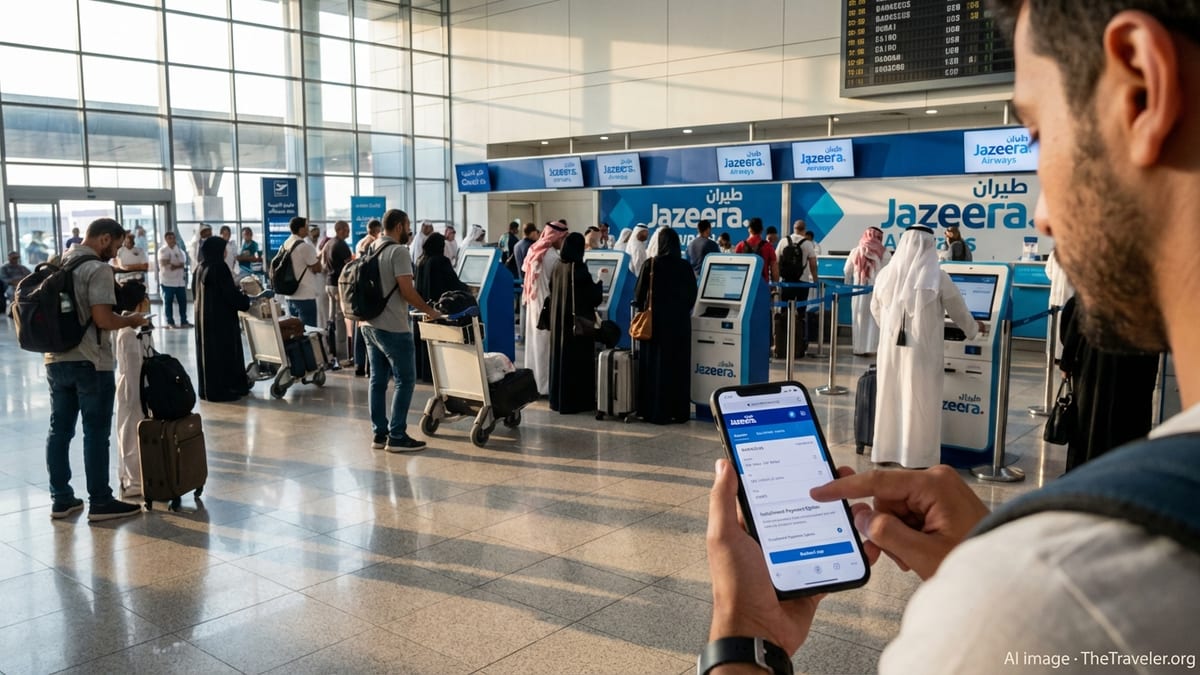
How Jazeera’s New Installment Option Actually Works
Kuwaiti low cost carrier Jazeera Airways has become the first airline in Kuwait to integrate a Fly Now, Pay Later payment option directly into its booking channels, in partnership with domestic fintech provider deema. Instead of paying the full fare at checkout, eligible travelers can now split the cost of their tickets into two to four equal installments, with the process embedded inside the airline’s website and mobile app.
For passengers, the experience is designed to feel similar to other buy now, pay later tools common in retail. After selecting flights from Kuwait to Damascus or elsewhere on Jazeera’s network, customers choosing deema at payment are run through an instant eligibility check. When approved, they receive immediate booking confirmation while agreeing to repay the fare in scheduled, interest free installments denominated in Kuwaiti dinars.
Behind the scenes, the structure is built to protect the airline’s cash flow. Jazeera Airways receives the full ticket amount up front from deema, which then assumes responsibility for collecting repayments from travelers over time. That separation means route operations, including politically sensitive services such as Kuwait to Damascus, are not directly exposed to missed payments, even as passengers benefit from greater financial flexibility.
Importantly for travelers, the Fly Now, Pay Later feature applies across Jazeera’s network rather than being limited to a handful of routes. As long as a journey is ticketed in Kuwaiti dinars and booked through eligible digital channels, the same installment logic applies, whether the passenger is flying point to point between Kuwait and Syria or connecting onward to other cities in the Middle East, Asia, Africa or Europe.
What This Means Specifically for Kuwait to Damascus Flyers
For passengers eyeing trips between Kuwait and Damascus, the new digital installment option lands at a time when regional travel remains sensitive to political conditions, currency pressures and shifting consumer budgets. Jazeera’s model does not change the underlying visa, security or airspace issues that still govern travel to Syria, but it does make the financial hurdle of booking a ticket slightly lower for those who are already cleared and determined to fly.
The ability to spread a fare over multiple zero interest installments may prove particularly attractive to Syrian expatriates, seasonal workers and families balancing remittances with occasional visits home. Instead of delaying travel until they can accumulate the full ticket price, some may now find it easier to lock in seats during peak periods or around key holidays, paying the balance over subsequent pay cycles.
However, would be travelers on the Kuwait–Damascus route should recognize that Fly Now, Pay Later is a payment tool, not a discount. The headline fare remains driven by demand, capacity and regional risk factors, which can still shift with relatively little notice. Using installments to secure a seat during a busy travel window might make sense for some, but it does not insulate passengers from schedule changes, travel advisories or airport disruptions that can affect operations to and from Syria.
In practice, the impact on this specific corridor will depend on how many travelers qualify for deema’s eligibility checks and how consistently Jazeera maintains its schedule into Damascus. For now, the airline is positioning the product as part of a wider digital transformation rather than a Syria specific initiative, but early adopters on the Kuwait–Damascus leg will effectively test how well the model handles a route where flexibility and contingency planning matter.
Who Can Use Fly Now, Pay Later and How Eligibility Is Assessed
Although Jazeera Airways is promoting Fly Now, Pay Later as a democratizing tool, it is not available to every prospective traveler. Eligibility runs through deema, Kuwait’s first licensed buy now, pay later platform, which uses its own risk models, transaction history and regulatory obligations to decide who can split payments and under what terms. Those checks occur in real time at checkout, with decisions delivered in seconds.
From a traveler’s perspective, that means there is no guarantee that the installment option will appear or be approved for every booking. Factors such as residency status, previous repayment behavior with deema, card details and internal spending limits are likely to shape outcomes. First time users may be offered lower maximums or shorter repayment windows, while repeat customers in good standing could see broader flexibility over time.
The service currently operates only in Kuwaiti dinars, which anchors the product squarely in the Kuwait market even if flights connect to Syria and other destinations. Travelers booking from outside Kuwait or trying to pay in other currencies may find the Fly Now, Pay Later button unavailable, pushing them back toward traditional card or wallet payments. This currency limitation is important for Syrian diaspora travelers who might be searching from abroad but paying for tickets issued in Kuwait.
Passengers should also note that approval for Fly Now, Pay Later does not replace normal identity and security checks applied to the flight itself. Airlines and border authorities still require valid passports, visas where applicable and compliance with sanctions and aviation safety rules. The financing decision only governs how the ticket is paid for, not whether the trip is legally permitted.
Benefits for Budget Conscious Travelers Across the Middle East
Jazeera’s move is part of a broader Gulf and Middle East trend where airlines are embedding fintech tools directly into their digital journeys. By collaborating with a regulated local provider, the carrier aims to reach younger, tech savvy passengers and those without access to traditional credit cards, groups that are increasingly accustomed to splitting retail purchases into installments through their phones.
For many travelers, the key benefit is cash flow smoothing rather than pure cost savings. A family planning to fly from Kuwait to Damascus, Beirut or Amman might face significant upfront outlays, especially if several tickets are booked at once. The ability to divide that cost into two to four payments can free up cash for accommodation, ground transport or emergency reserves, reducing the psychological barrier to booking.
This model can also help passengers lock in lower fares earlier. In markets where ticket prices climb closer to departure, Fly Now, Pay Later allows travelers to secure availability when fares are still competitive, without waiting to accumulate the full amount. For routes serving migrant workers, students and low to middle income households, such as some of Jazeera’s links between the Gulf and the Levant, that timing advantage can be significant.
Beyond individuals, small businesses and travel arrangers in the region may find the tool useful for managing group trips, religious travel or last minute corporate bookings. Paying in installments while receiving confirmed tickets immediately can help organizers match incoming payments from clients or employees with outgoing airline costs, though it also introduces new accounting and reconciliation steps when multiple installment schedules run in parallel.
The Fine Print: Fees, Missed Payments and Hidden Risks
While Jazeera Airways markets the installment option as interest free, travelers should read the underlying terms carefully. Most buy now, pay later schemes are structured around zero interest repayments as long as customers pay on time. Where they can become costly is in the penalties, late fees or collection actions that may be triggered by missed or partial payments, which fall under the fintech provider’s policies rather than the airline’s fare rules.
Prospective Kuwait–Damascus passengers should therefore treat Fly Now, Pay Later as a financial commitment. Once a booking is confirmed, the traveler owes the full amount to deema according to the agreed schedule, even if circumstances change. Canceling or modifying the trip later may involve both airline change conditions and the installment contract, which do not always align neatly. For instance, a partially refundable ticket might still leave the traveler liable for some or all outstanding payments if deema has already settled the entire sum with the airline.
Another area to watch is currency and banking exposure. Although transactions are processed in Kuwaiti dinars, passengers relying on foreign cards or accounts may incur separate conversion or bank fees, which add to the real cost of the trip. Because Fly Now, Pay Later emphasizes the absence of interest, some travelers may overlook these ancillary charges, only noticing them when statements arrive after the journey.
There is also the behavioral risk of overcommitting. Easy installments can make higher fares feel more affordable than they really are, tempting some travelers to upgrade cabins, add extras or book additional trips they might otherwise have postponed. For households already managing other debts or obligations, layering multiple buy now, pay later agreements across retail and travel purchases can strain budgets, especially if income is irregular or regional conditions worsen.
How the New System Fits Into Jazeera’s Wider Digital Strategy
The launch of Fly Now, Pay Later is not an isolated experiment for Jazeera Airways. Over recent years, the airline has steadily expanded its digital toolkit, from revenue management upgrades with global technology partners to plans for additional fintech style products that give passengers more control over disruption, cancellations and ancillary services. The installment feature is framed as a cornerstone of this evolving ecosystem.
Within that strategy, the deema partnership allows Jazeera to position itself as a digitally forward carrier while leveraging a locally regulated financial platform rather than trying to build and license its own credit infrastructure. The two companies emphasize the speed of integration, presenting it as evidence that the airline can move quickly when it identifies gaps in the customer journey, particularly around payment friction.
For routes like Kuwait to Damascus, which can be vulnerable to fluctuations in demand and operational constraints, more agile digital tools could help the airline adjust capacity, pricing and promotions while keeping its booking experience consistent with other regional low cost rivals. If Fly Now, Pay Later adoption is strong, it may also offer Jazeera valuable data on booking patterns, repayment behavior and customer segments that are especially sensitive to upfront payment barriers.
At the same time, the move aligns Jazeera with a broader policy push in Kuwait to stimulate the domestic fintech sector. By integrating a homegrown buy now, pay later solution instead of an international provider, the airline signals support for local innovation, something regulators and investors in the Gulf increasingly watch when assessing digital transformation stories.
Practical Booking Tips for Travelers Considering Installments
For travelers evaluating whether to use Fly Now, Pay Later on a Kuwait–Damascus trip or any other Jazeera route, a few practical steps can help keep the experience positive. First, compare the fare you are being offered under the installment option with any alternative flights, dates or carriers you might consider. The payment method does not change the base price, so a slightly cheaper flight paid in full could still be better value than a more expensive itinerary settled over time.
Second, map your repayment schedule against your income and other commitments. Because the installments are relatively short term, often spread over a handful of pay cycles, any disruption to expected earnings could make on time payments challenging. Travelers whose work or remittance flows are uncertain should be especially cautious about stacking multiple installment bookings.
Third, keep documentation from both the airline and deema. That includes booking confirmations, repayment plans, and any emails or app notifications detailing what happens if you need to change dates, face a cancellation or encounter disruption on a politically sensitive route like Kuwait to Damascus. Clear records can save time if a dispute arises over refunds, penalties or responsibility during irregular operations.
Finally, think about travel insurance and contingency planning in parallel with financing. An installment plan eases the upfront burden, but it does not cover hotel changes, medical issues or sudden border restrictions that might affect Syria and surrounding countries. Combining Fly Now, Pay Later with appropriate protection tools, where available, can keep the overall trip more resilient, especially for passengers who cannot easily absorb a total loss of funds.
Looking Ahead: Could Installments Become the New Normal in Regional Air Travel?
Jazeera Airways’ decision to bring Fly Now, Pay Later into its core booking experience reflects a wider shift in how Middle East travelers expect to pay for journeys. As digital wallets, local fintech brands and embedded finance tools become mainstream, the traditional model of paying for flights in a single upfront transaction is being quietly rewritten, especially in markets with young populations and growing low cost carriers.
If the deema partnership proves successful, travelers can expect more experimentation at the intersection of aviation and consumer finance. Future iterations could see longer repayment periods, dynamic limits based on travel history or bundled offers that tie installment plans to loyalty points, seat upgrades or add ons. Regional competitors may respond with their own solutions, accelerating a trend that starts with Kuwait but could extend across key hubs and secondary cities.
For now, passengers on routes such as Kuwait to Damascus sit at the forefront of this change, gaining access to tools that promise more affordable access to the skies while also demanding greater financial literacy at the point of booking. Whether Fly Now, Pay Later becomes a staple of regional air travel or remains a niche add on will depend largely on how responsibly travelers use it and how transparently providers communicate the real costs and obligations involved.
What is clear is that the era of static, one size fits all payment options in Gulf aviation is fading. As Jazeera Airways and its fintech partners push deeper into installment based products, the booking page is becoming as much a financial services interface as a travel itinerary screen, reshaping how Middle Eastern travelers plan, budget and ultimately experience their journeys.