

More news on this day
Kuwait based budget carrier Jazeera Airways has suspended flights between Kuwait and nine Indian cities from April 10 to May 15, 2026, offering full refunds as the airline continues to navigate severe regional airspace closures and operational challenges affecting Kuwait–India travel.
Get the latest news straight to your inbox!
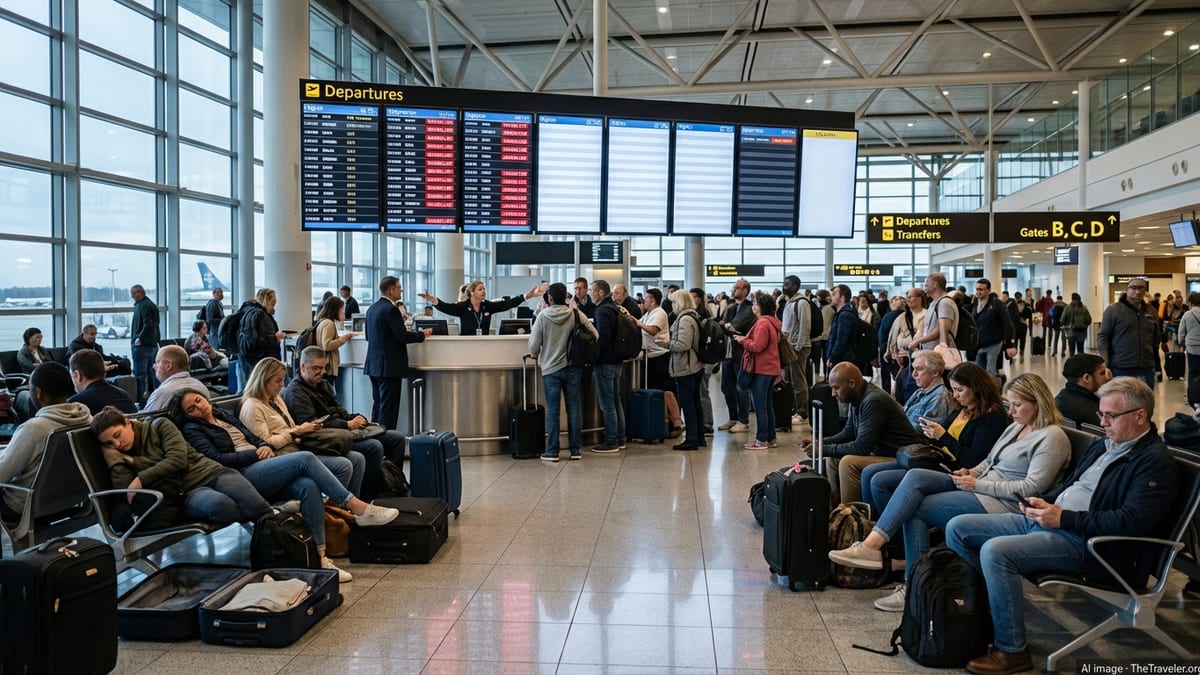
Suspension Hits Nine Secondary Indian Gateways
Publicly available information shows that Jazeera Airways has halted services on nine routes linking Kuwait with Coimbatore, Goa, Kannur, Kozhikode, Lucknow, Madurai, Mangaluru, Tiruchirappalli and Vijayawada. The suspension applies to flights in both directions and is scheduled to remain in place until May 15, 2026.
Reports indicate that affected flights were pulled from schedules starting April 10, with passengers notified through travel agents, airline channels and airport information systems. The move concentrates disruption on secondary Indian gateways that have relied on point to point links to Kuwait for labor, family visit and leisure traffic rather than on the country’s largest metros.
Coverage in Indian and Gulf travel media highlights that while these nine cities lose direct Kuwait connectivity for more than a month, Jazeera is maintaining a measure of India access via alternative routings, especially through Saudi Arabian airports. The suspension comes at a time when many travelers in India’s tier two and tier three cities have increasingly turned to Gulf low cost carriers for affordable connections to the Middle East.
For airports such as Kannur, Kozhikode and Mangaluru along India’s west coast, the pause removes a popular option for Gulf based Indian expatriates heading home, particularly from Kuwait’s sizable Keralite and Mangalurean communities. Local tourism businesses in destinations such as Goa and Madurai are also expected to feel a short term impact from reduced inbound traffic.
Operational Pressures and Regional Airspace Closures
According to published coverage, the airline attributes the suspensions to operational circumstances beyond its control, in the context of wider airspace closures and restrictions across parts of the Middle East. Since late February 2026, airlines serving India and the Gulf region have been forced to reroute or scale back flights as key corridors over Iran, Iraq and neighboring territories have been periodically shut to civilian traffic.
Other carriers in the region, including full service and low cost airlines, have announced schedule reductions, longer flight times and temporary pauses on selected West Asia routes as a result of the constrained airspace. These detours add fuel burn, crew duty time and network complexity, exerting particular pressure on mid sized operators with leaner fleets and tighter margins.
In Kuwait, local reporting shows that Jazeera Airways had already curtailed parts of its network earlier in the current disruption cycle and shifted some capacity to Saudi Arabian airports such as Al Qaisumah and Dammam in order to keep aircraft and crews productively deployed. The latest India route suspensions appear to be an extension of that strategy, prioritizing operational reliability and cost management over maintaining thinner point to point sectors during a volatile period.
Aviation analysts quoted in regional business media note that carriers with smaller route maps often have less flexibility when multiple long haul corridors close simultaneously. In such cases, suspending or consolidating routes with lower yields or limited onward connectivity can be a way to preserve overall network stability while waiting for clearer guidance from airspace regulators.
Full Refunds and Flexible Options for Affected Passengers
Publicly available passenger advisories state that customers booked on the cancelled Kuwait–India flights are entitled to full refunds. Travelers who purchased tickets directly from Jazeera Airways are being directed to process their requests through official airline channels, while those who booked via travel agencies are expected to work with their intermediaries to obtain refunds.
Consumer advocacy platforms tracking the disruption report that passengers are generally being offered the choice of a refund or rebooking on alternative dates or routes where available, although options may be limited on specific city pairs during the suspension window. With seats on rival carriers already tight due to wider regional disruptions, some travelers are opting for refunds and postponing their trips entirely.
Travel rights organizations are advising passengers to retain booking confirmations, cancellation notices and any written communication related to the disruption, as these documents may be useful if refund processing is delayed or disputed. Standard practice in such scenarios is for refunds to be returned to the original form of payment within a defined timeframe, although exact processing times can vary by airline and payment provider.
Industry observers point out that, while full refunds ease the immediate financial burden on travelers, they do not fully compensate for the broader inconvenience of rebooking during a period of constrained capacity. Many Indian expatriate workers in Kuwait, for example, carefully align leave schedules and connecting transport with their flights, making last minute changes particularly challenging.
Connectivity via Saudi Arabia and Hopes for Gradual Recovery
Despite the suspension of nine direct Kuwait–India routes, Jazeera Airways continues to operate services between Saudi Arabia and several Indian cities, with Kuwait based passengers in some cases traveling overland by bus to Saudi departure points. Travel industry coverage describes this as a bridging measure that allows the carrier to keep part of its India network active while direct Kuwait operations remain limited.
Kuwait based news outlets report that the airline has restored around 40 percent of its overall operational capacity following the onset of the regional crisis and is targeting a further ramp up in May, subject to the evolution of airspace restrictions. The focus on Saudi gateways reflects both the availability of slots and the relative resilience of those airports during the current wave of disruptions.
For India bound passengers, the partial restoration of services through alternative hubs offers some relief but often involves longer travel times and additional surface segments. Travel agents in Kuwait and India are adjusting itineraries to route customers through whichever Gulf or Saudi cities are currently accessible, leading to a patchwork of options that can change as new airspace notices are issued.
Observers of the Gulf–India aviation market note that demand fundamentals remain strong, driven by labor migration, family visits, education travel and tourism. Once overflight permissions stabilize and carriers regain clarity on routing, airlines are expected to re evaluate suspended routes such as the nine Kuwait–India sectors in question, particularly where there is a proven track record of load factors and local demand.
Wider Impact on Kuwait–India Travel and Planning Advice
The temporary loss of nine Jazeera Airways routes adds to a broader picture of uncertainty for travelers moving between Kuwait and India in early 2026. With other airlines also adjusting schedules in response to airspace closures, passengers are facing a more complex booking environment, fewer nonstop options and higher fares on some remaining services.
Travel experts writing in regional media recommend that passengers with upcoming Kuwait–India journeys monitor airline announcements closely, avoid speculative trips to airports without confirmed bookings and allow extra time for connections, especially when itineraries involve multiple Gulf or Saudi transit points. Booking through channels that offer flexible change policies and clear refund procedures is being emphasized as a way to reduce risk.
For those yet to purchase tickets, publicly available guidance suggests checking not only base fares but also the robustness of an airline’s current operations and its record of handling refunds and rebookings during the ongoing disruption. Some travelers are deliberately choosing itineraries with larger carriers that maintain wider networks and have more scope to reroute passengers if conditions change.
As regional governments and aviation regulators continue to update airspace bulletins, airlines such as Jazeera Airways are likely to keep fine tuning their India schedules. The outlook for full restoration of Kuwait–India links, including to secondary cities like Coimbatore, Kannur and Vijayawada, will depend on how quickly flight corridors reopen and whether operational constraints ease in the coming months.