

More news on this day
Jet AirWerks is expanding its engine teardown reach through a new collaboration with Stratton Aviation, aligning the Kansas-based repair specialist’s disassembly capabilities with Stratton’s global asset management and trading network as airlines and lessors accelerate retirement decisions for aging fleets.
Get the latest news straight to your inbox!
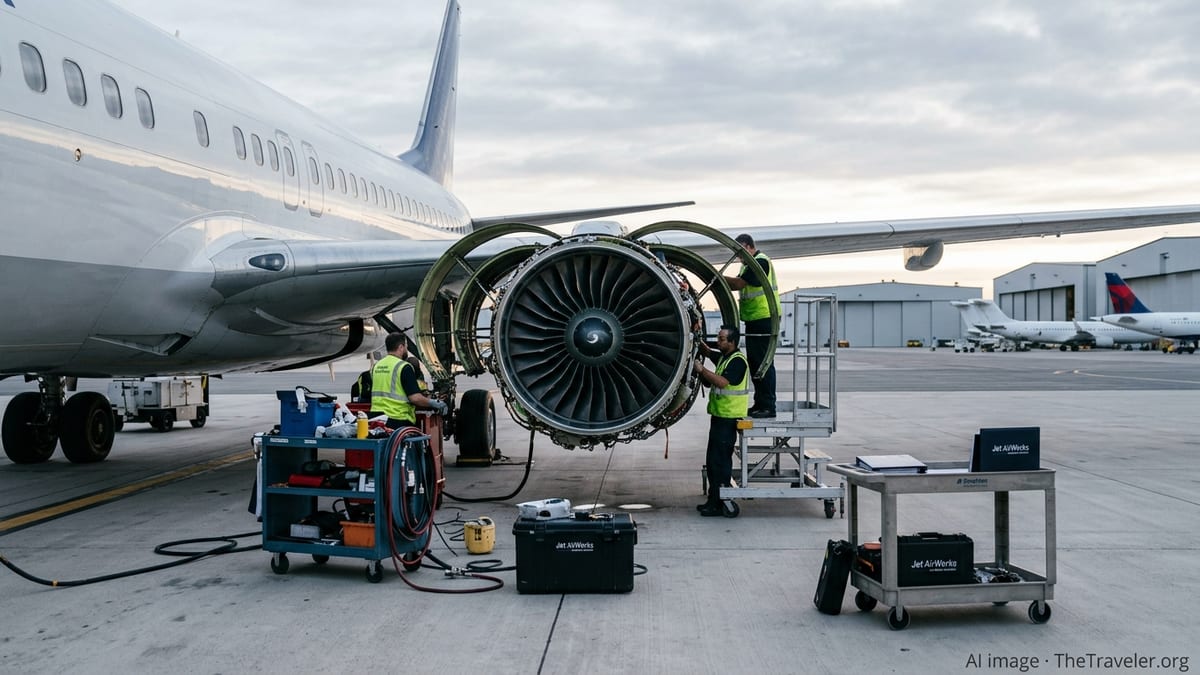
Strategic Collaboration Targets Growing Teardown Market
Publicly available information indicates that Jet AirWerks, a specialist in jet engine component repair and disassembly, is working with Stratton Aviation to broaden engine teardown services at a time when aftermarket demand for narrowbody powerplant parts continues to rise. While detailed commercial terms have not been disclosed, both companies are active across complementary segments of the engine lifecycle, from disassembly and repair through to parts distribution and asset monetization.
Jet AirWerks, based in Arkansas City, Kansas, markets itself as a global partner for CFM56, CF6 and CF34 component overhaul and engine disassembly, operating FAA, EASA and CAAC-certified facilities focused on cost-efficient, fast-turn maintenance support for operators and lessors. Stratton Aviation, headquartered in Vermont with key operations in Maine and Arizona, positions its business around aircraft and engine teardown, consignment, component trading and asset management, supported by a proprietary digital platform for tracking and valuing material.
The collaboration effectively connects Jet AirWerks’ teardown and component repair expertise with Stratton Aviation’s teardown programs and distribution channels. Industry coverage and company materials suggest that this type of alignment is increasingly common as aftermarket players look to secure reliable teardown capacity and maximize returns on high-value engines entering end-of-life programs.
Market observers note that the narrowbody engine teardown segment, particularly for the CFM56 family, remains active as operators refresh fleets with new-generation aircraft while still relying on legacy engines to support route networks. Partnerships that streamline teardown, repair and resale processes are seen as a way to capture more value from each engine while shortening turnaround times.
Expanded Capacity for CFM56 and Other Narrowbody Engines
Jet AirWerks has invested in dedicated engine disassembly infrastructure, including a 30,000-square-foot facility engineered specifically for CFM56-5B and -7B engines and accessory gearboxes. Public documentation on the company’s capabilities highlights multiple gantries, dedicated storage zones and integrated workflows that allow parts to move directly from teardown into inspection and overhaul, with detailed tagging and traceability throughout the process.
Stratton Aviation, for its part, lists engine disassembly capabilities across key narrowbody platforms, including CFM56-3, -5 and -7 variants as well as V2500 and certain Pratt & Whitney engine families. Its AFRA-accredited fixed-base teardown services at Brunswick Executive Airport in Maine are designed to manage complete aircraft and engine teardown projects, backed by FAA-licensed maintenance personnel and established processes for handling and preserving material.
By connecting these complementary footprints, the collaboration has the potential to expand available teardown capacity for popular engine types used on Boeing 737 Classics and Next-Generation aircraft, as well as Airbus A320-family jets. For airlines and lessors, that combination can translate into more options when deciding whether to part out engines, place them into repair programs, or feed components into exchange pools and long-term support agreements.
Industry data and recent project announcements around Stratton Aviation’s teardown activities, including additional narrowbody acquisitions for dismantling, indicate that demand for structured engine disassembly remains robust. Jet AirWerks’ focus on CFM56 component repair and disassembly aligns closely with that demand, offering a specialized pathway for engines that are no longer economically viable to keep on wing but still contain high-value material.
Leveraging Digital Platforms and Regulatory Credentials
Stratton Aviation’s asset management model is anchored by its Stratton Aviation Intelligence Platform, a data-driven system designed to provide detailed market analysis for surplus aircraft and engine inventory. According to company materials, the platform supports decisions on when to teardown, how to route components into repair, and where to place material across global markets to optimize returns.
Integrating such digital oversight with a teardown provider like Jet AirWerks can help ensure that components removed during disassembly are immediately mapped to demand signals and repair strategies. For example, parts in strongest demand may be prioritized for rapid turnaround at repair facilities, while lower-demand material can be routed to storage, consignment or longer-term remarketing programs.
Regulatory approvals are another key element of the collaboration’s potential impact. Jet AirWerks promotes its tri-release capabilities under FAA, EASA and CAAC approvals, which support the circulation of repaired components into multiple major aviation regions. Stratton Aviation operates as an FAA-approved repair station and AFRA-accredited teardown provider, underscoring a focus on quality, compliance and sustainable end-of-life practices for aircraft and engines.
Combining these credentials may provide reassurance to airlines, lessors and investors that engines and components handled under the relationship can move through the aftermarket with the documentation and airworthiness releases required by regulators and buyers worldwide. This is particularly important for engines such as the CFM56 series, which power thousands of aircraft across diverse regulatory jurisdictions.
Aftermarket Dynamics Drive Focus on Engine Lifecycle Value
The collaboration between Jet AirWerks and Stratton Aviation reflects a broader shift in the aviation aftermarket, where stakeholders are paying closer attention to the full lifecycle of engines and high-value components. Instead of treating teardown as a discrete, end-of-life event, companies are increasingly approaching it as a managed process that begins long before final removal from the aircraft and extends through repair, resale and reuse.
Reports on the commercial aviation sector indicate that sustained demand for spare parts, coupled with supply chain volatility and extended lead times for certain components, has increased the appeal of carefully managed teardown programs. Engines that once might have been retired with limited salvage are now seen as potential sources of serviceable material that can keep fleets flying while operators manage capital expenditure on new equipment.
In this context, collaborations that link teardown, repair and asset management are positioned as tools for unlocking more value from each powerplant. Jet AirWerks’ focus on detailed inspection and tagging, paired with Stratton Aviation’s analytics and distribution capabilities, suggests a model in which each component’s condition and market potential are assessed early and acted upon quickly.
For the broader travel ecosystem, including airlines and passengers, the impact of such arrangements is indirect but significant. Well-functioning engine teardown and repair networks can support higher aircraft utilization, reduce the risk of extended groundings due to parts shortages, and provide operators with more flexibility in managing aging fleets alongside newer models.
Positioning for Future Fleet Transitions
As carriers continue to introduce new-generation narrowbodies such as the Airbus A320neo family and Boeing 737 MAX, older CFM56-powered fleets are expected to transition gradually into retirement or secondary markets. Analysts point out that this process is likely to fuel a sustained period of engine and aircraft teardown activity, particularly for powerplants with strong operator bases and established reliability records.
Jet AirWerks’ and Stratton Aviation’s emphasis on CFM56 and other widely used engine types positions the collaboration within this trend. By enhancing teardown capacity and combining it with structured asset management, the two companies appear to be preparing for a multi-year flow of engines exiting frontline service and entering the aftermarket as sources of spare parts.
Public information on both organizations suggests an ambition to scale within this environment rather than treating teardown as a one-off project business. Investments in specialized facilities, digital platforms and regulatory approvals point to a view of engine disassembly as a core pillar of long-term aftermarket strategy, not merely an adjunct to repair or trading activities.
While further details on specific joint projects remain limited, the alignment of Jet AirWerks’ technical capabilities with Stratton Aviation’s teardown and asset management framework signals a continued evolution of how engine value is captured as fleets age and renew. For industry stakeholders watching the balance between new aircraft deliveries and support for legacy types, such partnerships are emerging as a central feature of the aviation services landscape.