

More news on this day
Major European airlines including Ryanair, Lufthansa and British Airways are warning of potential flight disruptions after four key Italian airports introduced temporary jet fuel limits amid mounting supply risks linked to the Middle East crisis.
Get the latest news straight to your inbox!
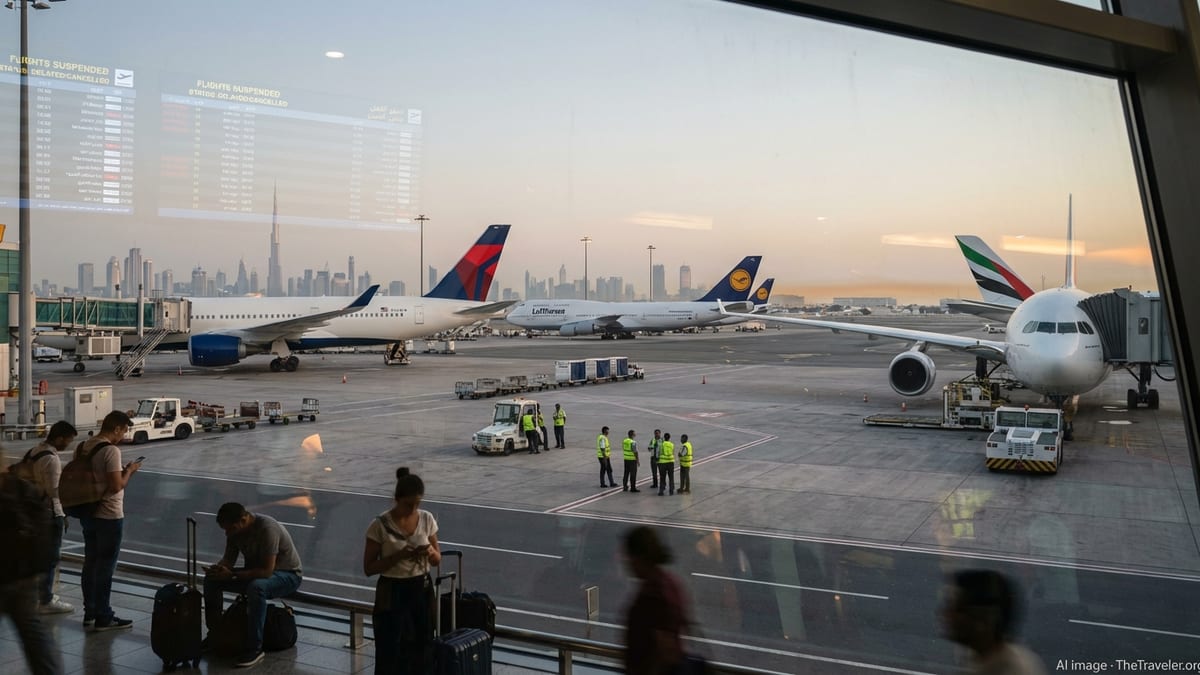
Fuel Rationing Hits Four Northern Italian Airports
Jet fuel availability has been temporarily capped at Bologna, Milan Linate, Venice Marco Polo and Treviso airports following Notices to Air Missions issued in early April. Publicly available information indicates that the advisories, triggered by constrained kerosene supplies, ask airlines to limit uplift at these airports through at least 9 April while stocks are carefully managed.
Reports describe quantitative caps per aircraft and a system of prioritisation, with emergency services, state flights and longer sectors receiving precedence at the pumps. Shorter intra-European services are being asked to tanker additional fuel from other airports wherever possible, easing pressure on local reserves during one of the busier travel periods of the spring.
The measures represent one of the first visible signs in Europe that jet fuel supply strains are starting to affect day to day airport operations. Although overall air traffic remains broadly stable, the rationing at these four hubs is being closely watched by airlines and regulators as a potential early warning of wider disruption if the situation persists.
Italian and international coverage emphasises that the restrictions are formally temporary and framed as a precaution. Nonetheless, the combination of pre-holiday demand and uncertainty over future deliveries has pushed airport fuel suppliers to adopt tighter controls, increasing the risk of knock-on schedule changes for passengers transiting northern Italy.
Middle East Crisis and Strait of Hormuz Closure Drive Supply Fears
The jet fuel squeeze is unfolding against the backdrop of heightened tensions in the Middle East and the effective closure of the Strait of Hormuz to a significant volume of tanker traffic. Business and energy media note that this chokepoint disruption is curbing shipments of crude oil, refined products and jet fuel from the Gulf to global customers, with Europe particularly exposed.
Europe is a major importer of aviation kerosene from the Persian Gulf region, and data cited in recent market analysis suggests that supplies from the Middle East account for around half of jet fuel imports into the European Union and the United Kingdom. With alternative supply routes costlier and more complex, refiners and airport fuel providers are facing higher prices and tighter margins for error in managing stock levels.
Industry experts quoted in recent coverage indicate that there is currently no broad physical shortage of jet fuel across Europe, but they warn that localized bottlenecks such as those seen in northern Italy could become more frequent if shipping disruptions endure. Airlines are therefore being urged to plan fuel logistics more conservatively, including tankering from less affected hubs and building in additional contingency for longer sectors.
The evolving situation underscores how quickly geopolitical shocks can ripple through aviation supply chains. Even where flights continue to operate, fuel availability constraints can translate into schedule reshuffles, equipment changes and operational complexities that travellers may experience as delays, re-routings or altered connection times.
Ryanair, Lufthansa and British Airways Flag Operational Risks
Low cost carrier Ryanair, which maintains significant operations in northern Italy, has publicly acknowledged the tighter conditions but says that its fuel suppliers currently expect to meet the airline’s needs into mid to late May. At the same time, reports highlight that Ryanair is warning of potential risks to fuel supply at some European airports later in the spring if hostilities and shipping disruption continue, raising the possibility of selective flight cancellations or rerouting.
Lufthansa Group, Europe’s largest aviation conglomerate, is reported to have activated contingency planning to cope with a prolonged period of elevated fuel prices and patchy availability. Publicly available information indicates that the group has hedged a substantial portion of its fuel requirements but is nonetheless preparing measures that could include temporary parking of aircraft if demand weakens and cost pressures intensify.
Meanwhile, airline holding company International Airlines Group, parent of British Airways, has also been cited in European business coverage as voicing concern about the potential impact of a sustained jet fuel squeeze. While British Airways has not announced specific changes tied to the Italian rationing, market commentators note that carriers across the group are reviewing schedules and fuel strategies on routes that depend heavily on Gulf-sourced supplies.
Collectively, these signals point to a sector on alert rather than in full crisis mode. Airlines are using existing risk management tools, such as fuel hedging and flexible capacity deployment, but are also openly acknowledging that more visible passenger-facing disruption could follow if supply pressures worsen into the summer travel season.
What Travelers Through Bologna, Venice and Milan Should Expect
For now, the fuel limits at Bologna, Milan Linate, Venice and Treviso have not triggered widespread cancellations, and most flights are still operating broadly as scheduled. Travel industry updates suggest that the most immediate effects are operational, with airlines adjusting fuel uplift routines, swapping aircraft types and fine tuning timetables to stay within the new caps.
Passengers may nonetheless notice more frequent schedule changes at short notice, particularly on shorter European services in and out of the affected airports. Some flights could depart with revised timings to accommodate refuelling at alternate hubs, while others may be consolidated if demand allows, as carriers seek to make the most efficient use of available fuel.
Travel management firms are advising corporate and leisure travellers to keep a close eye on airline notifications and to allow additional buffer time for connections that route through northern Italy. Given that the rationing is currently scheduled through at least 9 April, those flying over that period are being urged to monitor flight status on the day of departure and to have alternative routing options in mind where itineraries are complex.
Airlines are also expected to factor the possibility of fuel-related disruption into their customer policies, working within European passenger rights rules while emphasising that extraordinary supply constraints can limit compensation obligations. Travellers who experience cancellations or lengthy delays linked to fuel shortages may therefore encounter a different framework of assistance than in more routine operational disruptions.
Broader Implications for Europe’s Summer Travel Outlook
The Italian fuel caps arrive just as Europe’s aviation sector prepares for another busy summer, with demand expected to remain robust on both leisure and business routes. Analysts point out that even localized rationing can have outsized effects if it coincides with peak travel periods, as aircraft and crews are tightly scheduled and disruptions at one hub can quickly cascade through airline networks.
Energy market commentary suggests that if tension in the Middle East continues to curb tanker flows through the Strait of Hormuz, European buyers may need to compete more aggressively for alternative supplies, keeping jet fuel prices elevated and amplifying cost pressures on airlines. That in turn could feed into higher airfares or more cautious capacity planning on marginal routes.
For travellers, the developing situation reinforces the value of flexibility when planning trips over the next few months. Choosing itineraries with slightly longer connection windows, considering secondary airports that are less exposed to current fuel constraints, and remaining open to minor schedule changes can all help reduce stress if airline operations become more erratic.
While there is no indication at present that Europe is facing a systemic aviation fuel shortage, the experience at Bologna, Venice, Milan Linate and Treviso is serving as an early test of how airlines and airports manage a fast changing supply landscape influenced by global geopolitics. The outcome will shape not only near term reliability for passengers but also strategic decisions about fuel sourcing and route networks across the continent in the months ahead.