

More news on this day
A deepening jet fuel crunch, driven by severe disruptions to Middle East energy supplies, is rippling through global aviation as airlines cancel flights, trim capacity and pass sharply higher fuel costs on to passengers through rising fares and surcharges.
Get the latest news straight to your inbox!
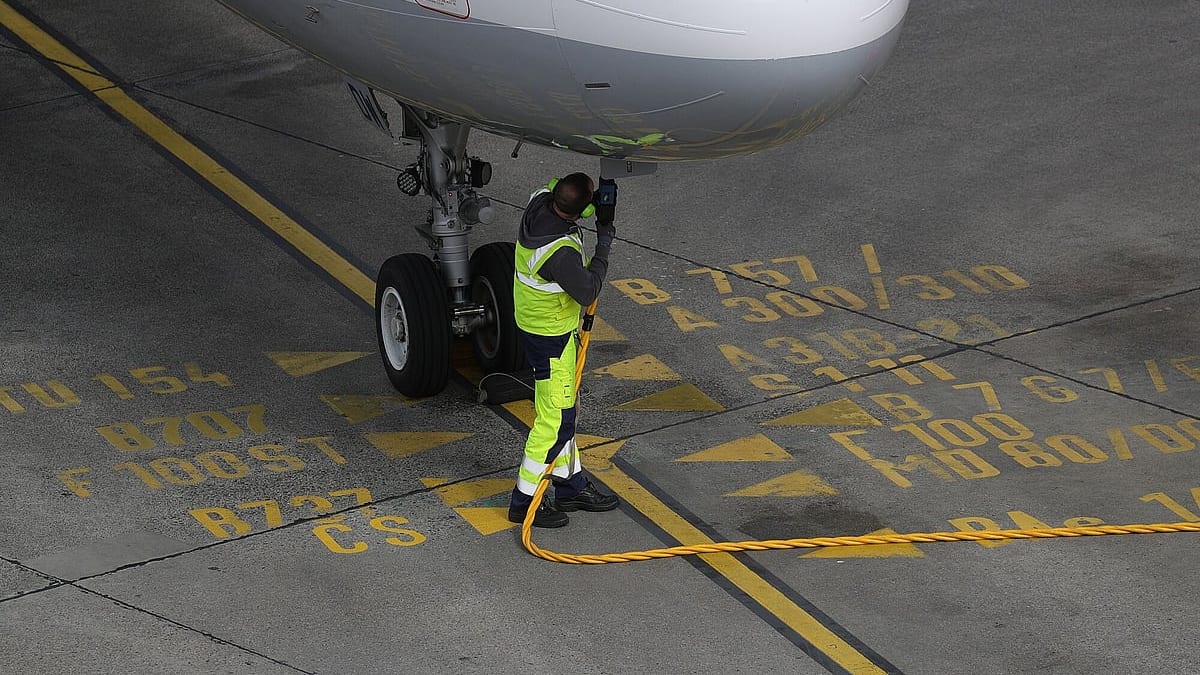
Geopolitical shocks squeeze global jet fuel supply
Publicly available data show that the current squeeze on aviation fuel originates in the wider energy shock unleashed by the Iran war and the partial closure of the Strait of Hormuz since late February 2026. The waterway is one of the world’s most critical oil and refined-product chokepoints, and its disruption has been described by international agencies as the largest hit to oil flows in decades.
Attacks on refineries and export terminals across the Gulf region have compounded the problem. Industry summaries point to strikes on major Saudi, Iranian, Emirati and Qatari facilities that normally supply large volumes of jet fuel to global markets. With several plants offline or running below capacity, refiners have cut aviation-grade output and diverted barrels to domestic markets, tightening export availability just as demand for commercial flying rises into the northern summer.
Market trackers report jet fuel prices roughly doubling since late February, with benchmarks in key hubs such as Singapore and the U.S. Gulf Coast surging to record or near-record levels. Some analytics firms estimate global jet fuel around 190 to 200 dollars per barrel in late March, compared with under 100 dollars before the conflict escalated, a swing that is rapidly feeding into airline cost bases.
The International Air Transport Association had already warned in late 2025 that aviation would be operating on thin margins in 2026, with fuel accounting for about a quarter of carriers’ operating expenses. The sudden spike has therefore landed on an industry that was profitable but still structurally exposed to energy volatility.
Flight cuts and schedule reshaping across key markets
As fuel bills mount, airlines in multiple regions are quietly trimming schedules, particularly on long-haul and marginally profitable routes. Aviation bulletin services and carrier advisories show a wave of targeted cancellations on transatlantic, transpacific and intra-Asia sectors where higher fuel burn makes operations especially sensitive to price shocks.
In Asia-Pacific, regional coverage indicates that some carriers have reduced frequencies on secondary routes and night-time services, prioritizing aircraft and fuel for trunk links between major hubs. Local reports from Southeast Asia describe capacity cuts coinciding with refinery run reductions of roughly 25 to 40 percent in parts of the region, limiting access to competitively priced jet fuel.
Freight operations are also being reshaped. Logistics providers have warned of air cargo disruptions out of the Middle East, with higher fuel surcharges and occasional last-minute flight adjustments as operators juggle scarce uplift and volatile pricing. A number of cargo airlines and integrators have issued updated fuel surcharge tables for early 2026, signaling that they expect elevated costs to persist for at least several months.
In Europe, government pressure on refineries to lift production slightly may help ease shortages at key hubs, but refiners themselves caution that scope for rapid capacity increases is limited. Even with incremental boosts, jet fuel supplies into major airports remain tight enough that airlines are planning summer schedules with more conservative assumptions on fuel availability and cost.
Fares, surcharges and fees climb as costs bite
With fuel costs jumping by tens of percent in a matter of weeks, many airlines are turning to passengers to absorb part of the shock. According to industry commentary and fare-tracking services, full-service carriers across Asia and Europe have raised fuel surcharges on long-haul tickets, in some cases adding the equivalent of 30 to 50 euros per round trip and, on premium cabins, several hundred dollars per itinerary.
In the United States, airlines that traditionally avoid explicit fuel surcharges are instead increasing base fares and ancillary fees. Recent coverage from major news outlets shows carriers such as JetBlue and United lifting checked-bag charges by around 9 to 10 dollars per piece on many routes, citing higher fuel and operating costs. Analysts note that such changes allow airlines to boost revenue without advertising headline fare spikes.
Survey data from regulators in Asia suggest that more than half of airlines serving certain markets have already introduced new fuel surcharges or fare increases since mid-March, with more planning to follow if jet fuel benchmarks remain elevated. Travelers on popular tourist routes in and out of Southeast Asia and the Pacific are seeing some of the steepest increases, reflecting both long stage lengths and tight regional fuel supply.
Independent fare monitors report that on some Asia to Europe and North America corridors, all-in economy-class prices for departures in April and May are up by more than 30 percent compared with early February, before the conflict-driven spike. Premium cabins remain available but with heavier surcharges, reinforcing a trend in which airlines protect yields at the top end while testing price sensitivity in the mass market.
Regional disparities and vulnerable travelers
The impact of the jet fuel crunch is far from uniform. Well-hedged airlines and those with access to domestic refining are generally faring better, while smaller and low-cost carriers that buy fuel on the spot market face difficult trade-offs between raising fares and cutting capacity.
In Asia-Pacific, commentary from aviation analysts highlights that large network airlines based in fuel-distribution hubs, such as Singapore and Hong Kong, can secure supply but at a premium to already high global prices. Smaller airlines serving secondary airports may struggle more simply to source enough fuel, increasing the risk of last-minute operational disruptions and selective route suspensions.
Emerging-market travelers appear particularly exposed. Where incomes are lower and air travel is more price-sensitive, even modest fare increases can depress demand. Yet governments in many of these countries have limited fiscal space to subsidize airline fuel, leaving carriers to either raise prices or reduce flying. That dynamic threatens connectivity for remote communities and tourism-dependent regions that are still recovering from the pandemic.
In wealthier markets, consumers are so far absorbing higher costs for upcoming spring and early-summer trips, according to forward-booking data cited in recent airline briefings. However, analysts warn that if fuel prices remain near current highs into the peak travel season, discretionary travelers could begin to cut back or trade down to shorter-haul or less frequent trips, eventually forcing airlines to rethink capacity plans again.
How long could the crunch last?
Forecasts for the duration of the jet fuel crisis hinge largely on geopolitics. Energy agencies and market consultancies broadly expect prices to stay elevated through at least the second quarter of 2026, with some potential stabilization later in the year if Middle East exports recover and alternative supply chains adapt. For now, futures curves and freight-rate signals suggest that traders are bracing for continued tightness.
Refineries outside the Gulf are ramping up where possible, but their ability to replace lost Middle Eastern output is constrained by capacity, crude quality and logistical bottlenecks. In Europe, North America and parts of Asia, incremental runs can soften the blow but are unlikely to fully offset the loss of cheap, readily exportable jet fuel from traditional suppliers.
Airlines are responding with a familiar toolkit: fuel hedging, surcharges, capacity discipline and, in some cases, accelerated fleet renewal toward more fuel-efficient aircraft. Yet these measures take time to show results and cannot fully shield carriers from a shock of the current magnitude. Industry projections from late 2025 that assumed relatively stable energy prices now look optimistic, and revised outlooks point to slimmer profit margins despite resilient demand.
For travelers, the immediate implication is clear: higher prices, busier peak flights on remaining frequencies and a greater risk that schedules will change at short notice. Unless geopolitical tensions ease and energy flows normalize, the current jet fuel crunch is poised to remain a defining feature of global air travel through much of 2026.