

More news on this day
A severe jet fuel crunch triggered by the war in Iran and earlier closures of the Strait of Hormuz is forcing airlines across regions to cut flights, rework routes and lift fares as energy markets struggle to absorb what international agencies describe as the largest oil supply disruption in modern history.
Get the latest news straight to your inbox!
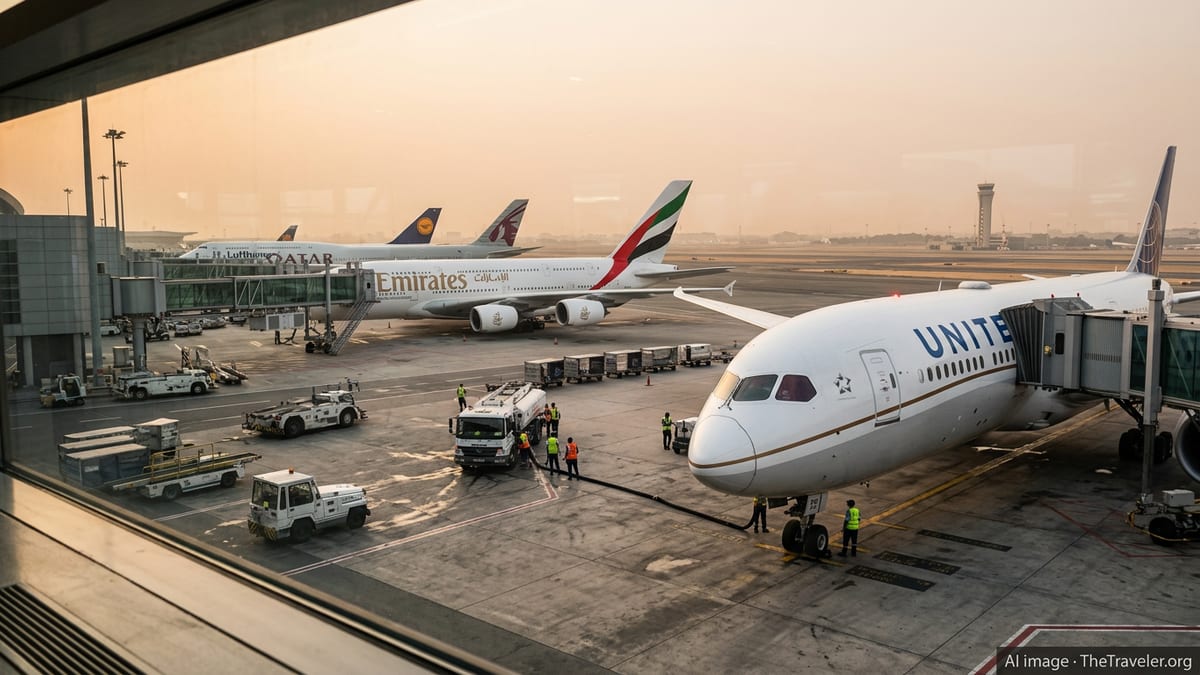
Strait of Hormuz shock ripples through jet fuel markets
The conflict that erupted in late February, combined with missile and drone attacks on refineries and export terminals around the Persian Gulf, has upended the flow of crude and refined products that underpin global aviation. Industry and government data indicate that Middle East outages and shipping interruptions have produced an unprecedented shock to oil supply, with refined products such as jet fuel and diesel among the hardest hit.
Reports from energy analysts show that the effective closure of the Strait of Hormuz through much of March choked off a key artery for jet fuel exports. The International Energy Agency and private forecasters note that while crude output can, in theory, be reshuffled from other regions, specialized middle distillates remain in tighter supply because many refineries configured to run Gulf crude have been damaged or are operating well below capacity.
Benchmark jet fuel prices have surged far faster than headline crude, according to monitors that track kerosene markets. In North America, publicly available figures compiled from airline and government disclosures suggest jet fuel costs have climbed by roughly 80 to 100 percent since late February, while some estimates for Europe and parts of Asia point to even steeper increases as carriers there rely more heavily on Middle Eastern supply.
Energy outlooks published in early April show that expectations for jet fuel prices have been revised sharply higher for the remainder of 2026, even with a tentative two week ceasefire allowing limited tanker traffic to resume. Analysts caution that inventories are already thin and that refineries outside the region have limited capacity to rapidly compensate for disrupted Gulf production.
Airlines trim capacity and redraw route maps
With fuel representing one of their largest operating costs, airlines are moving quickly to protect margins as the crisis unfolds. Industry trackers and airline schedule data indicate that many carriers have begun trimming planned capacity by around 5 to 10 percent for the March to May period, concentrating cuts on fuel intensive long haul and ultra long haul routes.
Published assessments of global aviation disruption highlight a pattern of selective withdrawals. Several European groups are reducing frequencies on routes that require lengthy detours to avoid closed airspace over parts of the Middle East, while reallocating some widebody aircraft to shorter transatlantic or intra European sectors that consume less fuel per seat. In Asia, some carriers have announced suspensions or reduced schedules on routes to the Gulf and beyond, citing both higher fuel burn on alternative routings and uncertainty around airport fuel availability.
Network planners are also rebalancing fleets toward newer, more fuel efficient aircraft as quickly as possible. Public information from airline fleet plans shows an acceleration in the retirement of older widebodies and regional jets, as operators prioritize models that offer double digit fuel savings. However, with many of these renewal decisions already baked in before the war, the near term flexibility is limited, making route reductions an unavoidable tool.
Industry briefings suggest that operational disruptions extend beyond scheduled cuts. Airlines and airports in Europe and parts of Asia are preparing for potential ad hoc cancellations and diversions if local storage tanks run low or deliveries are delayed. Some airports have issued advisories asking airlines to “tankering” extra fuel from less affected hubs when feasible, a practice that can help bridge local shortages but adds weight and further increases fuel burn.
Fares, fees and surcharges climb as costs spike
For travelers, the most immediate impact of the jet fuel crunch is appearing in higher ticket prices and ancillary charges. Publicly available coverage of major US carriers shows that several airlines have raised checked baggage fees in recent days, explicitly citing fuel cost pressures in regulatory filings and investor communications. Analysts view these moves as part of a broader effort to push more of the fuel shock onto passengers.
Across the Atlantic, executives from some of Europe’s largest airline groups have warned in recent industry forums that higher fares are now unavoidable. Trade association data shows kerosene prices running close to double their recent averages, and carriers say that without fuel surcharges and price increases they would be unable to maintain current levels of connectivity. Some long haul routes that were already marginally profitable are now being reviewed, with suggestions that unviable services could be suspended if prices remain elevated into the summer season.
Research from banks and travel data firms indicates that passengers are already feeling the squeeze. Analyses of card spending and fare trackers suggest airfares have risen by double digit percentages year over year on many international routes, with some markets in Latin America and Europe seeing gains above 20 percent. While underlying travel demand has remained relatively resilient so far, economists caution that prolonged high prices could eventually curb discretionary trips and force airlines into deeper capacity cuts.
In addition to headline fares, travelers are seeing a proliferation of add ons, from fuel surcharges on international tickets to higher change fees and adjustments to frequent flyer award charts. Industry observers note that after the pandemic era, airlines have become more willing to use dynamic pricing and ancillary revenue levers to manage shocks, a pattern that appears to be repeating in the current fuel crisis.
Regional winners and losers in a tight fuel market
The impact of the jet fuel crunch is uneven across regions, reflecting differences in domestic refining capacity, fuel stockpiles and reliance on Gulf shipments. The United States, which benefits from substantial internal refining and production, has so far experienced more of a price shock than a physical shortage, according to assessments by government agencies and private forecasters. Even so, analysts warn that certain isolated markets, notably on the US West Coast, could face localized supply strains later in the spring as pre war deliveries are drawn down.
Europe is seen as more vulnerable to outright shortages. Commentaries from energy companies and financial institutions in late March projected that the continent could begin to encounter tight supplies of refined products, including jet fuel, by mid April as the last tankers loaded before the conflict reach port. Airlines based in fuel constrained markets are therefore more exposed, with some already signaling that they will prioritize core routes and hubs if rationing emerges.
In the Asia Pacific region, the picture is mixed. Countries with large refining sectors and diversified crude import portfolios are better positioned to weather the disruption, while others that depend heavily on Middle Eastern supplies are reporting higher procurement costs and precautionary measures. Some Asian carriers are reportedly exploring medium term contracts with non Gulf suppliers, though capacity limits and logistics mean such shifts cannot fully replace lost flows from the Persian Gulf in the near term.
Air cargo operators, which often rely on dedicated freighters and fuel intensive express networks, face particular headwinds in markets where logistics chains were already stretched. Supply chain specialists point out that higher airfreight rates could feed through to the cost of time sensitive goods such as pharmaceuticals, electronics and high value industrial components, amplifying the economic effects of the jet fuel shortage beyond the travel sector.
Uncertain outlook despite ceasefire and policy responses
The ceasefire agreement that began this week and allows a limited reopening of the Strait of Hormuz has brought some relief to crude markets, with benchmark oil prices falling back from recent peaks. However, aviation and energy analysts caution that jet fuel markets will take longer to normalize, because pipeline and storage disruptions, refinery damage and depleted inventories cannot be reversed quickly.
Recent oil market reports suggest that non Middle Eastern producers are likely to increase output over the course of 2026, which could gradually ease pressure on refineries and downstream fuel prices. Yet forecasts also emphasize that if hostilities resume or shipping lanes are restricted again, the world could face recurring waves of supply stress. In that scenario, airlines might be forced into multiple rounds of capacity cuts and fare adjustments over the next year.
Policymakers are beginning to weigh potential interventions ranging from strategic stock releases to temporary changes in environmental fuel mandates, aiming to free up additional jet fuel supply. Some European governments are debating targeted support for critical air links and airports that play a central role in economic connectivity, while finance ministries warn that high energy prices are already feeding broader inflation.
For travelers and the wider tourism industry, the coming months will hinge on whether the fragile truce in the Gulf holds and whether fuel markets can adjust before the peak northern summer season. Until clearer signs of stabilization emerge, airlines are expected to keep schedules under close review and maintain pricing strategies that reflect the new, more volatile cost of keeping jets in the air.