

More news on this day
Jet fuel prices have jumped to multi‑year highs as conflict in the Middle East disrupts vital oil and shipping routes, creating a new cost shock that analysts say is likely to push up airfares for U.S. and global travelers just as the busy summer season approaches.
Get the latest news straight to your inbox!
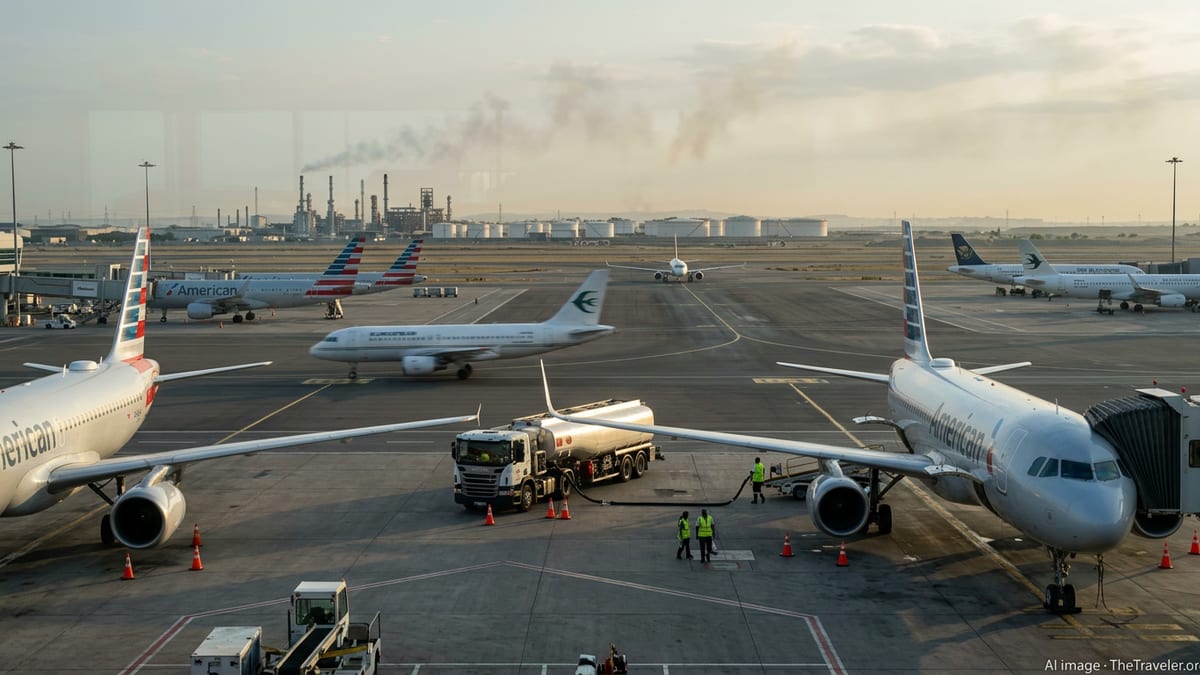
Middle East Conflict Sends Oil and Jet Fuel Costs Soaring
The latest surge in fuel costs is closely tied to the war involving Iran, the United States and Israel, which has roiled global energy markets since late February 2026. Crude oil benchmark Brent crossed 100 dollars a barrel for the first time in more than three years in early March, after attacks and shipping disruptions near the Strait of Hormuz rattled traders and insurers.
Publicly available economic analyses indicate that the conflict has disrupted a significant share of the oil and liquefied natural gas that normally flows through the narrow waterway, which handles roughly one fifth of the world’s seaborne oil trade. Tanker operators have rerouted vessels or paused transits, while war risk insurance premiums have risen, contributing to higher delivered costs for refiners.
Industry data compiled in recent days show that jet fuel prices have risen even faster than crude. Aviation market commentary describes jet fuel moving from pre‑crisis levels around 85 to 90 dollars a barrel to ranges as high as 150 to 200 dollars during the March spike, reflecting both the jump in crude prices and bottlenecks at refineries that produce aviation turbine fuel.
The International Air Transport Association has highlighted that the current Middle East conflict has exposed structural vulnerabilities in jet fuel supply, particularly in regions that rely on just‑in‑time deliveries and limited storage. With inventories thin and shipping routes under strain, airlines have little buffer against sharp daily price swings.
Why Fuel Costs Matter So Much for Airfares
For airlines, fuel is one of the two largest operating expenses alongside labor, typically accounting for about 20 to 30 percent of total costs in normal conditions. When jet fuel prices double in a matter of weeks, the impact can erase profit margins almost overnight, especially for carriers that did not hedge their fuel needs in advance.
Research from aviation and travel industry analysts suggests that U.S. airlines could collectively face tens of billions of dollars in additional fuel costs this year if prices remain near current elevated levels. One recent study estimated that to fully offset the latest fuel shock, average U.S. ticket prices might need to rise by at least 10 to 11 percent, a figure that would be noticeable for leisure travelers and families planning summer vacations.
Airlines have several tools to respond, but most ultimately lead back to higher fares. These include fuel surcharges added on top of base ticket prices, seasonal fare increases on high‑demand routes, and capacity adjustments that reduce the number of available seats, supporting higher yields on remaining inventory. Some full‑service carriers can also lean more heavily on premium cabins and corporate contracts, where customers are traditionally less price‑sensitive.
Low‑cost carriers often feel the pressure most acutely. Because they compete aggressively on price, they have less room to raise fares without losing demand, yet fuel makes up a slightly larger share of their total costs compared with legacy airlines. Analysts following the sector warn that sustained jet fuel prices at current levels could squeeze discount airlines, potentially leading to route cuts, reduced frequencies, or more auxiliary fees.
Immediate Signs Travelers Will Pay More
Evidence is already emerging that the cost shock is moving from fuel markets into plane tickets. According to recent business coverage, major U.S. carriers are signaling that higher fares are likely in the coming weeks as they adjust to sharply higher fuel bills. Market forecasts suggest that fare increases could appear first on long‑haul international routes and high‑demand domestic corridors where airlines believe travelers have fewer alternatives.
Outside the United States, some Asia‑Pacific and European airlines have begun updating fuel surcharges on both passenger and cargo services. Publicly available fare notices show increases on routes linking Europe and Asia, particularly those that now require longer detours to avoid conflict zones or constrained airspace around Iran and neighboring countries.
Financial market reports indicate that investors are already pricing in the impact. Airline stocks across U.S. and European markets fell sharply in early March as oil and jet fuel prices climbed, reflecting expectations of thinner profit margins and potentially softer demand if ticket prices climb. Sector analysts describe this as the most severe fuel‑driven test for airlines since the immediate post‑pandemic period.
Travel booking platforms and fare trackers are also beginning to flag rising average ticket prices on select routes for late spring and early summer departures. While many fares purchased weeks ago still reflect pre‑crisis fuel assumptions, new bookings made after the spike are increasingly being priced with higher operating costs in mind.
How U.S. and Global Travelers Could Feel the Impact
For U.S. travelers, the timing of the jet fuel spike is particularly sensitive. The domestic market had been preparing for another strong summer travel season in 2026, with high demand for leisure trips, transatlantic holidays and visits to friends and relatives. Higher fuel bills arriving just as airlines finalize summer schedules increase the likelihood of targeted price rises on peak‑season routes and holiday weekends.
Transatlantic flyers could see some of the earliest and most visible changes. Many flights between North America and the Middle East, South Asia and parts of Africa are facing longer routings or tighter airspace constraints, which can increase fuel burn per flight even before higher fuel prices are factored in. Airlines may respond with higher fares on connecting itineraries through European hubs or Gulf gateways, or by trimming marginal routes where the economics no longer work.
In Europe and Asia, where consumers are more directly exposed to imports of Middle Eastern oil products, the effect on ticket prices may be even sharper. Published fare guidance from some regional carriers already points to rising surcharges on routes within Asia and between Asia and the Middle East, as well as on cargo services that share aircraft belly space with passengers.
Travelers in emerging markets, where disposable incomes are lower and air travel is more price‑sensitive, could face difficult choices. Analysts caution that sharp fare increases may temporarily slow the recovery of international tourism to and from parts of Africa, South Asia and Latin America, especially if local currencies weaken against the U.S. dollar at the same time fuel is becoming more expensive.
What Could Happen Next for Airfares
The outlook for airfares over the rest of 2026 will largely depend on how long the Middle East conflict continues to disrupt oil supply and shipping, and how quickly markets believe the risk premium on energy prices can ease. Economic research from major insurers and consultancies lays out scenarios in which oil prices stabilize back toward earlier levels later in the year if tensions cool and shipping lanes normalize, which would relieve some pressure on jet fuel costs.
If hostilities persist or expand, however, energy analysts caution that oil benchmarks could remain elevated or even climb higher, especially if additional refinery capacity is taken offline or if shipping through the Strait of Hormuz faces repeated interruptions. Under those conditions, airlines might move beyond modest fare increases and surcharges toward more substantial price resets, while also reducing capacity to protect profitability.
Some carriers are attempting to cushion the blow through fuel hedging strategies, more efficient aircraft and incremental use of sustainable aviation fuels, but these measures offer only partial relief in the short term. Newer jets burn significantly less fuel per seat than older models, yet fleet renewal takes years, and sustainable fuels currently cost more than conventional jet fuel and remain limited in supply.
For travelers, the practical implication is growing uncertainty. Experts advising the sector suggest that volatility in ticket prices may increase, with periods of rapid fare adjustments as airlines respond to daily moves in energy markets. Until the underlying tensions in the Middle East ease and jet fuel markets regain stability, the cost of getting from point A to point B is likely to remain under upward pressure worldwide.