

More news on this day
A rapid spike in jet fuel prices linked to renewed conflict in the Middle East is rippling through global aviation, driving fresh disruptions across the region, the United Arab Emirates and the United States just as travelers head into the peak vacation season.
Get the latest news straight to your inbox!
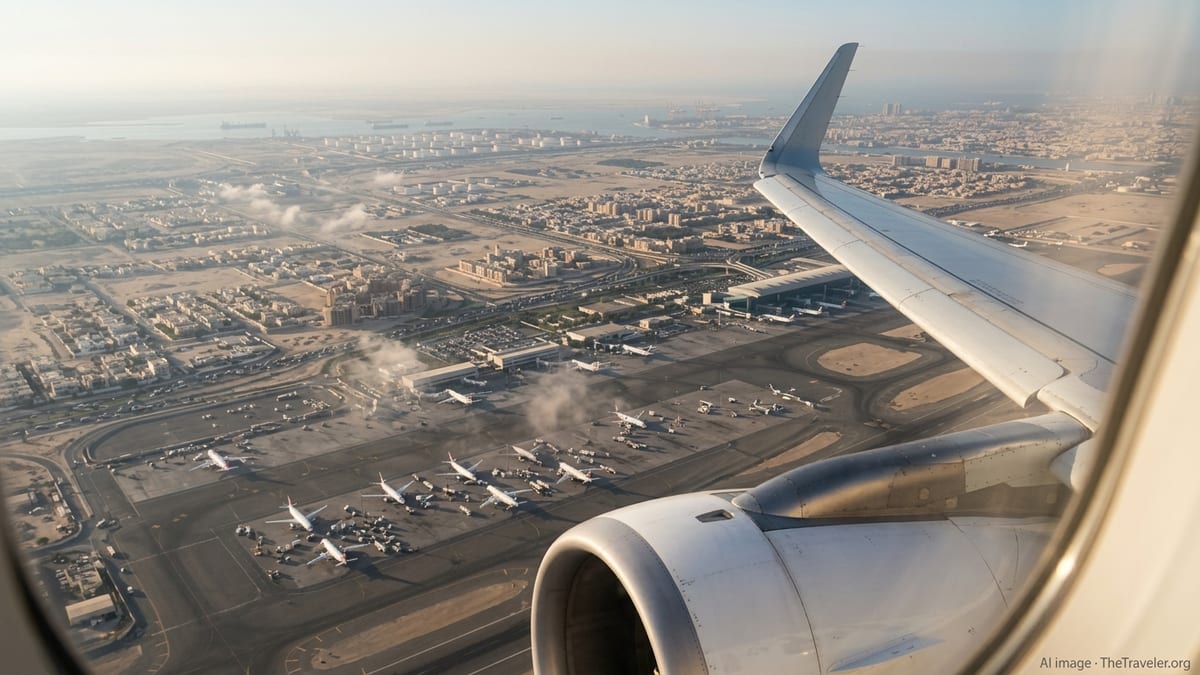
Jet Fuel Costs Hit Multi-Year Highs
Industry fuel trackers show aviation fuel climbing to some of its highest levels in years, with benchmark jet fuel prices in early March approaching double what airlines were paying at the start of 2026. Price data compiled by the International Air Transport Association’s Jet Fuel Price Monitor indicates that the global average refinery price has surged in recent weeks, significantly inflating carriers’ single largest operating expense.
The latest run-up follows a series of shocks to global oil markets, including the 2026 Iran conflict and tensions around the Strait of Hormuz, a corridor that carries a substantial share of the world’s seaborne crude. As oil has spiked, jet fuel has followed, squeezing airlines that had only just rebuilt balance sheets after the pandemic and earlier energy price swings.
According to publicly available industry analysis, jet fuel typically accounts for about a quarter of an airline’s cost base in normal conditions. The current spike is pushing that share higher, leaving carriers with a difficult choice between absorbing costs, raising fares, trimming schedules or adding fuel surcharges.
The surge coincides with a still-solid appetite for travel, particularly for long-haul leisure and visiting-friends-and-relatives trips. That demand is giving airlines some room to pass higher fuel bills on to passengers, especially on routes where capacity is constrained by security or airspace restrictions.
Middle East Airspace Closures and Rerouted Flights
Nowhere are the effects more visible than in the Middle East itself. Airspace closures and temporary restrictions linked to the Iran war and regional security concerns have forced airlines to reroute or suspend services, adding extra flying time and fuel burn just as fuel becomes dramatically more expensive.
Coverage of recent airspace notices indicates that several countries, including the United Arab Emirates, have at times limited overflights or imposed tighter routing near conflict zones. Long-haul flights that once crossed parts of Iran, Iraq or Syria are instead being sent on longer detours over Turkey, the Caucasus or the Arabian Sea, lengthening journeys between Europe, Asia and Africa.
For travelers, the operational moves translate into more frequent schedule changes, extended flight times and, in some cases, last‑minute aircraft swaps or forced overnight stops when crews run up against duty limits on rerouted sectors. Travel advisories from major carriers flying through the region emphasize the need to monitor bookings closely and allow extra connection time at hubs such as Dubai, Abu Dhabi and Doha.
With regional hubs handling a large share of global connecting traffic between Europe, Asia and Australasia, disruptions in Middle Eastern airspace can quickly cascade across the global network. When combined with elevated fuel prices, any additional flight hour becomes materially more expensive for airlines to operate, reinforcing the pressure to raise fares on affected corridors.
UAE Hubs Face Higher Costs and Tight Capacity
The United Arab Emirates, home to some of the world’s busiest long‑haul carriers, sits at the center of these trends. Publicly available fare data tracked by aviation analysts suggests that routes touching Dubai and Abu Dhabi have seen some of the steepest recent increases in ticket prices, particularly in premium cabins and on last‑minute bookings.
Reports focusing on Gulf carriers note that fuel surcharges and base fares on select long‑haul services have climbed sharply as airlines grapple with higher jet fuel and, in some markets, costly blends of sustainable aviation fuel. IATA estimates show that sustainable aviation fuel traded at a multiple of conventional jet fuel in 2024 and continues to carry a high premium, adding an extra layer of cost for carriers operating under environmental mandates.
Operationally, Gulf airlines are maintaining most of their core long‑haul networks but have implemented tactical schedule adjustments in response to airspace closures and shifting demand. Some services to conflict‑adjacent destinations remain paused or reduced, while capacity is being redeployed to more resilient leisure and business markets where travelers have proven willing to pay higher fares.
For visitors planning UAE stopovers or beach holidays, the immediate impact is likely to be higher ticket prices, fewer ultra‑cheap sale fares and a stronger incentive to book well in advance. Travelers originating in the United States or Europe may also find that the most affordable itineraries now involve less direct routings or off‑peak travel dates as airlines yield-manage scarce seats more aggressively.
US Travelers See Rising Fares but Resilient Schedules
In the United States, major carriers are also contending with elevated fuel bills but, so far, are largely preserving schedules, especially on lucrative long‑haul routes to Europe, the Middle East and Asia. Recent earnings commentary reported by outlets such as the Associated Press indicates that big US airlines continue to see strong demand and record bookings, helping offset hundreds of millions of dollars in additional fuel expenses tied to Middle East‑related supply shocks.
That dynamic means most US travelers will feel the shift not as widespread cancellations, but as steadily higher average fares, more dynamic pricing around holidays and fewer ultra‑low promotional deals. Domestic leisure routes may see modest capacity tweaks as airlines redeploy aircraft to international markets where passengers are more tolerant of fare increases.
Regulatory filings and government statistics through 2025 show that fuel and related expenses remain a major swing factor in airline profitability. While the industry as a whole is expected by IATA to post record global profits in 2026, net margins remain thin, leaving little cushion if fuel prices rise further or demand softens.
For US passengers heading to or through the Middle East and UAE, the combined impact of regional airspace instability and higher fuel costs is already visible in booking engines. Nonstop flights to Gulf hubs and one‑stop itineraries to South Asia, East Africa and Oceania are pricing higher than in recent years, with the largest jumps often seen on peak‑season departures and close‑in bookings.
What This Means for Your Vacation Plans
For travelers planning vacations in the coming months, the clearest consequence of the jet fuel spike is simple: expect to pay more, especially if you are flying long‑haul, booking late or relying on popular hubs in the Middle East and UAE. The combination of higher operating costs and constrained routings leaves airlines little incentive to discount heavily on routes where demand remains strong.
Flexible dates and times are becoming more valuable. Fare data compiled by independent tracking services shows unusually wide spreads between peak‑day and off‑peak prices on many intercontinental routes, with savings sometimes reaching hundreds of dollars per ticket for travelers willing to shift departures by a few days or accept a less direct routing.
Travelers using frequent‑flyer miles may see award charts remain nominally unchanged, but practical availability tightening on high‑demand routes that now cost airlines significantly more to operate. Many carriers continue to levy substantial carrier‑imposed surcharges on award tickets as a way of passing through some of the fuel burden, particularly in premium cabins.
Finally, analysts underscore that the current pattern of high but volatile jet fuel prices is unlikely to resolve overnight. While a de‑escalation in the Middle East or a retreat in global oil prices could ease pressure later in the year, publicly available forecasts point to a period of continued uncertainty. For vacationers, that translates into a renewed case for planning early, budgeting for higher airfares to and through the Middle East and UAE, and watching for sudden fare drops if and when fuel markets stabilize.