

More news on this day
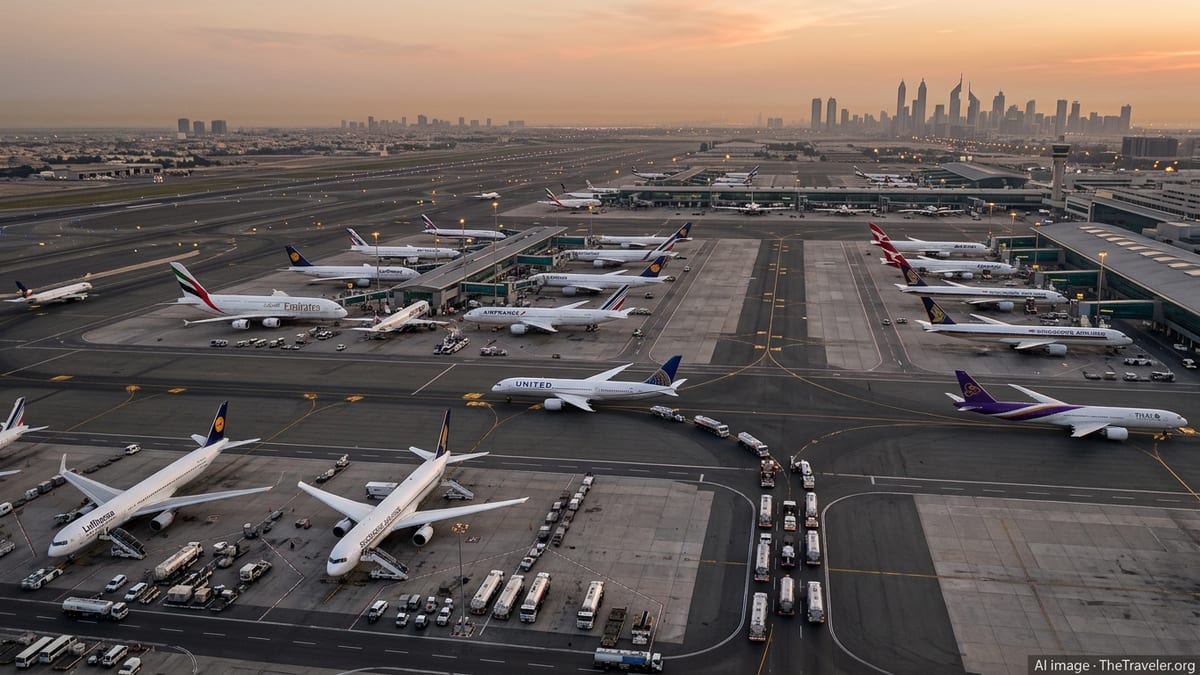
A sharp spike in jet fuel prices, amplified by supply disruptions linked to the war in Iran, is rippling through global aviation and tourism, squeezing carriers such as Air France, United Airlines, Vietnam Airlines, Qantas, Lufthansa, Emirates, Thai Airways and Singapore Airlines while pressuring hotel and travel spending in key markets including the United Arab Emirates, the United Kingdom and the United States.
Get the latest news straight to your inbox!
Jet Fuel Spikes Reshape Airline Cost Calculations
Recent fuel monitors and industry data show jet fuel prices climbing rapidly in early 2026, reversing the relative relief airlines experienced in 2025. Analysts note that jet fuel typically accounts for around a quarter to nearly a third of airline operating costs, making even modest price swings highly consequential for profitability and fares. The latest turbulence in fuel markets is now being described as one of the most severe shocks since the pandemic.
According to publicly available assessments, the global jet fuel index has moved sharply higher in the first quarter of 2026, with some reports citing year to date increases in excess of 100 percent on certain benchmarks compared with late 2025 levels. Industry commentary indicates that this surge is being driven by a combination of crude oil volatility, constrained refining capacity and the disruption of key shipping and air corridors around the Middle East.
Major network carriers, including Air France and Lufthansa in Europe, United Airlines and other US majors, and Qantas, Singapore Airlines, Thai Airways and Vietnam Airlines in Asia-Pacific, are facing a renewed squeeze on margins. Financial filings and investor presentations released in recent months repeatedly highlight fuel as a critical risk, with several airlines warning that sharp swings in prices can have a significant impact on earnings even when demand remains strong.
At the same time, efforts to increase the use of sustainable aviation fuel are layering additional cost pressures onto the system. Industry bodies have previously estimated that sustainable aviation fuel trades at several multiples of conventional jet fuel, creating a difficult balancing act for airlines attempting to meet climate pledges while they confront sudden escalations in their core fuel bill.
Middle East Conflict Disrupts Routes and Refueling Hubs
The war in Iran and related tensions across the Gulf are adding a severe geopolitical overlay to the fuel shock. Open reporting on the conflict highlights large disruptions to oil flows, attacks on energy infrastructure and a partial closure of airspace over parts of the Middle East. Analysts say this has triggered what some describe as the largest supply disruption in the history of the global oil market, sending both crude and refined products, including jet fuel, sharply higher.
For airlines such as Emirates, which is deeply tied to hub operations in Dubai, the conflict has created a dual challenge of operational disruption and soaring fuel costs. Regional airspace restrictions and security concerns have forced many long haul carriers to divert flights around the affected zone, adding distance, burn and scheduling complexity. Each additional hour in the air compounds fuel consumption at a moment when each tonne of jet fuel purchased is significantly more expensive.
Industry coverage notes that global airlines are also navigating a patchwork of airport and refueling constraints beyond the Gulf. A recent aviation fuel shortage in Cuba, for example, temporarily prevented airlines from refueling at major tourist gateways on the island, forcing carriers such as Air Canada to suspend some services and send recovery flights to repatriate passengers. While this is a localized case, it illustrates how tight global supply conditions can quickly trigger cascading operational issues for the tourism sector.
The rerouting of flights away from traditional Middle East corridors is also affecting airlines based far from the region, including European groups like Air France-KLM and Lufthansa and Asia-Pacific players such as Singapore Airlines, Qantas, Vietnam Airlines and Thai Airways. Published analyses emphasize that longer routings around closed or contested airspace not only push fuel usage higher but can also reduce aircraft and crew productivity, adding indirect cost pressures on top of direct fuel expense.
Tourism and Hospitality Feel the Strain in UAE, UK and US
The repercussions of the fuel shock and route disruptions are reaching far beyond airport aprons and airline balance sheets. Tourism economists and travel industry monitors report that higher airline operating costs are feeding through to airfares, particularly on long haul and premium routes that rely heavily on Middle Eastern hubs or transatlantic traffic. In turn, these fare increases are beginning to weigh on international travel demand and spend in key destination markets.
Hospitality operators in the United Arab Emirates, especially in Dubai and Abu Dhabi, are experiencing a sharp change of mood after a series of strong post pandemic seasons. With Gulf airspace uncertainty, reports of strikes on infrastructure and temporary caution among some long haul travelers, hotel analysts indicate that bookings and forward revenue projections have softened. Some properties are reportedly offering steeper discounts and flexible terms to shore up occupancy as airline schedules come under review.
In the United Kingdom, where long haul tourism and business travel rely heavily on connections to Asia, Africa and Australasia, higher jet fuel costs and rising fares are starting to filter into demand patterns. Publicly available data from UK airports show continued recovery in passenger volumes overall, but travel trade commentary suggests growing price sensitivity among leisure travelers and corporate travel managers, particularly on routes most exposed to diversions around the Middle East.
Across the United States, major carriers have told investors that they still see strong underlying travel demand, yet recent reporting by news agencies points to a noticeable increase in fuel bills. Analysts warn that if jet fuel prices remain elevated into the Northern Hemisphere summer, airlines may need to lean more heavily on fare rises and capacity adjustments. That, in turn, could temper inbound visitor numbers to major US city destinations and resort markets, affecting hotel revenues, restaurant takings and broader tourism related spending.
Airline Responses: Surcharges, Capacity Shifts and Efficiency Drives
To manage the fuel shock, airlines across regions are turning to familiar tools. Fare increases and fuel surcharges have already been signaled by several European and Middle Eastern carriers, according to coverage in European business media. IATA leadership has publicly estimated that ticket prices on some routes affected by the Middle East conflict could rise by high single digit percentages, reflecting both higher fuel costs and longer flight paths.
Capacity adjustments are also likely as carriers reexamine route economics. Long haul services that were marginally profitable before the spike in fuel costs may face reductions in frequency or seasonal suspensions, especially on leisure oriented routes. This could affect connectivity into tourism dependent economies in Southeast Asia, Australia, the Pacific and parts of Africa, where airlines such as Qantas, Singapore Airlines, Thai Airways and Vietnam Airlines play critical roles in feeding international arrivals.
At the same time, airlines are accelerating long term efficiency strategies. Public guidance from groups like Lufthansa, Air France-KLM and major Asia-Pacific carriers underscores plans to retire older, less fuel efficient aircraft faster and prioritize new generation widebodies and narrowbodies that burn significantly less fuel per seat. Enhanced fuel management, including more precise flight planning and weight reduction programs, is being highlighted as an immediate lever to claw back some of the cost increase.
However, analysts caution that efficiency measures cannot fully offset a rapid, externally driven spike in fuel prices. For many airlines, particularly those without extensive fuel hedging programs, the near term outlook will depend heavily on how energy markets respond to evolving geopolitical developments and whether oil flows and refining capacity can stabilize in the months ahead.
Global Tourism Faces a More Fragile Recovery Path
For the wider tourism economy, the jet fuel shock arrives just as many destinations were nearing or surpassing pre pandemic visitor volumes. International travel demand remained resilient through 2025 despite inflation and currency swings, but the combination of conflict related disruption and steeper airfares now threatens to slow the pace of recovery.
Tourism boards in the UAE, UK and US are closely watching booking trends from long haul source markets such as Europe, North America and Asia-Pacific. Travel trade briefings and booking data analyses indicate early signs that some travelers are shortening trips, choosing closer destinations or delaying long haul plans in response to rising transport costs and uncertainty about flight reliability.
Industry observers suggest that if jet fuel prices moderate later in 2026, as some longer term forecasts anticipate, the impact on tourism could prove temporary. Yet the current episode is reinforcing concerns about the sector’s exposure to energy and geopolitical shocks. For airlines including Emirates, Air France, United, Vietnam Airlines, Qantas, Lufthansa, Thai Airways and Singapore Airlines, the crisis is sharpening the focus on fuel diversification, hedging strategies and network resilience as essential components of long term planning.
For now, the spike in jet fuel costs is testing the adaptability of carriers and destinations alike. The coming peak travel seasons in the Northern and Southern Hemispheres will offer the clearest indication of whether higher fares and disrupted routes translate into a sustained hit to tourism spending, or whether travelers continue to absorb rising costs to keep flying.