

More news on this day
A renewed spike in jet fuel prices, compounded by fresh fuel and climate surcharges, is rapidly inflating air travel costs worldwide and beginning to cool tourism demand on some of the world’s busiest routes.
Get the latest news straight to your inbox!
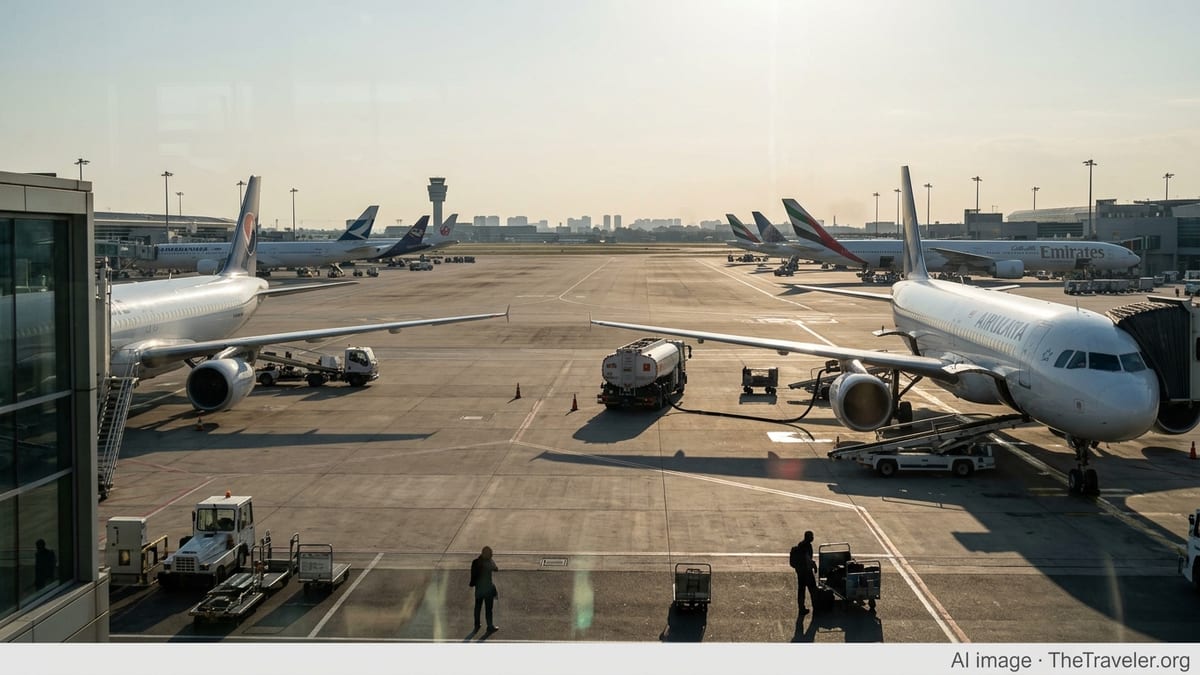
Fuel Markets Tighten as Geopolitics Ripple Through Aviation
Global aviation is facing a sharp cost shock as jet fuel prices climb on the back of volatile crude markets and renewed geopolitical tension. Industry analyses drawing on recent Brent crude movements and refined product pricing point to wider jet fuel crack spreads, meaning airlines are paying a growing premium over the underlying oil price. Market research shows that each 10 dollar swing in Brent can shift airline operating costs by several percentage points, leaving carriers highly exposed when crude and refinery margins rise together.
Data referenced by aviation consultancies indicate that jet fuel, which already ranks among airlines’ largest expenses, can account for around a quarter to a third of operating costs at full-service carriers. After a relative easing in 2024 and early 2025, this latest surge is eroding those gains. Recent commentary from financial analysts highlights that a mid‑twenties percentage rise in oil prices has the potential to wipe out annual profits at some large network airlines if higher costs cannot be offset through ticket prices or cost cutting elsewhere.
Reports summarizing IATA’s global outlook add that the sector’s profitability remains built on thin margins and is acutely vulnerable to any combination of new taxes, higher infrastructure charges or fuel shocks. While some forecasts earlier anticipated a gradual softening of jet fuel prices into 2026, the current geopolitical backdrop and capacity constraints at refineries have disrupted that narrative, forcing airlines to absorb higher spot prices in the near term.
Airlines Respond With Surcharges and Steep Fare Hikes
In response to the spike in fuel costs, carriers across multiple regions are rapidly recalibrating pricing. Recent coverage from international news outlets notes that airlines in Asia and Europe have been at the forefront of introducing or increasing explicit fuel surcharges on long‑haul routes, particularly where flights are also being rerouted to avoid conflict zones. These extra charges are being layered on top of already elevated base fares, compounding the impact on travelers.
Aviation news reports point to striking fare examples on trunk intercontinental routes. On some Asia–Europe flights, benchmark economy tickets have briefly surged to many times the price available just weeks earlier, as carriers passed through both higher fuel bills and the additional costs of longer detours. Industry commentary explains that when airlines are forced to fly less direct routings, fuel burn increases sharply, amplifying the effect of higher per‑gallon prices.
Airlines are also adjusting their hedging strategies. Regional financial coverage describes how more carriers are turning to fuel hedging to smooth out extreme volatility, though the level of protection varies widely. Low‑cost and smaller airlines that lack sophisticated hedging programs are often more exposed to spot market spikes and therefore faster to push through surcharges or seasonal fare adjustments, particularly on flights longer than a few hours.
At the same time, some full‑service airlines are incorporating environmental and sustainable aviation fuel levies into ticket prices. Policy announcements in hubs such as Singapore have introduced new ticket‑based contributions to fund cleaner fuels, adding modest but visible amounts to final fares. While individually small, these levies stack atop traditional fuel surcharges, security fees and airport charges, helping to drive record total ticket prices on key routes.
Tourism Hotspots Begin to Feel Demand Friction
Higher flight costs are now feeding through to tourism flows in uneven ways across regions. Global tourism statistics compiled by UN‑linked bodies show that international arrivals reached record levels in 2025, with Europe, the Middle East and parts of Africa surpassing pre‑pandemic volumes. That resilience was driven by robust pent‑up demand, improved air capacity and relaxed visa regimes. However, more recent commentary suggests that the latest bout of fare inflation is starting to test households’ budgets, particularly for long‑haul leisure trips.
Travel industry analysts report early signs of softness in price‑sensitive markets such as family holidays and group tours, where package costs are closely tied to airfares. North America has already seen weaker inbound performance relative to global averages, and tour operators indicate that some travelers are shortening stays, downgrading hotel categories or switching to closer destinations reachable with cheaper flights. For long‑haul sun and city destinations reliant on visitors from distant markets, even a small percentage dip in arrivals can translate into a noticeable slowdown in local tourism revenue.
In Asia and the Pacific, where international arrivals have lagged behind other regions since the pandemic, the timing of the fuel shock is particularly challenging. Many destinations had been counting on stronger recovery in 2026 as airline capacity returned and new routes launched. Instead, travelers from Europe and North America now face sharply higher ticket prices to reach these markets, and reports from fare‑tracking platforms show that peak‑season prices to popular Asian gateways are climbing faster than to competing short‑haul destinations within the same source regions.
Travelers Adjust Behavior as Costs Climb
The surge in fuel costs and associated airfare inflation is changing how and when people travel. Booking data and consumer travel surveys indicate that more travelers are bringing forward flight purchases to lock in lower prices before airlines implement additional surcharges. Some travelers are increasingly relying on loyalty points and credit card rewards to offset higher cash fares, while others are shifting to shoulder seasons or midweek departures where capacity and pricing are less constrained.
Published analyses from business travel forecasters suggest that corporate travel budgets are also under pressure. Companies are re‑examining trip approval policies, consolidating meetings and making greater use of virtual alternatives for routine interactions. Where travel remains essential, there is a gradual tilt toward shorter trips, fewer premium‑cabin bookings and closer scrutiny of route choices, particularly in regions experiencing the steepest fare escalation. This behavior has implications for cities that depend heavily on high‑spending business visitors, such as major financial and technology hubs.
On the leisure side, higher long‑haul costs are prompting some travelers to substitute international trips with domestic or regional options reachable by low‑cost carriers or alternative transport. Industry watch groups say this pattern risks diverting spend away from far‑flung beach and cultural destinations toward closer competitors, potentially reshaping tourism flows if elevated fares persist over multiple seasons. Accommodation providers in classic bucket‑list locations are already reporting wider booking windows and a greater share of last‑minute deals as travelers wait to see if prices soften.
Airlines and Destinations Look to Efficiency and Sustainable Fuels
Facing sustained cost pressure, airlines and tourism authorities are leaning more heavily on efficiency measures and long‑term fuel strategies. Aircraft lessors and manufacturers report that delayed deliveries of new, more fuel‑efficient jets are depriving airlines of potential fuel savings worth billions of dollars globally, leaving carriers dependent on older fleets that burn more fuel per seat. This bottleneck compounds the impact of rising jet fuel prices and restricts airlines’ ability to expand capacity without significantly increasing operating costs.
At the same time, sustainable aviation fuel is emerging as a central, if currently expensive, part of the industry’s response. IATA projections cited in energy and aviation reports estimate that the cost of complying with international carbon schemes and procuring sustainable fuel will continue to climb through 2026, even if conventional jet fuel prices eventually ease. These additional environmental costs are expected to be reflected progressively in ticket prices, particularly on routes where regulators mandate higher blends of cleaner fuels.
Destination marketing organizations and tourism ministries are responding by promoting longer stays and higher‑value experiences to compensate for potentially lower visitor numbers. By encouraging travelers to stay longer and spend more per trip, they hope to preserve tourism income even if total arrivals plateau or edge down. Some cities are also intensifying campaigns in nearby source markets reachable with shorter flights or alternative transport, hedging against a prolonged period of elevated long‑haul airfares.
For now, the global picture remains mixed. Overall tourism volumes are still robust by historical standards, but the combination of a jet fuel price surge, new surcharges and rising climate‑related costs is clearly straining the economics of air travel. How long this cost shock persists will determine whether today’s early signs of tourism slowdown in some long‑haul destinations harden into a more structural shift in global travel patterns.