

More news on this day
Air travelers across the United States are facing higher ticket prices and shrinking route maps as a rapid spike in jet fuel costs ripples through an industry already under pressure from capacity constraints and robust demand.
Get the latest news straight to your inbox!
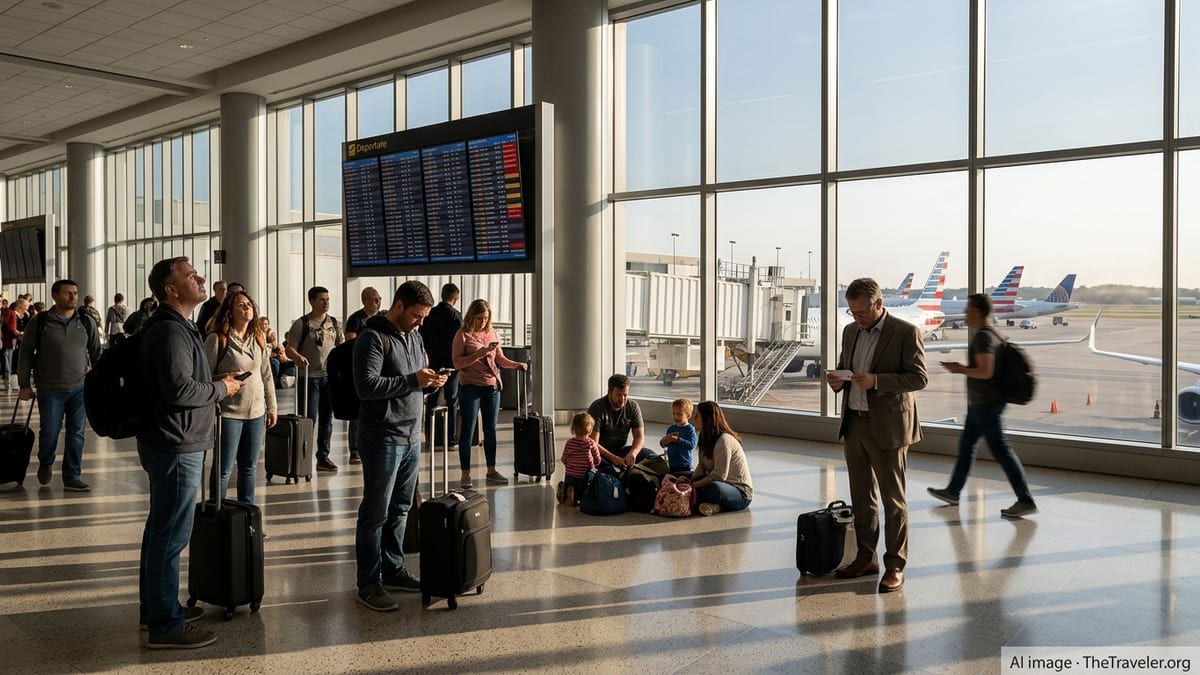
Jet Fuel Costs Double in Weeks, Squeezing Airline Economics
Jet fuel, traditionally one of the largest line items on an airline’s balance sheet, has surged in price since late February as the war involving Iran disrupted crude supplies and key shipping lanes in the Middle East. Industry analyses indicate that global jet fuel benchmarks have roughly doubled from early year levels, with some measures jumping by more than 50 percent in a single week, far above what carriers had budgeted for the 2026 peak travel season.
Publicly available data from airline financial filings and trade groups show that fuel typically accounts for between 17 percent and more than 20 percent of a U.S. carrier’s operating costs, second only to labor. When prices swing sharply higher, the effect on profitability is immediate because most large U.S. airlines have limited fuel hedging in place and must buy at or near prevailing market rates.
Recent research by aviation and travel industry analysts estimates that if current prices persist, U.S. airlines could collectively face more than 20 billion dollars in additional annual fuel expense. To offset that shock, average fares would need to rise by roughly 10 to 12 percent, a figure now being closely watched by both investors and consumer advocates.
While some global markets have experienced previous fuel spikes, the current run-up is colliding with still-elevated operating costs, including higher pilot wages and maintenance expenses. That combination is leaving airlines with less flexibility to absorb the shock without passing it on to passengers.
Higher Fares Already Hitting U.S. Travelers
Early signs of the fuel spike are appearing in U.S. fare data. Travel industry reports tracking airline ticket sales indicate that average domestic round-trip fares, which had already climbed more than 30 percent between 2019 and 2024 even after inflation adjustments, are now moving higher again as carriers quietly adjust pricing algorithms.
Premium cabins and long-haul international routes are seeing some of the steepest increases. Analysts note that these flights burn significantly more fuel per departure, making them especially sensitive to changes in energy costs. Some transatlantic and transpacific tickets for peak summer dates are now pricing 15 to 25 percent above comparable itineraries last year, according to booking engine and corporate travel agency data.
Even on shorter domestic routes, travelers are encountering higher base fares and a renewed emphasis on add-on charges. Ancillary revenue from baggage, seat selection and priority boarding has become a critical buffer for airlines trying to protect margins, and there are indications that certain fees are edging up or being applied more aggressively during busy travel periods.
Budget-conscious passengers are responding by shifting trip dates, trading nonstop flights for connections, or redeploying frequent flier miles to offset rising cash prices. However, strong leisure demand and the return of many corporate travelers mean that, for now, planes remain near full and airlines retain significant pricing power.
Fewer Flights and Thinner Networks for Smaller Cities
The surge in jet fuel costs is also reshaping where and how airlines fly. Industry breakdowns of fleet usage show that regional jets and older aircraft, which tend to be less fuel efficient, are disproportionately affected when fuel prices rise. In response, several major U.S. carriers have been trimming frequencies or discontinuing marginal routes, a trend that appears to be accelerating as the latest price shock works its way through network planning.
Smaller and mid-sized communities are especially vulnerable. When the economics of a short-haul flight tighten, airlines often redeploy aircraft to larger hubs and high-demand trunk routes where higher fares can be sustained. Recent schedule filings and route announcements indicate that some secondary airports are losing nonstop links to major business centers, forcing travelers onto longer and less convenient connections.
Low-cost and ultra-low-cost carriers, which rely on high aircraft utilization and thin margins, also face difficult decisions. Public analyses of their financial models suggest that abrupt increases in fuel costs can quickly erode profitability, prompting reductions in frequency on off-peak days or the suspension of experimental routes. While headline-grabbing exits have been limited so far, there is growing concern that a prolonged period of elevated fuel prices could lead to a more noticeable contraction in budget options.
For communities that have spent years courting new air service, the combination of higher fuel prices and tight aircraft supply means that lost routes may not return quickly, even if global energy markets stabilize later.
Aircraft Shortages and Sustainability Costs Limit Flexibility
At the same time that fuel costs are spiking, U.S. airlines are grappling with ongoing aircraft delivery delays and maintenance bottlenecks. Industry forecasts from aircraft manufacturers and leasing firms point to a persistent backlog of new, more fuel-efficient jets. This limits how rapidly airlines can swap older planes for newer models that burn less fuel per seat, delaying one of the most effective long-term defenses against volatile energy markets.
Supply chain constraints have also slowed cabin retrofits and engine upgrades that could improve efficiency on existing fleets. Reports from aviation finance houses note that carriers are being forced to extend the life of older airframes longer than originally planned, which can further raise operating costs through increased maintenance and fuel burn.
Layered on top of these pressures are the growing costs of sustainability initiatives. Sustainable aviation fuel, which many airlines are beginning to blend into their fuel mix to meet climate commitments, remains significantly more expensive than conventional jet fuel. Industry studies suggest that the price premium for these alternative fuels can be several times the cost of standard kerosene, adding another structural cost that is difficult to absorb when baseline fuel prices are already high.
Together, these factors mean that airlines have limited room to maneuver. With fleets stretched and environmental obligations mounting, the traditional playbook of quickly pivoting to more efficient aircraft or absorbing temporary shocks on the balance sheet is far harder to execute.
What Higher Costs Mean for the Summer Travel Season
With the busy spring and summer travel periods approaching, aviation analysts are watching closely to see how the fuel price surge translates into booking patterns and capacity decisions in the United States. Recent coverage in business and travel media notes that executives at major carriers are signaling both continued strong demand and a likelihood of higher fares as the peak season nears.
Some industry research firms project that if current jet fuel prices hold, average U.S. ticket prices may need to rise by high single to low double digits over the coming months. That would be on top of earlier post-pandemic increases, raising concerns that discretionary trips could be deferred or shortened, particularly for price-sensitive leisure travelers.
For now, forward booking data suggests that many Americans are still willing to pay more rather than forgo travel altogether, a pattern seen in previous periods of elevated fuel costs. However, should economic conditions soften or energy prices climb further, airlines may be forced into a delicate balancing act between covering costs and preserving demand.
Travelers planning trips later in 2026 are being advised by consumer advocates and travel planners, as reflected in recent media reports, to budget for higher fares, to shop carefully across dates and airports, and to factor in the possibility of reduced service on smaller routes. As long as jet fuel prices remain elevated, the era of relatively cheap and plentiful U.S. air travel appears to be under renewed strain.