

More news on this day
Growing turbulence in global energy markets is fuelling new concerns that jet fuel shortages from May could force airlines to trim schedules and raise fares if the war in Iran and the wider Middle East conflict drags on, casting uncertainty over the peak summer travel season.
Get the latest news straight to your inbox!
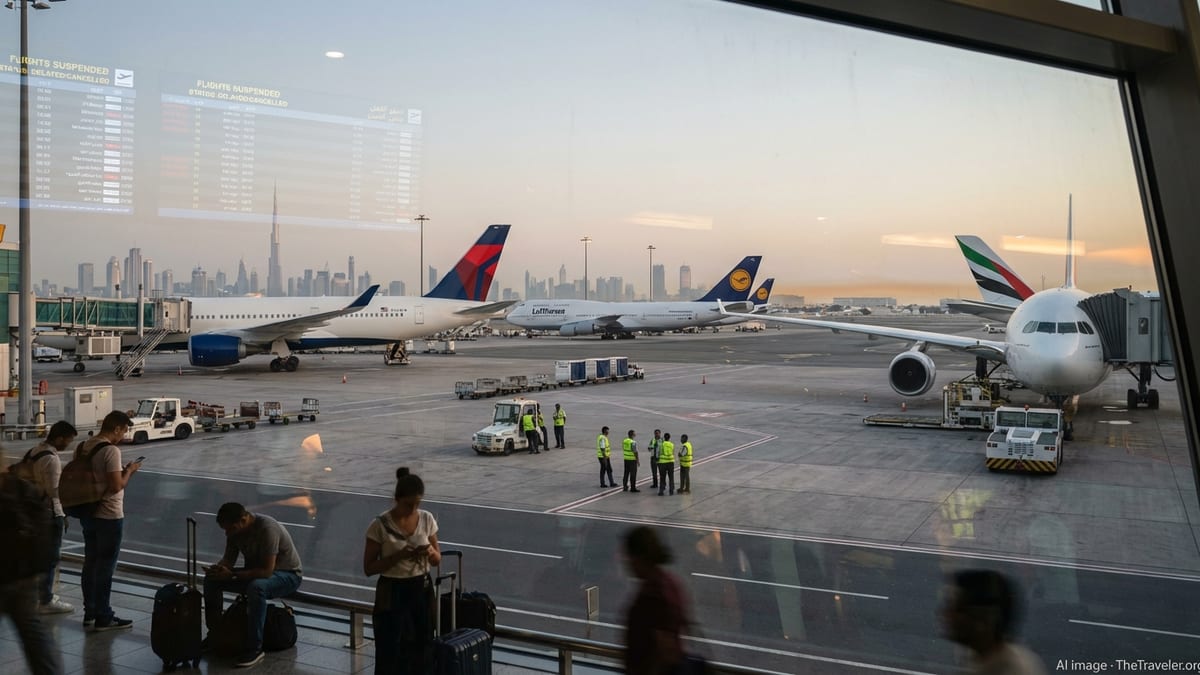
Warnings grow over Europe’s jet fuel exposure
The sharpest alarms are currently sounding in Europe, where low-cost carriers rely heavily on jet fuel sourced from the Persian Gulf. Reports indicate that Ryanair has warned that up to a quarter of its fuel supplies could be at risk through May and June if disruptions linked to the conflict persist, highlighting how even large, cost-focused operators may be forced to rethink capacity.
Industry analyses cited by business media note that around one quarter to one third of Europe’s jet fuel demand is normally met by refineries in the Gulf region. With tanker traffic through and around the Strait of Hormuz constrained by attacks on energy infrastructure and heightened military risk, refiners and traders have been forced to reroute supplies via longer, more expensive paths or seek alternative sources altogether.
Strategists at aviation bodies and industry consultancies describe Europe as particularly vulnerable because many airports depend on “just in time” deliveries and limited on-site storage. While significant outright shortages have not yet materialised, the combination of higher prices, longer shipping times and insurance costs is already tightening margins for airlines and raising the possibility of targeted flight reductions if supply chains come under further strain into early summer.
Some European carriers have begun to model scenarios that include operating leaner schedules, prioritising higher-yield routes and building contingency plans for short-notice cancellations. These preparations underscore how closely flight availability over the next few months is tied to developments around the Strait of Hormuz and the wider conflict.
Global price shock ripples through airline networks
The conflict’s impact is not limited to Europe. From North America to Asia, publicly available data on refined product markets show that jet fuel prices have more than doubled compared with pre-war levels, in some cases rising faster than during previous energy crises. The war has disrupted key Iranian export hubs and refineries, while also injecting uncertainty into broader OPEC supply decisions and shipping insurance costs.
Reports from the United States indicate that major carriers are already adjusting capacity in response. Some airlines have announced near-term reductions in planned flying, citing the surge in fuel costs and the need to protect balance sheets. Industry coverage notes that for large network airlines, sustained price increases at current levels could add billions of dollars to annual operating expenses.
In Asia, media reports from India and China describe carriers grappling with a combination of higher fuel bills and longer routings to avoid sensitive airspace, which together erode already thin margins. Indian aviation fuel prices have reportedly climbed to record highs, while Chinese airlines have signalled caution on forward outlooks, highlighting the risk that weaker profitability could translate into more restrained capacity growth later in the year.
International aviation organizations had expected 2026 to be a year of record profits for the sector, but the fuel shock is rapidly reshaping those projections. Analysts now warn that if the Iran war continues deep into the summer, the industry could shift from a recovery narrative to one focused on cost containment and selective capacity cuts.
How logistics bottlenecks could trigger actual shortages
While price spikes are immediate and visible, several technical assessments argue that the more acute threat to flight schedules lies in the logistics of getting refined jet fuel to the right airports at the right time. Even if global crude oil supply remains adequate, refinery outages, damaged export terminals and disrupted tanker routes can all create local shortages that force airlines to adjust operations.
The Iran war has already seen strikes on energy and industrial infrastructure, including oil export islands and facilities near the Gulf, according to open-source conflict monitoring and economic analyses. Combined with a heightened risk environment in the Strait of Hormuz, this has encouraged some shipowners and insurers to reduce exposure, pushing more vessels onto longer detours around the Arabian Peninsula and the Cape of Good Hope.
Risk briefings for corporate travel and logistics clients describe how these longer voyages tie up tanker capacity and reduce the flexibility of supply chains. At the same time, storage tanks and airport fuel farms in parts of Europe and Asia typically hold only a few days to a couple of weeks of normal consumption. Any disruption that delays deliveries by several days could therefore have an outsized impact on the ability of airlines and airport operators to maintain usual fuelling patterns.
Specialist aviation risk reports also highlight vulnerabilities at intermediate hubs and smaller regional airports, which often depend on a single supplier or limited pipeline connections. In such locations, even a relatively small shortfall in incoming fuel could translate into refuelling limits, payload restrictions or short-notice cancellations, particularly during peak travel dates.
Signs of strain already visible in fares and capacity
Evidence of stress is already emerging in ticket prices and airline schedules. European travel media report that more carriers have begun adding fuel surcharges or adjusting base fares on medium and long-haul routes, citing the rapid rise in jet fuel costs. In parallel, some airlines in Asia have announced large blocks of flight cancellations or capacity reductions, with official communiqués frequently referring to fuel supply constraints linked to the Middle East conflict.
In the United States and Europe, corporate disclosures and public comments by airline executives indicate that carriers are weighing fleet and route changes if current conditions persist. One major European group has acknowledged that it may ground dozens of aircraft should the war in Iran continue to put upward pressure on fuel prices, a move that would inevitably reduce seat availability and connectivity.
Travel industry analysts describe the current situation as a “perfect storm” of high fuel costs, rerouted airspace and strong demand ahead of the northern hemisphere summer. While airlines are eager to capture revenue from leisure and business travellers, their ability to keep every planned frequency in the air will depend on whether fuel supplies remain reliable and affordable into May and June.
Early data from online travel agencies suggests that some travellers are already facing higher prices on key holiday routes, and that certain marginal seasonal services may not return at the scale originally envisioned before the conflict escalated. This gradual tightening of capacity could accelerate if refiners and distributors struggle to keep jet fuel flowing smoothly to major hubs.
What travellers should watch as May approaches
For passengers with trips booked from May onward, the risk is less about a sudden, global shutdown of air travel and more about uneven, route-specific disruptions. Aviation experts interviewed by European and Asian outlets emphasize that large hubs in regions with diversified fuel supply are likely to remain operational, but that some secondary airports, low-margin routes and high-frequency holiday services may be more vulnerable.
Public commentary from airline and tourism specialists suggests several indicators that travellers may want to monitor in the coming weeks. These include sustained volatility in oil and jet fuel benchmarks, announcements by airlines about revised schedules or capacity cuts, and any escalation in attacks affecting Gulf energy infrastructure or shipping lanes.
Travel advice published by industry bodies and consumer outlets also encourages passengers to pay attention to the financial health and network strategies of the carriers they choose. Airlines under severe cost pressure may be quicker to trim weaker routes or consolidate frequencies, which can translate into limited rebooking options in the event of disruption.
For now, aviation authorities and governments in key markets continue to stress that there is no immediate, systemic shortage of aviation fuel. Yet as the Iran war reshapes global energy flows, the prospect that jet fuel supplies could become tighter from May is increasingly influencing how airlines plan, how regulators monitor resilience and how travellers think about the reliability and cost of flying in the months ahead.