

More news on this day
Jet fuel prices have jumped sharply as conflict across the Middle East disrupts oil supplies and key air corridors, forcing airlines to raise fares, reroute long-haul services and warn of fresh pressure on already thin profit margins ahead of the peak summer travel season.
Get the latest news straight to your inbox!
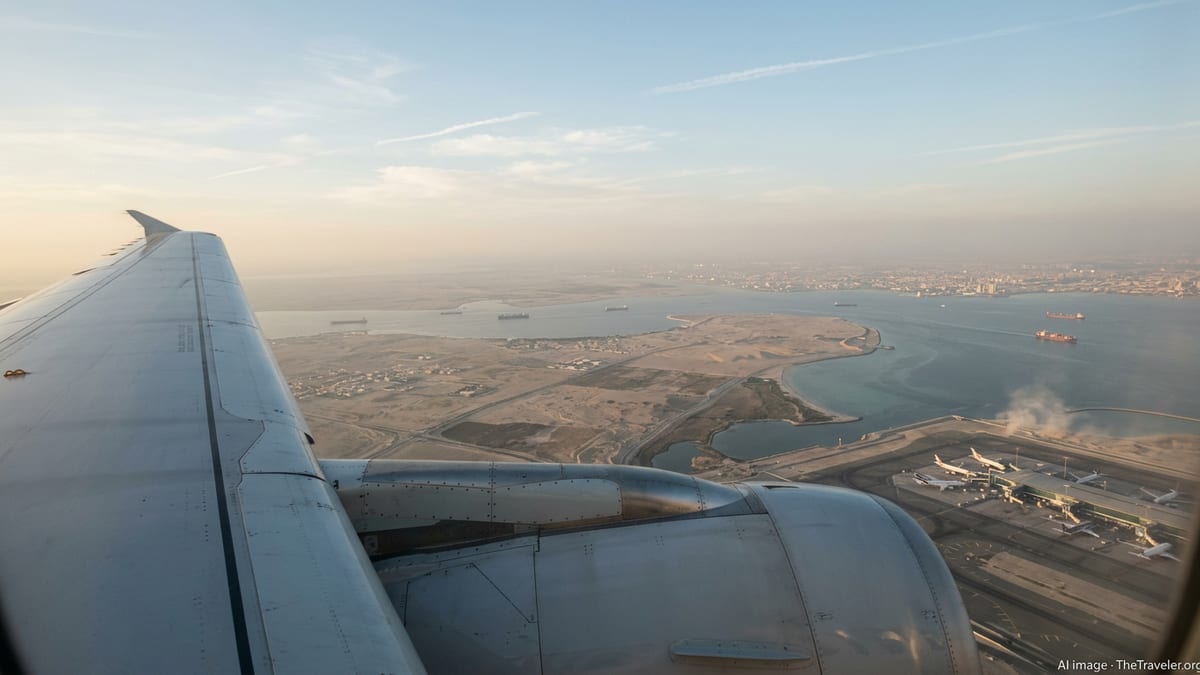
Middle East Conflict Sends Jet Fuel Costs Sharply Higher
Global jet fuel benchmarks have surged in recent weeks as the war centered on Iran and its neighbors constrains oil exports and disrupts shipments through the Strait of Hormuz and the Red Sea. Industry fuel monitors indicate that jet fuel, which averaged under 90 dollars a barrel in 2025, has climbed toward or above the 100 dollar threshold in early March 2026, reversing last year’s easing trend and reviving concerns about another energy shock for aviation.
Analysts note that the conflict has damaged or threatened critical energy infrastructure, including refineries and export terminals around the Persian Gulf. Drone and missile strikes against facilities in Saudi Arabia and Qatar, alongside threats to tanker traffic in the region, have tightened supplies of refined products such as jet fuel just as airlines were preparing for a busy northern summer. The resulting spike in fuel costs is rippling quickly into airline balance sheets and ticket pricing models.
Industry data highlighted by IATA and energy consultancies show jet fuel now accounts for roughly 25 to 30 percent of airline operating expenses in many markets, making even modest price swings highly significant. With the latest run-up in prices driven by geopolitical risk rather than demand growth, carriers are facing a cost surge that is largely outside their control and difficult to fully offset through efficiency gains alone.
Airlines Start Raising Fares and Adding Fuel Surcharges
Publicly available information from carriers in Asia and Europe shows that many have already begun to adjust ticket prices in response to the fuel shock. Reports from financial and aviation outlets describe airlines introducing or increasing fuel surcharges on international routes, particularly long-haul flights linking Europe and the Asia-Pacific, where fuel burn per trip is highest.
Several Asia-Pacific airlines have announced revised fare structures that pass part of the higher fuel bill to passengers, while also warning investors that earnings guidance for 2026 may no longer be reliable under current market conditions. Coverage from business media in the region indicates that low-cost carriers, which typically operate on thinner margins and have less extensive fuel hedging programs, are especially exposed and are modeling scenarios that include grounding aircraft if jet fuel becomes prohibitively expensive or difficult to secure.
In Europe, network carriers are moving more cautiously but are nonetheless signalling price pressure. Reports indicate that some groups with extensive hedging have so far avoided large across-the-board fare hikes, while others have detailed specific increases on long-haul tickets, measured in tens of euros per roundtrip. Travel analysts quoted in recent coverage expect fare adjustments to broaden if elevated fuel prices persist into late spring.
Rerouted Flight Paths Add Miles, Fuel Burn and Complexity
Alongside higher prices at the pump, airlines are burning more fuel per flight as they detour around closed or high-risk airspace. Airspace restrictions over Iran, Iraq, parts of the Gulf and segments of the Red Sea corridor have forced long-haul services between Europe and Asia, as well as routes connecting Africa and North America with South and Southeast Asia, to adopt longer flight paths.
Operational briefings and flight-tracking data referenced in aviation reports show that many carriers are now diverting around the Arabian Peninsula, routing via the eastern Mediterranean, Central Asia, or further south over the Arabian Sea and the Indian Ocean. These deviations can add up to 60 to 90 minutes to certain journeys, increasing fuel consumption, crew costs and schedule complexity. For airlines already paying markedly more per ton of fuel, the combination of higher unit price and higher volume per flight is particularly painful.
Some Middle Eastern hubs, previously marketed as efficient crossroads between continents, are now experiencing reduced traffic and more erratic operations as the conflict flares nearby. Coverage from regional and European outlets notes that selected services to and through major Gulf hubs have been suspended, while remaining flights are sometimes subject to last-minute reroutes and holding patterns that further inflate fuel burn.
Regional Impacts: Asia-Pacific, Europe and the Gulf Feel the Strain
The financial squeeze is most visible so far in the Asia-Pacific, where airlines rely heavily on long-haul leisure and connecting traffic and tend to have longer average stage lengths. Business-focused publications report that some Asian carriers have introduced steep surcharges on flights to Europe and North America, while also examining temporary capacity cuts on marginal routes to preserve cash.
European airlines face a different mix of pressures. While fuel hedging programs provide some short-term insulation, the need to avoid conflict-affected skies adds distance to core trunk routes linking major European hubs with destinations in East and South Asia. Eurocontrol data and route analyses cited in trade publications suggest that even incremental flight-time increases, repeated across hundreds of weekly services, can erase the thin profits typically earned on these long-haul sectors.
In the Gulf, where aviation is tightly intertwined with national economic strategies, airlines are grappling with both fuel costs and direct conflict-related disruption. Regional economic analyses describe capacity reductions across hub carriers in the United Arab Emirates and Qatar, with some operating at less than half of pre-conflict levels. The cutbacks, combined with diversified energy export routes and refinery outages, are reshaping long-established patterns of air connectivity between Europe, Asia and Africa.
What Rising Fuel Costs Mean for Travelers in 2026
For travelers planning international trips later in 2026, the convergence of higher jet fuel prices and longer flight paths is likely to translate into higher ticket prices and fewer options on certain routes. Travel industry reports already point to noticeable fare increases on some Europe–Asia and trans-Pacific itineraries, alongside reduced frequencies and occasional suspensions of service to specific Middle Eastern destinations.
Analysts quoted in recent coverage advise that airlines will try to protect core, high-demand routes while trimming capacity on thinner or more price-sensitive segments. That could mean less competition and firmer pricing on some secondary city pairs, as well as tighter availability of the lowest fare classes during peak summer travel months. At the same time, carriers are expected to keep promotional activity alive where demand appears vulnerable, using sales selectively to stimulate bookings while still accounting for higher fuel costs.
Industry organizations caution that the trajectory of fares and route networks in the second half of the year will depend heavily on how the Middle East conflict evolves and whether energy markets stabilize. If crude and jet fuel prices retreat and key airspace corridors reopen, some of the current detours and surcharges could be rolled back. If tensions persist or intensify, airlines and travelers alike may need to adapt to a new period of elevated costs and more circuitous journeys between many of the world’s major regions.