

More news on this day
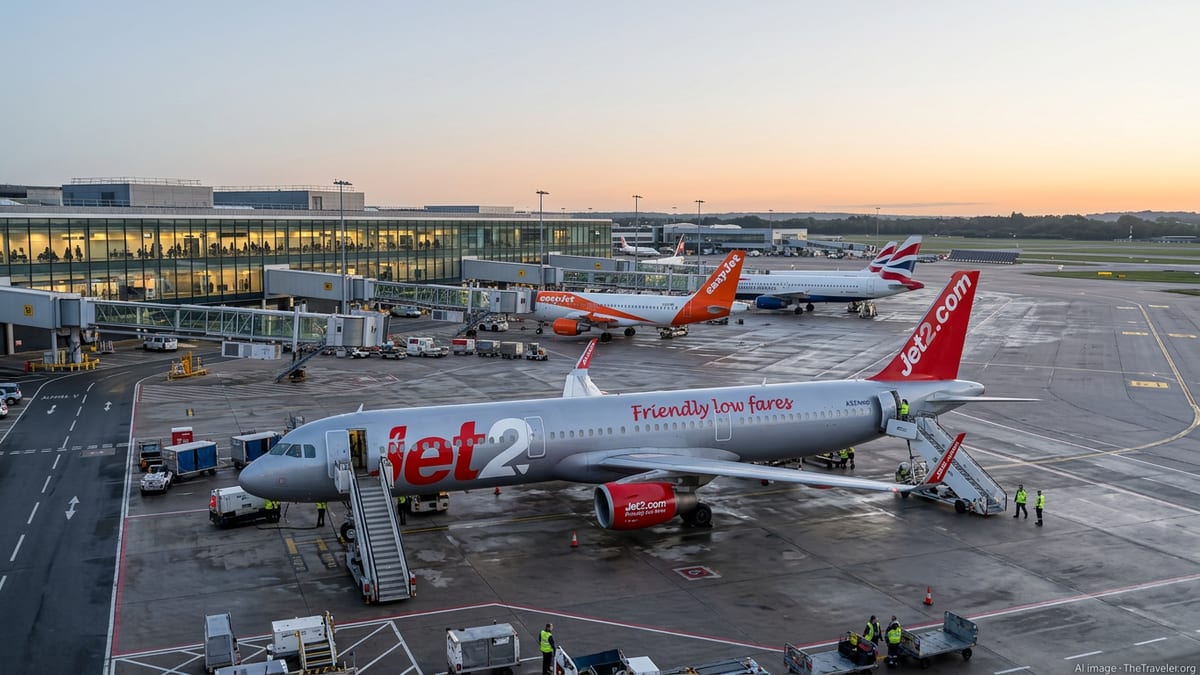
Jet2 is set to open a full base at London Gatwick in March 2026, deploying six aircraft and 29 mostly Mediterranean routes in a direct challenge to easyJet and BA Euroflyer for a greater share of the UK’s booming summer leisure market.
Get the latest news straight to your inbox!
Major New Player in Gatwick’s Leisure Line-Up
Publicly available information shows that Jet2 will begin based operations at London Gatwick from 26 March 2026, marking its fourteenth UK base and its first full-scale presence at the airport. The leisure-focused carrier plans to operate 79 weekly flights at launch across 29 sun and city destinations, primarily in Spain, Greece, Portugal, Türkiye, Italy, Croatia, Bulgaria, Cyprus and Malta.
Industry coverage indicates that this is the largest new based-airline entry at Gatwick in several years, reflecting the airport’s status as the UK’s leading gateway for short and mid-haul holiday traffic. The move also significantly broadens Jet2’s reach into the densely populated catchment of south London, Surrey, Sussex and Kent, where many holidaymakers currently rely on easyJet and BA Euroflyer for short-haul leisure trips.
The programme is scheduled to ramp up from late March into the summer peak, with high-frequency services on core routes such as Faro, Palma de Mallorca, Alicante, Málaga and Tenerife South. By focusing on proven “sunshine corridor” markets, the airline is positioning Gatwick as a major new source of volume for its combined flight and package holiday offering.
Six-Based-Aircraft Strategy and A321neo Focus
According to company filings and industry analysis, Jet2 has secured slots for six based aircraft at Gatwick, including five Airbus A321neo jets. The fleet mix underscores a strategy built around higher-capacity, fuel-efficient narrowbodies that can deliver competitive operating costs on busy leisure sectors while offering ample seat supply in school holidays.
The A321neo’s larger seat count is expected to support Jet2’s strong emphasis on inclusive package holidays sold through its tour operator arm, alongside flight-only tickets. Analysts note that this approach allows the carrier to control a greater portion of the value chain, from airlift to accommodation and transfers, which can be particularly effective at slot-constrained airports such as Gatwick.
Public documents also highlight that Gatwick’s new base will generate more than 300 direct jobs across flight operations, ground services and administration. The investment indicates Jet2’s confidence in long-term leisure demand from the London and South East region, as well as its intention to become a permanent fixture at the airport rather than a seasonal or opportunistic operator.
Direct Challenge to easyJet and BA Euroflyer
The expansion places Jet2 in head-to-head competition with easyJet and BA Euroflyer, both of which have built significant short-haul networks from Gatwick. EasyJet has long been the dominant low-cost carrier at the airport, while BA Euroflyer operates a mix of leisure and business routes under the British Airways brand on short-haul services.
Reports indicate that many of Jet2’s planned destinations overlap with existing easyJet and BA Euroflyer routes to Mediterranean beach and island markets. This overlap sets the stage for heightened competition on fares and capacity, particularly during peak summer weeks when demand is strongest but price sensitivity remains high among family travellers.
Analysts suggest that Jet2’s package-first business model could be a key differentiator. The airline typically bundles flights with accommodation, transfers and generous baggage allowances, positioning its offer against both low-cost rivals and traditional tour operators. For easyJet and BA Euroflyer, the arrival of a large, integrated leisure competitor at Gatwick is likely to add pressure in an already contested segment.
What It Means for Gatwick Holidaymakers
For travellers in London and the South East, Jet2’s arrival is expected to translate into greater choice, more peak-season availability and potentially sharper pricing on some of the most popular summer routes. With multiple airlines now competing on key leisure corridors, capacity on peak weekend departures and school holiday dates should increase.
Travel industry commentary points out that the additional flights may help ease traditional bottlenecks on routes that often sell out months in advance, such as Palma de Mallorca, the Algarve and key Greek islands. More competition could also encourage airlines to refine schedules, offering early-morning departures and convenient returns designed around one- and two-week holiday patterns.
For Gatwick itself, the new base helps cement its reputation as a primary leisure gateway, broadening the mix of carriers and reinforcing its role as an alternative to Heathrow for holiday-focused passengers. With Jet2 now joining easyJet, BA Euroflyer, TUI and others, the airport is positioned as one of Europe’s most competitive hubs for short-haul sun and city breaks.
Signals of Further Growth Beyond 2026
Jet2’s Gatwick launch appears to be a starting point rather than a one-off expansion. Recent programme updates show that the airline has already placed additional routes and capacity on sale from the base for summer 2027, including an expanded list of destinations beyond the initial 29. This suggests that early demand indicators and forward bookings have been encouraging.
The airline’s broader fleet plans, which include a substantial pipeline of new Airbus aircraft, support the potential for further growth at Gatwick if slots and commercial performance allow. Industry observers note that once a carrier has established a base of this scale, it often looks to deepen frequencies on high-performing routes and add niche destinations that can be profitably served from an established customer base.
For easyJet and BA Euroflyer, the prospect of Jet2 consolidating and then expanding its Gatwick operation raises the likelihood of a sustained multi-year contest for leisure travellers. As schedules for 2027 and beyond take shape, the airport’s short-haul market is expected to remain one of the most closely watched competitive battlegrounds in UK aviation.