

More news on this day
JetBlue is sharpening its focus on key U.S. gateways in 2026, rolling out new nonstop routes that tie New York, Boston, Houston and a cluster of mid-sized cities more closely into its growing domestic and Caribbean network.
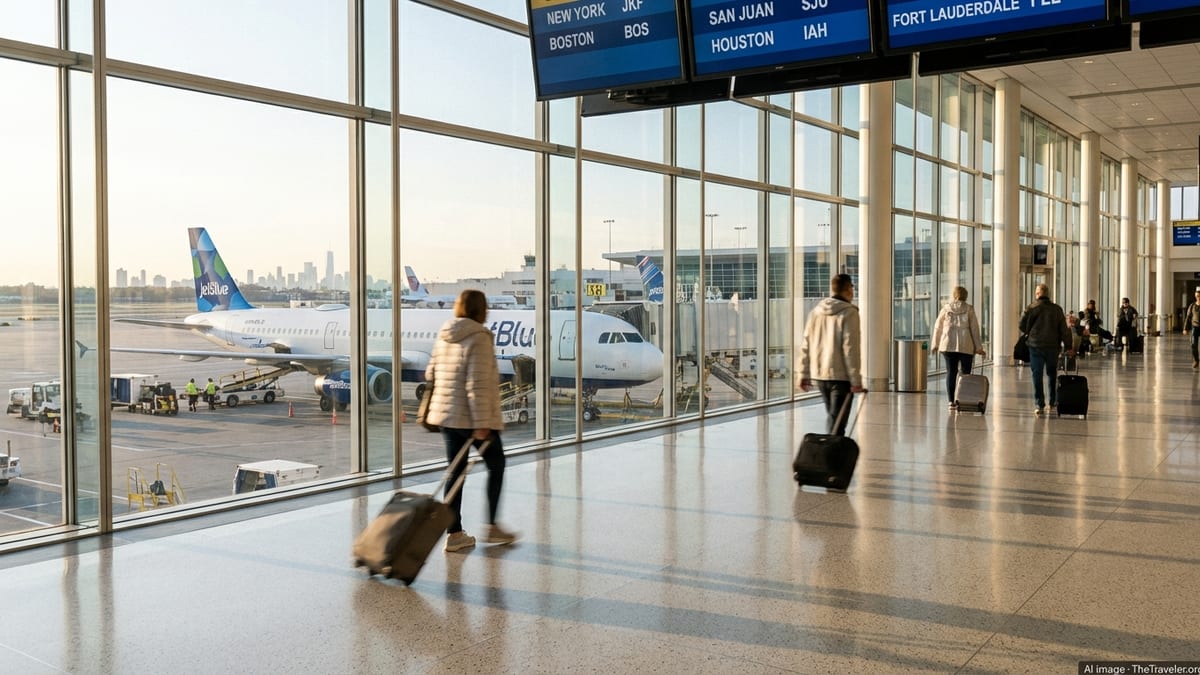
New York Strengthens Its Role as a Core JetBlue Gateway
New York remains the centerpiece of JetBlue’s strategy for 2026, as the airline adds new nonstop options that deepen its reach across the U.S. and into the Caribbean. New service from John F. Kennedy International will support the carrier’s expanding footprint in Florida, Puerto Rico and beyond, while helping to anchor a web of new flights in other regions such as Texas and the Mid-Atlantic. The focus is on nonstop connectivity that bypasses congested hub-and-spoke patterns, giving New Yorkers more point-to-point choices at competitive fares.
Among the most notable additions for 2026 are new north-south links that place New York at the center of an emerging triangle between Florida, Puerto Rico and secondary U.S. markets. Buffalo’s new connection to Fort Myers, for example, will pair with an expanding portfolio of JetBlue flights from Buffalo and other upstate cities into New York and Florida, effectively using New York as a flexible transfer point without relying on traditional legacy hubs. For leisure and visiting-friends-and-relatives travelers, the result is a simpler path to beaches, resorts and warm-weather destinations.
New York’s role will also be reinforced by the continued rollout of previously announced routes and frequency increases, particularly along the East Coast. While much of the spotlight has been on Puerto Rico and Florida, the New York market remains the backbone that supports these additions. By using JFK’s scale and visibility, JetBlue can seed new routes from smaller cities with confidence that there will be steady demand, especially during peak travel periods and school holidays.
For New York-area airports, this growth is arriving in a competitive environment shaped by low-cost and legacy rivals. JetBlue’s strategy in 2026 appears aimed at differentiating with a mix of cabin product, onboard experience and targeted nonstop links rather than blanketing the map. That positioning could prove advantageous as travelers in the New York region seek more nonstop choices to leisure destinations without sacrificing comfort or inflight amenities.
Houston and Mid‑Sized Markets Gain New Nonstop Access
While New York and Boston continue to serve as JetBlue’s most visible focus cities, 2026 is also a turning point for the airline’s service into mid-sized markets, with Houston emerging as a key beneficiary. The carrier is layering new nonstops that tie Texas and other interior markets into its broader coastal network, creating fresh options for travelers who previously relied on connections or competing carriers. Houston’s growing importance in the national route map reflects both its population growth and its status as a business and leisure gateway.
By positioning new JetBlue flights between Houston and major coastal cities such as New York and Boston, the airline is targeting a mix of business travelers, cruise passengers and leisure visitors. For Houston-based customers, additional nonstops open easier access to the Northeast and to onward connections into the Caribbean and Latin America. For JetBlue, they help diversify demand beyond the traditional corridors in Florida and the Northeast, allowing the carrier to tap year-round traffic flows linked to energy, health care, technology and convention travel.
The 2026 schedule also underscores JetBlue’s interest in mid-sized cities that historically have had fewer nonstop options. Markets such as Buffalo, Syracuse, Jacksonville, Norfolk, Richmond and Cleveland are central to this strategy. New nonstops from these cities into New York, Fort Lauderdale, Fort Myers and San Juan create a lattice of routes that can sustain demand on the strength of local traffic alone, while still plugging seamlessly into JetBlue’s larger network.
For passengers in these communities, the effect is more than just a new line on the map. Additional nonstop choices can mean shorter travel days, fewer missed connections and more competitive pricing as airlines vie for local loyalty. As JetBlue adds Houston and other mid-sized markets to its 2026 schedule, travelers stand to benefit from increased competition that previously centered almost exclusively on legacy hub carriers and ultra-low-cost rivals.
Boston’s 2026 Role: Domestic Links and New Transatlantic Gateways
Boston is set to play a dual role in JetBlue’s 2026 expansion, serving both as a domestic gateway for new leisure routes and as a springboard for fresh transatlantic service. On the U.S. side, previously announced nonstops from Boston to Destin–Fort Walton Beach in Florida’s Panhandle are scheduled to begin March 5, 2026, offering New England travelers a direct path to the Emerald Coast. The route will run several times a week and represents JetBlue’s first foray into that region of Florida.
Beyond Florida, Boston will continue to benefit from a wave of international growth in 2026. JetBlue plans new long-haul routes from Boston to Barcelona in April 2026 and to Milan in May 2026, deepening the airline’s European portfolio from New England. These flights complement the carrier’s existing transatlantic services and underscore JetBlue’s strategy of pairing strong Northeast demand with fuel-efficient aircraft and a differentiated onboard experience, particularly in its premium cabins.
Domestically, Boston remains a launchpad for Caribbean and Central American flying as well. The airline is increasing service to leisure destinations from Logan Airport, and those decisions are closely tied to the broader U.S. network shifts under way. By reinforcing Boston’s position with both short-haul sun routes and longer-haul European services, JetBlue is effectively giving travelers in the region a wider range of nonstop options from a single airport, which can simplify planning and reduce the need for domestic connections.
For Boston-area passengers in 2026, the combination of new U.S. routes such as Destin and the added European links means a broader span of choices across price points and cabin types. It also signals that JetBlue sees Logan as a long-term strategic pillar, not only for domestic expansion but as a competitor in the increasingly crowded market of transatlantic low-fare and hybrid carriers.
Puerto Rico at the Center of JetBlue’s New 2026 Nonstops
Nowhere is JetBlue’s 2026 expansion more visible than in San Juan, where the airline is rolling out a cluster of new U.S. routes that meaningfully reshape travel between Puerto Rico and the mainland. Beginning in March 2026, JetBlue will introduce new nonstop service from San Juan to Philadelphia, Jacksonville, Norfolk, Richmond and Buffalo, turning the Puerto Rican capital into an even more powerful connecting point for both visitors and residents.
According to the airline’s schedule filings, service from San Juan to Jacksonville is set to begin March 13, 2026, with four flights per week. Philadelphia service is scheduled to launch March 26 with daily flights, while routes to Richmond and Norfolk will follow with three or four weekly frequencies around the same time. The San Juan to Buffalo service, starting March 27 with four weekly flights, will bring a new direct option to travelers from upstate New York who previously relied on connections through larger hubs.
These additions will lift the number of nonstop destinations served from San Juan to more than twenty, reinforcing JetBlue’s status as the largest carrier in Puerto Rico by seat capacity and daily departures. The airline is clearly banking on sustained demand in both directions: Puerto Ricans visiting friends and family on the mainland, and mainland travelers drawn to the island’s beaches, culture and year-round warm weather.
For Puerto Rico’s tourism industry, the 2026 routes are expected to bring a measurable boost, particularly from mid-sized markets that have historically lacked direct access. Easier nonstops from cities such as Richmond, Norfolk and Buffalo lower the barrier to spur-of-the-moment travel and longer winter escapes. For the local economy, the expanded network supports not only leisure arrivals but also business, medical and educational travel, broadening the flow of visitors beyond the peak holiday season.
Buffalo, Syracuse, Cleveland and Florida: New Links for 2026
JetBlue’s 2026 schedule also delivers new nonstops that directly connect northern cities with Florida, building on the airline’s long-standing strength in the Sunshine State. Among the most notable additions is a Buffalo to Fort Myers route, highlighted in the carrier’s new-routes overview for March 2026. Scheduled to operate several times each week, the flight will shorten the journey for Western New York travelers heading to Southwest Florida’s beaches and rapidly growing communities.
Syracuse is another winner in JetBlue’s 2026 lineup, with new nonstop service to Fort Lauderdale slated to begin in March. For central New York residents, the flight offers a direct route to South Florida’s cruise terminals, beaches and theme parks, bypassing connections through larger hubs. The service also integrates Syracuse more firmly into JetBlue’s broader network, giving local travelers easier access to connections onward to the Caribbean and Latin America.
Cleveland is set to join the list of JetBlue cities gaining fresh connectivity in 2026 with a new nonstop link to New York’s JFK. The route, flagged in the airline’s March 2026 information, extends JetBlue’s presence in the Midwest and gives Cleveland-area passengers an alternative to entrenched legacy carriers on the critical Northeast corridor. From JFK, those travelers will be able to access the full breadth of JetBlue’s domestic and international network, including onward flights to Florida, the West Coast and Europe.
For Florida airports such as Fort Myers and Fort Lauderdale, the new routes underscore how important the state has become to JetBlue’s overall strategy. JetBlue has steadily grown its presence in Florida over recent years, and the 2026 schedule effectively knits that network together with new spokes from secondary and tertiary markets. The result is a richer web of options for travelers on both ends of each route, supporting tourism, second-home travel and business links alike.
New Destin Service Extends JetBlue’s Florida Footprint
Another cornerstone of the 2026 expansion is JetBlue’s arrival in Florida’s Panhandle with new flights to Destin–Fort Walton Beach. On March 5, 2026, the carrier plans to begin nonstop service from both New York’s JFK and Boston, with each route operating five times per week. That move brings JetBlue into an area of Florida that has seen rapid tourism growth in recent years but has had relatively limited service from major East Coast carriers.
The new Destin flights give travelers in New York and New England easier access to the Emerald Coast’s white-sand beaches and resort communities. For Destin, JetBlue’s entry introduces an additional carrier and a new level of service, including inflight entertainment, Wi-Fi and more generous legroom than some low-fare competitors. The flights are aimed squarely at leisure travelers, with schedules designed to cater to long weekends and weeklong stays during peak spring and summer months.
Strategically, Destin’s addition means JetBlue will serve more than ten airports in Florida by 2026, reflecting the state’s central role in the airline’s network planning. Florida’s combination of strong leisure demand, rapidly growing population and a large base of second-home owners creates a resilient market that can support flights year-round. By layering new routes like Destin on top of existing services to cities such as Orlando, Tampa, Fort Lauderdale and Fort Myers, JetBlue is creating a dense network of options that can be rebalanced as demand shifts.
For travelers in the Florida Panhandle, the new service is likely to be felt in both pricing and convenience. Additional capacity from an airline known for its onboard amenities can create pressure for rivals to match offerings, while also giving local residents and visitors another option for reaching the Northeast without connecting through Atlanta or other hubs. The broader effect is to bring the Destin region more squarely into the national conversation as a mainstream beach destination.
What the 2026 Expansion Means for U.S. Travelers
Across New York, Houston, Boston, Puerto Rico and a tapestry of mid-sized cities, JetBlue’s 2026 schedule represents a clear bet on targeted, high-demand routes rather than blanket coverage. By focusing on nonstop links that match where travelers actually want to go, the airline is positioning itself as a strong alternative to both ultra-low-cost carriers and full-service legacies. The emphasis on San Juan, Florida, and new domestic spokes points to a view that leisure, family and small-business travel will remain robust in the year ahead.
For U.S. travelers, the benefits appear tangible. More nonstops from secondary cities mean fewer connections, shorter overall travel times and, often, more competitive pricing. The addition of routes such as Buffalo to Fort Myers, Syracuse to Fort Lauderdale, Cleveland to New York, and the suite of new San Juan links also broadens choices for travelers who may have felt locked into a single carrier in the past.
At the same time, JetBlue’s move to pair domestic expansion with transatlantic growth from Boston and continued investments in New York underscores how intertwined domestic and international networks have become. A traveler flying from Houston or Buffalo may find that a new 2026 nonstop unlocks easier access not only to Florida or Puerto Rico but also to onward flights to Europe or Latin America. That interconnectedness is central to JetBlue’s pitch as it competes for travelers looking for value, comfort and better route options in a crowded marketplace.
As 2026 approaches, the full impact of these additions will depend on how demand evolves and how rivals respond. For now, though, JetBlue’s new nonstops out of New York, Houston, Boston and its expanding roster of mid-sized U.S. cities point to a competitive year ahead, with travelers standing to gain from an airline willing to test new routes and deepen its presence in emerging leisure markets.