

More news on this day
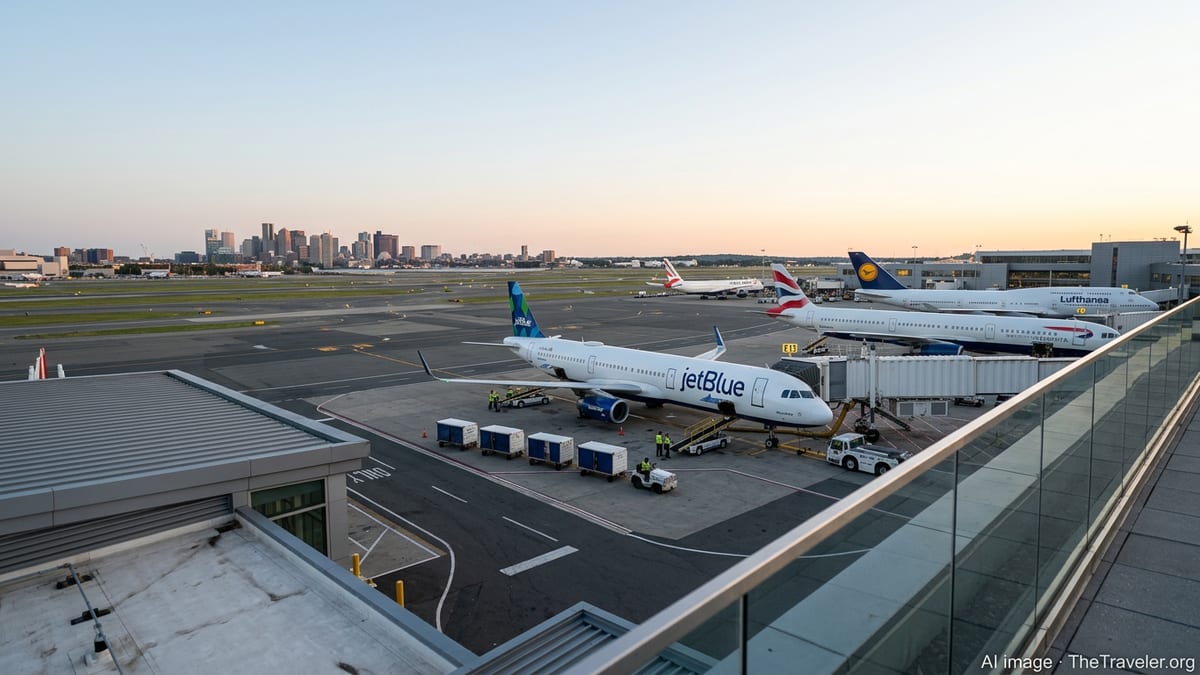
JetBlue is adding Milan to its growing roster of European destinations from Boston, cementing Logan International Airport as a key battleground in the transatlantic fight for U.S. leisure travelers and putting the airline in more direct competition with established rivals that already link New England to London, Paris, Amsterdam, Dublin, Madrid and Barcelona.
Milan and Barcelona Complete a New Boston–Europe Lineup
JetBlue plans to launch new daily summer seasonal service from Boston to Milan Malpensa and Barcelona in 2026, extending the carrier’s push into Europe from its New England focus city. According to the airline, flights to Josep Tarradellas Barcelona–El Prat Airport will begin on April 16, 2026, followed by service to Milan Malpensa on May 11, 2026. Both routes will operate during the peak summer travel season, with tickets offered on JetBlue’s website and usual booking channels.
The additions bring JetBlue’s Boston network to nine European destinations in the 2026 summer schedule: London Heathrow, London Gatwick, Paris, Amsterdam, Dublin, Madrid, Edinburgh, Barcelona and Milan. For the carrier, Milan marks a first entry into Italy, while Barcelona becomes its second Spanish destination after Madrid. All flights are set to be operated with narrow-body Airbus A321LR and A321neo aircraft, configured with the airline’s Mint premium cabin and its standard Core economy offering.
By adding Milan and Barcelona from Boston, JetBlue is positioning itself more squarely against major full-service competitors that already serve these cities nonstop from Logan or via their East Coast hubs. The move also strengthens Boston’s role as a transatlantic gateway, giving New England travelers an expanding menu of nonstop options to some of Europe’s most visited urban centers.
Boston Becomes JetBlue’s Transatlantic Flagship
While JetBlue entered the European market from New York in 2021 with flights to London, Boston has emerged as the more strategic springboard for its transatlantic ambitions. In recent seasons, the airline has layered on routes from Logan to Amsterdam, Dublin, London Gatwick, London Heathrow and Paris, then added Madrid and Edinburgh for 2025. With Barcelona and Milan arriving in 2026, JetBlue will offer nine daily nonstop flights to Europe from Boston at the height of the summer timetable.
This concentration effectively turns Logan into JetBlue’s transatlantic centerpiece, even as New York remains a key part of its wider network. The airline has consistently framed Boston as an attractive base for leisure-focused, long-haul routes, citing strong origin-and-destination demand in New England as well as healthy connecting traffic from across its domestic, Caribbean and Latin American operations.
From a competitive standpoint, the buildout allows JetBlue to match or closely track the breadth of European networks offered from Boston by larger legacy carriers. The presence of London, Paris, Amsterdam, Dublin, Madrid, Barcelona and now Milan gives the airline a portfolio that spans both business-heavy capitals and highly seasonal leisure favorites, providing flexibility to adjust capacity as demand ebbs and flows through the year.
Transatlantic Rivalry Heats Up Over Milan and Barcelona
The decision to add Milan and Barcelona from Boston comes as other airlines also target the same routes, turning them into focal points of a broader transatlantic rivalry. Delta Air Lines, for example, has been rolling out its own nonstop service from Boston to both Milan and Barcelona, framing the expansion as part of its largest-ever summer schedule to Europe. For travelers, that means more choice, increased competition on fares and products, and potentially better connectivity into European partner networks.
In Milan and Barcelona, JetBlue will be up against not just U.S. competitors but also European carriers that can feed passengers onward across the continent. Milan Malpensa offers links throughout Italy and into southern and central Europe, while Barcelona is a major Spanish hub with strong ties to Mediterranean and Latin American markets. JetBlue’s strategy hinges on differentiating itself with a more boutique, leisure-oriented experience at price points that undercut or pressure traditional full-service offerings in economy and premium cabins.
The presence of multiple players on the same Boston routes is likely to trigger tactical schedule adjustments, promotional fares and product enhancements as airlines look to carve out a loyal customer base. For Logan, the competitive dynamic underscores its evolution from a primarily U.S. and transborder facility into a significant North Atlantic gateway.
What the New Routes Mean for Boston Travelers
For passengers in New England, JetBlue’s latest additions translate to more nonstop choices and potentially smoother journeys to Europe’s marquee cities. Milan opens up direct access to northern Italy’s business district, design scene, shopping corridors and rail links to Lake Como and the Alps, which previously required at least one connection from Boston on many itineraries. Barcelona provides a direct bridge to Catalonia’s capital, a perennial favorite for architecture, food and beach breaks as well as a jumping-off point for cruises in the western Mediterranean.
The use of single-aisle A321LR and A321neo jets keeps capacity relatively nimble compared with traditional wide-body transatlantic aircraft. JetBlue’s cabins combine lie-flat Mint suites at the front with an all-economy Core section featuring in-seat entertainment, complimentary Wi-Fi and free snacks. That mix aims to appeal to both value-conscious leisure travelers and small business passengers looking for an alternative to the larger network airlines.
With more nonstop options now linking Boston to London, Paris, Amsterdam, Dublin, Madrid, Barcelona, Edinburgh and Milan, Logan-based travelers gain a wider canvas of city breaks and multi-stop European itineraries without a change of plane in New York or a continental hub. As airlines continue to recalibrate their networks for peak-season demand, Boston’s role as a launchpad for new transatlantic experiments looks set to grow.
JetBlue Bets on Leisure Demand and Narrow-Body Long Haul
The Boston expansion also illustrates how JetBlue is leaning into a wider industry trend toward long-range narrow-body aircraft on transatlantic routes. The A321LR and A321neo, with lower operating costs than many wide-body jets, give the airline the flexibility to serve secondary or highly seasonal markets that might not sustain year-round, large-capacity service. That model is especially suited to leisure-heavy routes such as Barcelona, Madrid and Edinburgh, where demand peaks in late spring and summer.
By aligning its schedule with those seasonal patterns, JetBlue has signaled that it will prioritize profitability and network agility over blanket year-round coverage. Year-round flights are concentrated on heavyweight routes like London Heathrow and Paris, while destinations that rely more on vacation travel are offered seasonally, allowing aircraft to be redeployed elsewhere during the off-peak months.
The gambit is that travelers will respond to a mix of lower fares, a more contemporary onboard product and the convenience of nonstop service from Boston. With Milan and Barcelona now added to its European map, JetBlue is betting that a leaner, leisure-led transatlantic strategy can hold its own against the sprawling global networks of its larger rivals, and that Logan will remain at the heart of that contest in the years ahead.