

More news on this day
JetBlue is set to deepen its footprint in South Florida with a fresh wave of Fort Lauderdale flights in 2025, adding new links to Dallas, Tampa and Cartagena as the carrier positions the airport at the center of its U.S.–Latin America growth plans.
Get the latest news straight to your inbox!
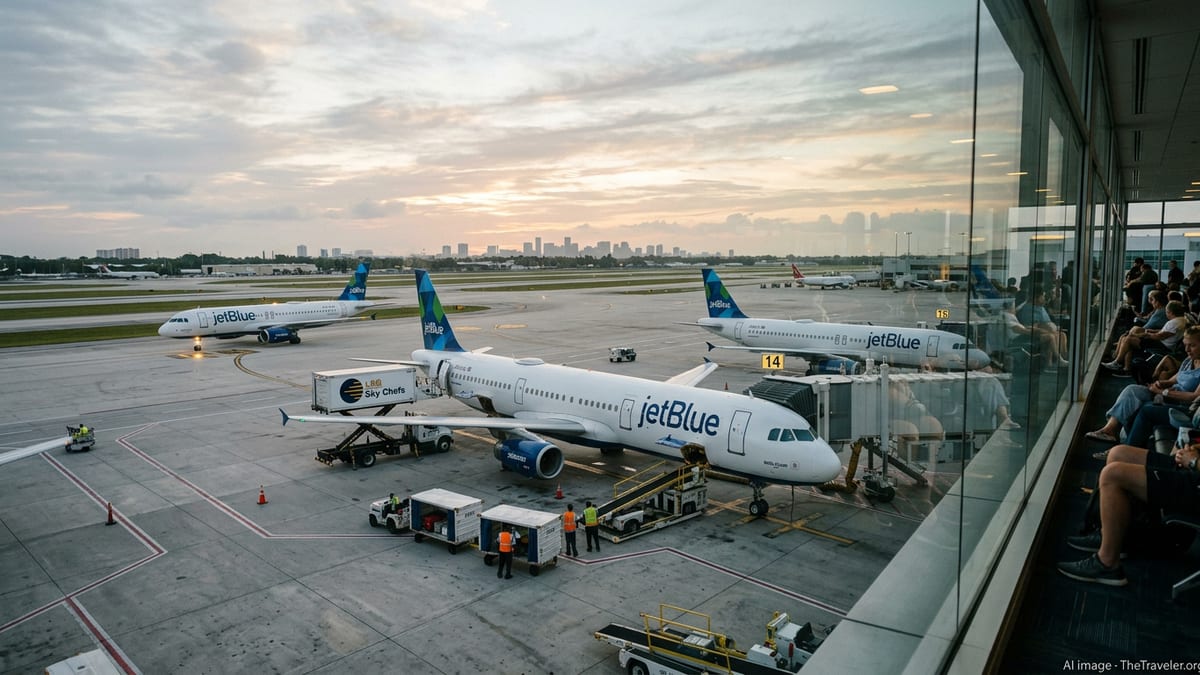
Fort Lauderdale Takes Bigger Role in JetBlue Network
Publicly available company presentations and filings show that JetBlue is planning its largest-ever schedule out of Fort Lauderdale-Hollywood International Airport in the upcoming winter season. The carrier anticipates more than one hundred daily departures serving close to fifty destinations, a level that would further entrench its role as the airport’s leading airline by seat capacity and departures.
The new and returning routes to Dallas, Tampa and Cartagena are described within a wider 2025 build-out that includes additional domestic and Caribbean markets from Fort Lauderdale. The expansion comes as JetBlue retools its broader network following industry consolidation efforts and shifting competitive dynamics across Florida.
While the exact start dates and weekly frequencies for the new Dallas and Cartagena flights were outlined for the 2025 winter season window, schedules remain subject to final timetable adjustments and regulatory clearances where applicable. The Tampa route, identified among JetBlue’s Fort Lauderdale highlights for 2025, is part of an effort to thicken service on short-haul Florida corridors that connect major population centers.
Together, these moves underscore Fort Lauderdale’s continued evolution from a strong focus city into one of JetBlue’s core connecting hubs, especially for leisure and visiting-friends-and-relatives travel between the United States and Latin America.
New Links to Dallas, Tampa and Cartagena
JetBlue’s planned Fort Lauderdale to Dallas service is expected to open a new nonstop link between South Florida and one of the largest metropolitan areas in the United States. For travelers, the route adds another option between the two markets beyond the offerings of legacy carriers and ultra-low-cost competitors that already serve the broader Dallas–Fort Worth region.
The Tampa route is positioned as an increase in frequency within Florida rather than a brand-new market, building on existing demand between the state’s west coast and its southeastern urban corridor. By adding more flights, JetBlue is aiming to capture travelers who might otherwise drive the four-hour journey across the peninsula or choose rival carriers on similar city pairs.
Cartagena stands out as the key international addition within the latest Fort Lauderdale plan. The historic Colombian coastal city has become one of the fastest-growing leisure destinations in the Caribbean basin, attracting both U.S. tourists and members of the Colombian diaspora living in Florida and Texas. New nonstop service from Fort Lauderdale to Cartagena is expected to give JetBlue an additional foothold in a market that has been expanding for several years.
All three routes are framed as part of a broader realignment of JetBlue’s network, prioritizing leisure and VFR demand patterns where the airline’s product and pricing can compete effectively. The combination of a major U.S. business market in Dallas, an in-state high-frequency corridor to Tampa and an international leisure draw in Cartagena is intended to balance seasonality and diversify revenue sources.
Strengthening Domestic and Latin America Connectivity
The Fort Lauderdale growth plan is tightly linked to JetBlue’s broader strategy in the U.S. southeast and Latin America. Network planning materials highlight a cluster of new or restored routes from Fort Lauderdale to destinations across the Caribbean, Central America and northern South America, positioning the airport as a key bridge between medium-sized U.S. cities and emerging tourism hubs in the region.
Within the United States, additional capacity from Fort Lauderdale to large domestic markets such as Dallas and Tampa complements JetBlue’s efforts to maintain relevance beyond its traditional strongholds in the Northeast. The airline has emphasized the importance of connecting traffic that links smaller U.S. cities to Latin America via Fort Lauderdale, allowing it to build scale on transborder sectors.
On the Latin American side, Cartagena joins a roster of Colombian and Central American destinations already tied into Fort Lauderdale. The new service is expected to enable more one-stop itineraries for travelers coming from secondary U.S. points, helping JetBlue compete against carriers that operate large connecting banks through Miami and other regional hubs.
Industry analysis suggests that Fort Lauderdale’s lower operating costs relative to some larger hubs remain an important factor in route planning. By concentrating flights here, JetBlue can deploy aircraft and crews across a web of domestic and international routes that share common demand peaks, particularly around winter holidays and school vacation periods.
Competitive Pressures in South Florida
The decision to expand at Fort Lauderdale comes amid intense competition across South Florida’s three major airports: Miami, Fort Lauderdale and Palm Beach. Legacy carriers, low-cost competitors and ultra-low-cost airlines all see the region as a core market, leading to frequent changes in capacity and route offerings.
According to schedule data cited in recent financial disclosures, JetBlue’s plan is to shift more of its Florida flying into markets where its product differentiation and loyalty programs can have the greatest impact. Fort Lauderdale’s role as a connecting hub for JetBlue contrasts with Miami’s focus on long-haul and alliance-driven traffic, while Palm Beach caters to a more seasonal, premium leisure audience.
By reinforcing Fort Lauderdale with routes such as Dallas, Tampa and Cartagena, JetBlue is seeking to defend and grow its share in a region where customer choice is high and fare pressure is constant. The mix of domestic and international additions also allows the airline to adjust capacity quickly if competitive conditions or macroeconomic trends change.
At the same time, the carrier is continuing to refine its network elsewhere in Florida, including frequency increases from other airports to Fort Lauderdale and other major Sunshine State destinations. This approach signals an attempt to build a more resilient Florida portfolio rather than relying on a small number of marquee city pairs.
What Travelers Can Expect
For passengers, the additional Fort Lauderdale flights to Dallas, Tampa and Cartagena are expected to translate into more schedule options and, potentially, added fare competition on busy corridors. Travelers will have increased opportunities to connect through Fort Lauderdale to other points in JetBlue’s network, especially across the Caribbean and Latin America.
JetBlue’s public materials indicate that the Fort Lauderdale build-out will continue to feature a mix of its Airbus narrowbody aircraft. While the headline expansion centers on seat and frequency growth, the airline has also highlighted customer-facing elements such as in-flight entertainment, Wi-Fi and its extra-legroom seating options as differentiators on competitive routes.
As with any new or expanded route launch, schedules and start dates may shift as airlines finalize their seasonal plans and adjust to operational considerations. Travelers are encouraged to monitor published timetables as the 2025 winter season approaches to identify the full range of frequencies and connection possibilities.
For Fort Lauderdale-Hollywood International Airport, the added capacity reinforces its role as a major gateway between the United States and Latin America and underscores how competition in South Florida continues to reshape the map of U.S. domestic and regional air travel.