

More news on this day
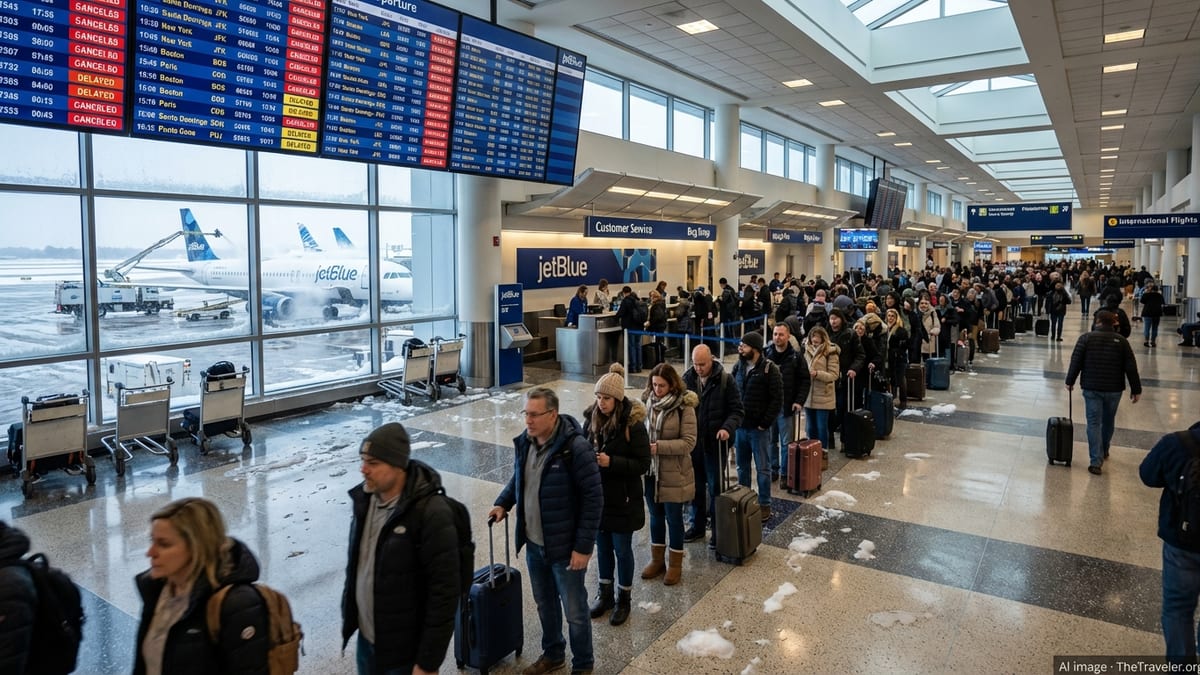
Thousands of air travelers found themselves stranded or scrambling to rebook on Monday as JetBlue grappled with 778 flight cancellations and at least 30 new delays tied to a powerful winter storm, disrupting traffic at major airports across the United States, France, the Dominican Republic and other international gateways.
Storm-Slammed Network Pushes JetBlue to the Brink
The latest wave of disruptions hit as a deep winter system swept through the northeastern United States on February 23, 2026, forcing JetBlue to cancel the majority of its schedule at some of its busiest hubs. According to flight-tracking data and airport operations reports, the airline led all U.S. carriers in scrubbed flights, with hundreds more delayed as crews, aircraft and airport teams struggled to keep up with snow, high winds and limited visibility.
JetBlue, which has built its brand around customer-friendly service, now finds itself at the center of one of the most severe operational breakdowns of the winter season. The carrier has been particularly exposed because of its concentration at weather-vulnerable airports such as New York’s John F. Kennedy International, Boston Logan and Fort Lauderdale, all of which have been hit repeatedly by storm systems this month.
The combined effect is a rolling disruption that has rippled far beyond the United States. International routes to and from France, the Dominican Republic, Puerto Rico and the wider Caribbean have been severely affected, leaving travelers stranded at both ends of transatlantic and trans-Caribbean journeys.
Major U.S. Hubs Choke Under Cancellations and Delays
In the United States, the storm’s epicenter was the busy Northeast corridor, where JetBlue maintains a dense schedule of domestic shuttles and international departures. At New York’s JFK, one of the airline’s primary bases, hundreds of JetBlue flights were grounded as the airport contended with heavy snowfall, icy taxiways and long queues for de-icing equipment. Similar scenes played out at nearby LaGuardia and Newark Liberty, where departures in all directions were thinned or halted for hours at a time.
Farther north in Boston, Logan International Airport reported waves of cancellations affecting both short-haul and long-haul services. JetBlue’s popular routes to Florida, the West Coast and the Caribbean were especially hit, with passengers reporting overnight waits, terminal crowding and limited access to rebooking agents as operations seesawed between brief windows of activity and extended ground stops.
In Florida, storm knock-on effects slowed operations at Fort Lauderdale, Orlando and Miami, key sun destinations for winter-weary travelers. While the weather there was less severe, the disruption upstream in the Northeast meant aircraft and crews simply did not arrive, forcing local cancellations and unexpected delays even under clear skies.
Transatlantic Links to France Disrupted
The turmoil also reached across the Atlantic to France, where JetBlue has built up a growing presence on key transatlantic routes. Flights linking New York and Boston with Paris-area airports faced rolling cancellations and extensive delays as the airline prioritized safety and attempted to reposition aircraft out of storm-battered U.S. hubs.
Passengers in France reported day-long waits and last-minute schedule changes as departure boards at major airports showed JetBlue services repeatedly marked as canceled or delayed. Travelers who had planned onward connections to other European cities or long-haul destinations were forced to scramble for alternatives, often at higher last-minute fares on rival carriers.
French airports themselves were not facing the brunt of the winter weather, but they became collateral victims of the chaos across the Atlantic. Ground staff and airport authorities emphasized that the root cause lay in aircraft and crews stranded in the United States, where the storm had disrupted flight rotations and broken the delicate timing that underpins long-haul schedules.
Dominican Republic and Caribbean Gateways Feel the Shockwaves
Across the Caribbean, airports in the Dominican Republic have been among the hardest hit international outstations as JetBlue’s network faltered. Las Américas International in Santo Domingo, Cibao International in Santiago and Punta Cana International saw clusters of JetBlue cancellations, particularly on routes to New York, Boston and Florida, where the winter storm has been most severe.
Local tourism authorities warned that repeated disruptions threaten to dent visitor confidence at the height of the winter travel season, when resorts in Punta Cana and coastal areas typically operate near capacity. Hotel operators reported an uptick in last-minute cancellation requests, as well as guests extending stays involuntarily while waiting for replacement flights to the United States.
Similar disruption has been reported in Puerto Rico and nearby islands, where JetBlue is a key connector linking regional airports with mainland U.S. cities. Flights between San Juan, the Dominican Republic and New York have been particularly vulnerable, as these services rely heavily on aircraft cycling through weather-affected northeastern hubs.
Passengers Confront Long Lines, Uncertain Timelines
For travelers caught in the middle of the turmoil, the numbers translate into a difficult and often exhausting experience. At crowded terminals from New York to Paris and Santo Domingo, queues stretched through check-in halls and into concourses as passengers attempted to rebook flights, secure meal or hotel vouchers and find updated information amid rapidly changing schedules.
Many passengers reported receiving short-notice cancellation alerts, often after arriving at the airport or while already in transit. Others said they struggled to reach airline support via phone or digital channels at peak periods, with hold times stretching to hours as call centers fielded a surge of inquiries from across the network.
The disruptions have had particular consequences for travelers on tight itineraries, including those connecting to cruises in the Caribbean, international conferences in Europe and family events. In some cases, trip plans have been abandoned entirely as available seats on alternative flights dwindled and complex itineraries became impossible to reassemble within planned timeframes.
Operational Strain Exposes Network Vulnerabilities
Industry analysts say the depth of JetBlue’s current disruptions highlights how vulnerable modern airline networks can be when extreme weather hits key hubs. The carrier’s concentration in the Northeast, while commercially logical in normal times, leaves it especially exposed when snowstorms and ice disrupt tightly choreographed aircraft rotations and crew schedules.
Once large blocks of flights are canceled, it can take days for an airline to restore normal operations. Aircraft and crews end up in the wrong cities, maintenance windows must be rearranged and legal limits on pilot and flight attendant duty hours constrain how quickly operations can ramp back up. Even as weather conditions improve, congestion in airspace and at gates can slow the recovery.
JetBlue has also been navigating broader industry challenges, including high demand during peak travel periods, limited spare capacity in its fleet and ongoing staffing pressures in some operational roles. When layered on top of a major storm, these factors compound the difficulty of mounting a swift and seamless recovery.
Industry and Regulators Scrutinize Resilience
The scale of the current wave of cancellations is likely to draw close scrutiny from regulators and consumer advocates on both sides of the Atlantic. In recent years, authorities in the United States and the European Union have signaled a tougher stance on airlines that leave passengers without timely information, adequate care during long disruptions or clear mechanisms for refunds and compensation where applicable.
While weather is generally considered an extraordinary circumstance that can exempt carriers from some financial liabilities, regulators increasingly focus on how airlines plan for predictable seasonal storms and how quickly they restore service once conditions allow. They also assess whether carriers communicate clearly with customers about options for rebooking, refunds and assistance during extended delays.
For JetBlue, the episode may revive questions about its ability to manage complex growth on transatlantic and Caribbean routes while maintaining reliable performance at congested U.S. hubs. Operational resilience, once a largely technical concern, has become a central strategic issue as airlines compete not only on price and onboard service but also on the likelihood that travelers will arrive where and when they planned.
What Travelers Can Expect in the Days Ahead
With 778 cancellations already logged and additional delays mounting, travel experts warn that JetBlue’s network could remain fragile for several days, even if the worst of the storm has passed. Some aircraft and crew imbalances may persist well into the week, particularly on longer-haul routes between the United States, Europe and the Caribbean.
Passengers booked on JetBlue in the coming days are being urged to monitor their flight status frequently, make use of mobile apps for real-time updates and consider adjusting itineraries proactively where flexible ticket rules or travel waivers allow. Airports suggest arriving earlier than usual, especially at major hubs where security queues and check-in lines may remain longer than normal.
Travel advisers also recommend packing essentials such as medications, a change of clothes and chargers in carry-on bags, given the heightened risk of overnight disruptions and missed connections. For travelers with nonrefundable hotel or tour reservations at their destinations, reaching out early to providers can sometimes yield flexible rebooking terms when airline disruptions are widely reported.