

More news on this day
A transatlantic JetBlue flight from New York to Paris has sparked a cross-border legal dispute after a passenger filed a lawsuit in the United States alleging she suffered painful dry ice burns when a drink was served aboard the aircraft.
Get the latest news straight to your inbox!
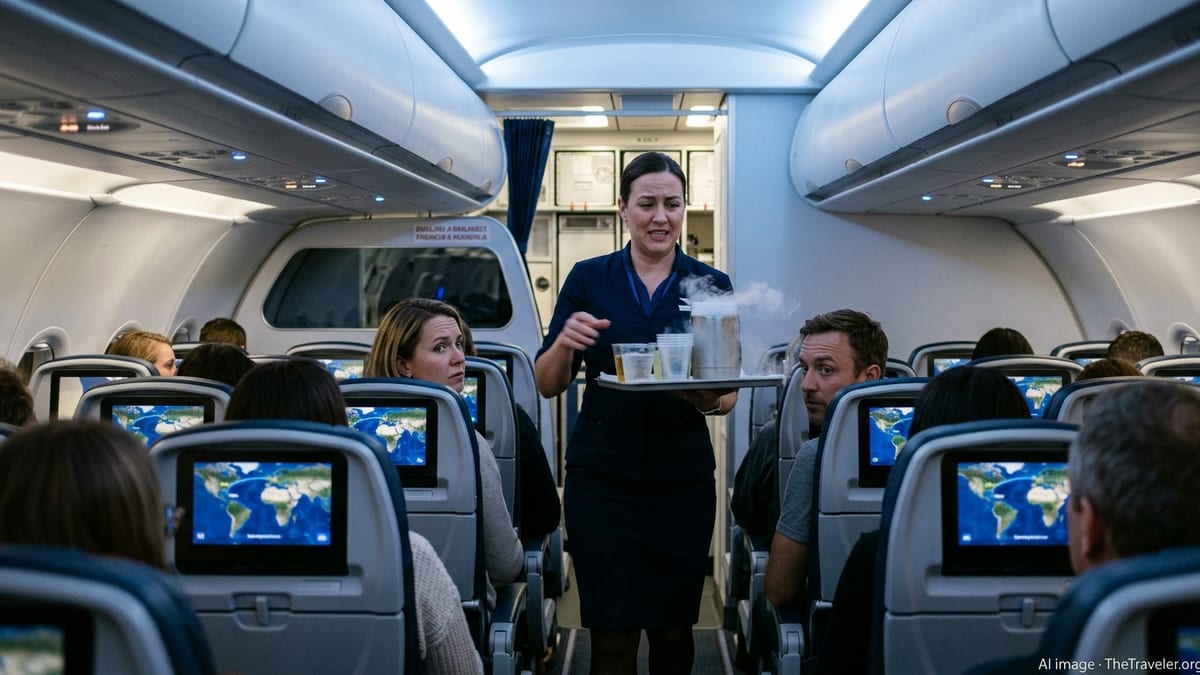
Lawsuit Alleges Dry Ice Mishandled in Cabin Service
According to publicly available court filings, the incident occurred on a JetBlue flight operating from New York’s John F. Kennedy International Airport to Paris Charles de Gaulle. During in-flight service, the passenger claims a crew member handed over a beverage that contained, or had come into contact with, dry ice, resulting in chemical burns when she attempted to drink it.
The complaint, filed in a New York federal court, states that the passenger experienced an immediate burning sensation to her mouth and throat. She is reported to have required medical evaluation after landing in Paris and alleges continuing pain and sensitivity following the flight.
The suit contends that dry ice, commonly used in aviation catering to keep food and beverages cold, was not handled or labeled with sufficient care in the cabin environment. The passenger’s legal team argues that the airline failed to ensure that any dry ice used during service was kept separate from items intended for direct passenger consumption.
The filing seeks damages for physical injuries, emotional distress, and related medical expenses, asserting that the incident was “unexpected and unusual” for the purposes of international air carriage law.
Claims Brought Under the Montreal Convention
Publicly available information indicates that the lawsuit has been brought under the Montreal Convention, the international treaty governing carrier liability for injuries to passengers on most international flights, including services between the United States and France.
Under the treaty, airlines are generally liable for proven damages resulting from an “accident” that causes death or bodily injury on board an aircraft or in the course of embarking or disembarking. The central legal question is often whether a particular event qualifies as an accident that is external, unexpected, and not inherent in the normal operation of the flight.
In this case, the passenger argues that being handed a drink that allegedly caused dry ice burns constitutes such an accident, and that the airline bears responsibility regardless of any contributory behavior by the passenger. The complaint maintains that the incident arose out of airline-controlled processes, including catering procedures and crew training.
The Montreal Convention also shapes where and how such claims can be brought. Because the flight originated in New York and the passenger has ties to the United States, the plaintiff is pursuing the case in a U.S. court even though the flight was heading to Paris, underscoring the cross-border nature of modern aviation disputes.
Cross-Border Implications for the United States and France
Although the lawsuit is proceeding in the United States, the case highlights how incidents on transatlantic flights can trigger overlapping interests for both U.S. and French legal systems. The journey linked New York and Paris, and the alleged injuries carried over into France, where the passenger reportedly sought initial treatment after landing.
Legal observers note that, while the Montreal Convention creates a broadly uniform framework, practical questions can still arise over medical documentation, expert assessments, and evidence obtained in different countries. Treatment records from French medical providers may become part of the evidentiary record in the U.S. proceedings.
The case also places renewed attention on how carriers serving France from the United States manage onboard safety protocols. Aviation lawyers indicate that rulings on what qualifies as an accident, or on the adequacy of airline procedures, can inform how future claims are litigated across the North Atlantic market connecting major hubs such as New York and Paris.
For travelers, the dispute serves as a reminder that liabilities for in-flight injuries on international routes are often determined in light of both domestic law and international treaty obligations, regardless of where the airline is based or where the traveler ultimately resides.
Focus on Airline Handling of Dry Ice and Passenger Safety
Dry ice is widely used across the aviation industry to keep perishable items cold during long-haul flights. However, because it is a solid form of carbon dioxide that can cause severe cold burns on contact and emit gas as it sublimates, industry guidance generally calls for careful handling, clear labeling, and controlled storage away from direct passenger contact.
The lawsuit argues that the airline did not adequately separate dry ice from items provided directly to passengers during cabin service. It raises questions about whether crew members received sufficient training on identifying containers or components that posed a risk of burns if touched or ingested.
Travel and consumer advocates often emphasize that, while serious dry ice incidents are rare, safety culture on board long-haul flights depends on strict procedures for food and beverage handling. The claim against JetBlue may prompt carriers operating transatlantic routes to review internal guidelines, especially on night or long-duration services where crew fatigue and high passenger volumes can add to operational pressure.
The case arrives at a time when travelers are increasingly attentive to their rights in the air, including responsibilities airlines have for injuries connected to catering, galley equipment, or other onboard systems under their control.
What the Case Could Mean for Future Passenger Claims
While the JetBlue lawsuit remains at an early stage, its outcome could have implications for how future passenger injury claims involving dry ice and cabin service are evaluated. A finding that this type of incident constitutes an accident under the Montreal Convention could encourage more passengers to bring claims when they believe catering-related injuries occurred on international flights.
Legal specialists point out that most such disputes are ultimately resolved through settlements, and detailed court judgments can be relatively rare. However, when courts issue written decisions interpreting the treaty, those rulings can influence how airlines assess risk, train crew members, and document onboard incidents.
For international travelers, the case underlines the importance of promptly reporting any in-flight injury, seeking medical attention upon landing, and retaining documentation such as boarding passes, medical records, and photographs. These records often form the backbone of any subsequent legal claim, whether pursued in the United States, France, or another jurisdiction connected to the journey.
As the JetBlue case progresses, it will be closely watched by aviation lawyers and consumer advocates on both sides of the Atlantic, who view it as part of a broader pattern of passengers testing the boundaries of airline liability in an era of expanding long-haul travel between the United States and Europe.