

More news on this day
A JetBlue passenger is pursuing legal action in both the United States and France after allegedly suffering dry ice burns during a flight from New York to Paris, focusing renewed attention on airline safety procedures and the complex web of international aviation liability rules.
Get the latest news straight to your inbox!
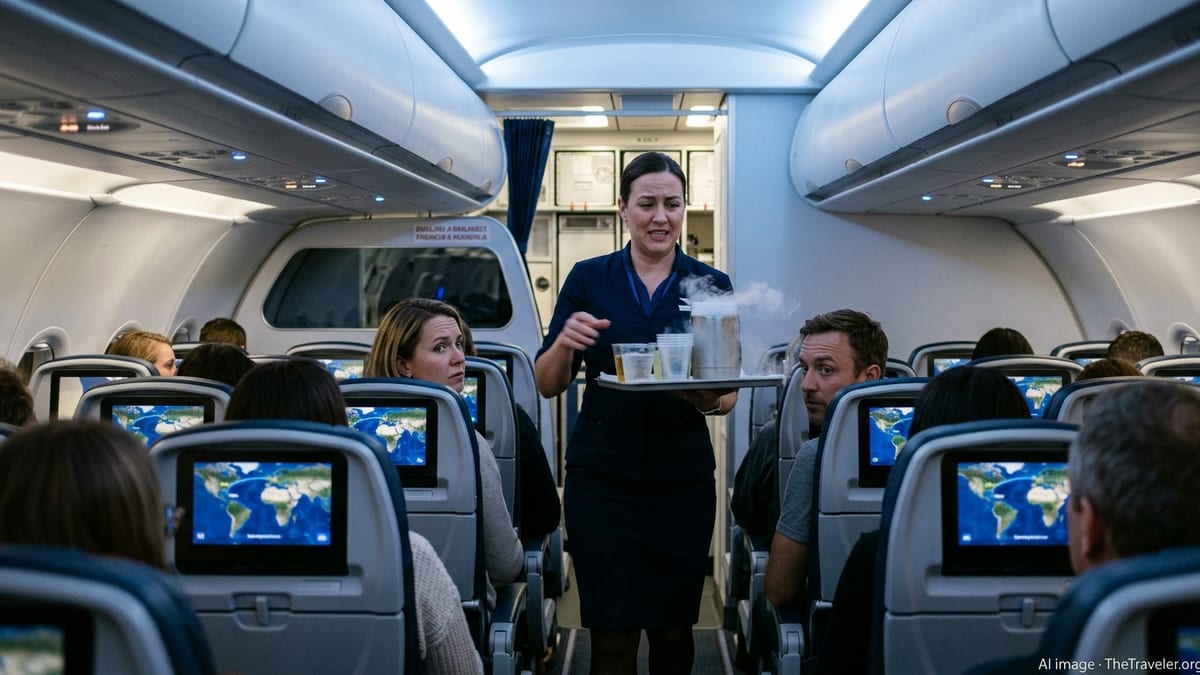
Incident on Transatlantic JetBlue Service
According to publicly available legal filings and media coverage, the case centers on an incident aboard a JetBlue-operated service between New York’s John F. Kennedy International Airport and Paris Charles de Gaulle. The passenger alleges that contact with dry ice used in connection with in-flight service resulted in burns during the transatlantic journey.
Reports indicate that the substance, typically handled by airline staff for cooling food and beverages, came into direct contact with the traveler in circumstances that will likely be closely scrutinized in court. The passenger claims to have sustained physical injury consistent with cold burns, sometimes referred to as freeze burns, and is seeking monetary damages.
The lawsuit contends that cabin crew and airline procedures failed to prevent hazardous exposure to dry ice, a material that must generally be handled with protective equipment and kept away from passengers. The passenger’s legal team argues that the incident meets the definition of an “accident” under international aviation law, opening the door to carrier liability.
Initial documentation suggests the complaint seeks compensation for medical costs, pain and suffering, and related damages. The exact amount requested has not been publicly detailed in all coverage, but the case is being portrayed by legal commentators as a significant test of JetBlue’s handling of in-flight safety risks on long-haul routes.
Legal Claims Span United States and French Jurisdictions
The litigation highlights how cross-border flights can bring multiple legal systems into play. Because the journey originated in the United States and landed in France, the passenger has invoked mechanisms available in both countries. Legal analysts note that such cases are often grounded in the Montreal Convention, the global treaty that governs airline liability for international carriage.
Under the Montreal framework, passengers generally may bring claims in several possible venues, including the country of destination and the place where the airline is domiciled or has its principal place of business. For a New York to Paris itinerary on a United States carrier, that can make both American and French courts potentially relevant forums.
Claims based on bodily injury typically depend on whether a court finds that an “accident” occurred during embarkation, flight, or disembarkation. In incidents involving onboard burns or contact with hazardous materials, aviation law specialists say the focus often turns to whether the event was unexpected or unusual from the passenger’s perspective and whether it can be traced to airline operations.
Publicly accessible case summaries and prior rulings involving other airlines show that courts have treated in-flight spillages, mishandled catering items, and unsafe storage of equipment as potential accidents under the treaty. The JetBlue dry ice case is expected to revisit similar questions, with the added dimension of an alleged chemical or thermal hazard rather than a typical hot liquid spill.
Dry Ice Handling Practices Under Renewed Scrutiny
Dry ice is widely used in aviation to keep food, beverages, and medical or technical items cold during long flights. While common in airline logistics, the substance requires caution because it is extremely cold and sublimates into carbon dioxide, which can create localised hazards if not properly ventilated or contained.
Guidance published by aviation safety bodies generally stresses that dry ice should not be placed in direct contact with passengers and should be managed with appropriate protective gear. Reports on the JetBlue case suggest that the lawsuit argues these standard precautions were not adequately observed, resulting in direct skin exposure for the traveler.
Aviation lawyers following the matter say the dispute may prompt carriers to re-examine how dry ice is packed and stored in galleys, how it is transported through the cabin, and what training is provided to crew. Even if the volume used on board remains relatively small, any incident that leads to visible burns can carry reputational and legal consequences.
Consumer advocates point out that similar disputes in the past, involving hot beverages or catering equipment, have sometimes led to updated airline manuals and revised crew briefings. Observers note that a high-profile case tied specifically to dry ice could accelerate the inclusion of more detailed handling rules in internal safety programs.
Implications for JetBlue and Transatlantic Operations
The lawsuit arrives at a time when JetBlue has been working to build its transatlantic presence, including services from Northeast hubs to major European cities. Legal commentators say that any finding of liability could influence how the carrier structures training and risk management on long-haul routes, particularly those subject to overlapping American and European regulatory expectations.
JetBlue has not issued detailed public commentary on the specific allegations beyond general statements in prior matters that it places a priority on customer safety. Industry observers note that airlines often refrain from addressing the specifics of ongoing litigation, relying instead on legal filings submitted to courts to present their position.
For travelers, the case underscores the role of international conventions and national laws in defining remedies when something goes wrong midflight. While compensation levels and procedural requirements can vary, passenger rights in cross-border aviation incidents are often shaped by a mix of treaty provisions, national regulations, and prior case law.
The eventual outcome could also influence how other carriers approach similar incidents. A decision that strongly favors the passenger may encourage more claims in comparable situations, while a ruling that narrows the circumstances under which dry ice incidents qualify as compensable accidents could reinforce a more restrictive view of airline liability.
Broader Context of Airline Liability and Passenger Safety
The JetBlue dry ice dispute adds to a growing body of litigation involving in-flight injuries, ranging from scalds caused by hot drinks to injuries from falling luggage or service carts. Legal records show that such cases often turn on detailed factual questions about crew actions, onboard procedures, and whether the event could reasonably have been avoided.
Specialists in aviation law note that airlines already operate under strict safety regimes governed by national regulators and international treaties. Yet courtroom cases can expose gaps between written procedures and real-world practices, prompting adjustments that may not have emerged solely through internal audits or regulatory inspections.
As the case progresses through the legal system, analysts expect that filings and court decisions will shed more light on precisely how the incident unfolded and how responsibility is allocated between airline staff, corporate policies, and the broader regulatory framework. For now, the matter stands as a pointed reminder that even routine elements of in-flight service, such as cooling food and drinks, can carry legal as well as safety implications if something goes wrong.
With travel demand between North America and Europe remaining strong, the outcome of the JetBlue lawsuit will be closely watched by passengers, industry observers, and carriers alike. The case reinforces the continuing debate over how best to balance operational efficiency, customer experience, and rigorous protection against onboard hazards on some of the world’s busiest international routes.