

More news on this day
A recent report alleging that a JetBlue Mint passenger engaged in sexually explicit behavior onboard, while being identified as a top-tier Mosaic 4 loyalty member, is drawing renewed attention to how airlines handle inflight misconduct and the balance between customer status and cabin safety.
Get the latest news straight to your inbox!
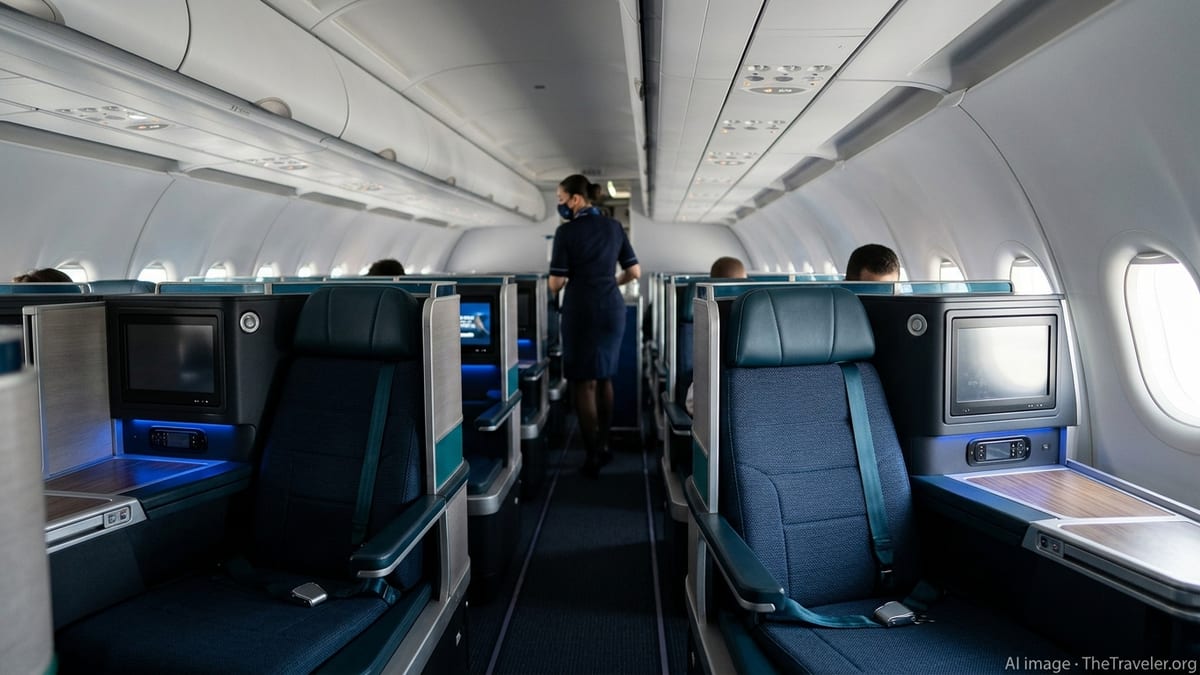
The Reported JetBlue Mint Cabin Incident
Online aviation forums and social media posts in late March 2026 began circulating an alleged JetBlue crew communication referring to a “passenger in 5C Mint” who was reportedly masturbating during a flight and described as “a Mosaic 4.” The phrase, framed as if taken from an internal crew message, has not been independently verified through formal public records. However, the intensity of public reaction has focused less on the specific flight details and more on the broader issues of passenger behavior, crew response and whether elite status affects how such situations are addressed.
Publicly available information does not yet indicate the date, route or flight number associated with the alleged exchange, nor whether any law enforcement follow-up took place after landing. The lack of confirmed operational details has led many observers to treat the account as an illustrative example within a wider pattern of inflight harassment reports, rather than as a fully documented case on its own. Even so, the combination of a premium Mint seat assignment and reference to Mosaic 4 status has sharpened debate about whether loyalty hierarchies risk creating perceived double standards in cabin discipline.
Sexually explicit behavior in the confined space of an aircraft cabin is widely recognized by safety specialists as both a potential criminal matter and a serious disruption to passengers and crew. In similar past cases documented across the industry, such conduct has led to diversions, arrests on arrival and lifetime bans from carriers. As discussions around the JetBlue Mint allegation continue, many frequent flyers and cabin crew advocates have used it to call for more consistent rules and transparent consequences.
JetBlue Mint and the Mosaic 4 Loyalty Tier
JetBlue’s Mint product is the airline’s premium offering, featuring lie-flat seats, enhanced catering and an upgraded ground experience on select routes. According to JetBlue’s published materials, Mint is marketed toward travelers seeking a business-class style experience on transcontinental and select international flights, including routes linking major hubs such as New York, Boston and select West Coast or Caribbean destinations. The cabin is typically smaller and more intimate than the main economy section, which heightens the impact when disruptive behavior is reported in those seats.
JetBlue’s overhauled TrueBlue loyalty program, updated in recent years, introduced a tiered Mosaic structure that extends up to Mosaic 4. Public descriptions of the program indicate that this top level is reserved for travelers who earn a high number of so-called tiles, generally through significant annual spending on flights and cobranded credit cards. Reported benefits for Mosaic 4 members have included priority services, upgrades and access to select premium experiences above and beyond what is offered at lower tiers.
The reference to “he is a Mosaic 4” in the alleged crew message has struck a chord because it explicitly links an accusation of serious misconduct with a passenger’s elite rank. Aviation analysts note that loyalty programs are designed to reward profitable customers, not to influence the enforcement of inflight rules. Still, when status is mentioned in the same breath as unacceptable behavior, it can create public suspicion that higher-value customers might be handled differently than others, even if airline policies do not formally distinguish between them in matters of safety and conduct.
Inflight Sexual Misconduct and Airline Responsibilities
Published coverage from government agencies and advocacy organizations shows that inflight sexual harassment and assault have been rising concerns for regulators and carriers for several years. Reports indicate that improper touching, indecent exposure and other forms of sexual misconduct are among the most underreported inflight offenses, often occurring when cabins are dark or when neighboring passengers feel uncomfortable speaking up. In response, many airlines have gradually updated internal procedures, crew training and post-flight reporting pathways.
Airlines operating in and out of the United States are subject to a patchwork of criminal laws depending on where the aircraft is registered, where it is located when the conduct occurs and where it lands. In many documented cases, disruptive or criminal sexual behavior has led to involvement from airport police or federal law enforcement once a flight arrives at the gate. Crew members are trained to prioritize immediate safety in the cabin, which can include reseating affected passengers, issuing warnings to disruptive individuals and coordinating with ground staff to ensure that any required reports are filed.
Industry guidance emphasizes that inflight behavior expectations apply equally to all passengers, regardless of ticket class or loyalty status. From a safety and legal perspective, a traveler in a premium lie-flat seat is subject to the same baseline rules as someone in a standard economy row. The heightened scrutiny surrounding the alleged JetBlue Mint incident underscores the pressure on airlines to demonstrate that their front-line decisions on misconduct are grounded in policy and law, not in the commercial value of any particular customer.
Crew Communication, Evidence and Passenger Privacy
The phrase “passenger in 5C Mint is masturbating” has drawn attention partly because it appears framed as an internal crew communication rather than as a public-facing statement. Modern aircraft and airline operations rely on a mix of discreet messages between flight attendants, cockpit crews and ground teams to manage medical events, security concerns and disruptive behavior with minimal impact on the wider cabin. These exchanges are generally not intended for public distribution, which complicates assessments when partial or unattributed fragments appear online.
When allegations of misconduct arise, cabin crews must make quick judgments based on what they personally observe, what other crew report and what nearby passengers are willing to describe. In many cases, there may be no video or photographic record, both because of privacy rules and because not every incident is captured by personal devices. Publicly available information about the JetBlue case does not indicate whether other passengers corroborated the alleged behavior or whether any formal complaint was filed after landing.
At the same time, passengers who are the subject of such accusations retain privacy and due process rights. Airlines tend to avoid naming individuals in public statements about onboard disturbances unless criminal charges or civil proceedings make those identities part of the public record. The current discussion around the alleged Mint incident therefore remains focused on process and policy, rather than on the identity of the traveler in the seat referenced by the circulating message.
Loyalty Programs, Perceptions of Fairness and Traveler Trust
The combination of a premium cabin, a specific seat number and a top-tier loyalty designation in the alleged JetBlue message has amplified wider questions about fairness in customer treatment. Frequent flyer communities have long debated whether high-status travelers receive more lenient responses to seat disputes, alcohol-related disturbances or other forms of disruptive behavior. Published commentary from aviation consumer advocates suggests that even the perception of unequal enforcement can erode trust in an airline’s brand.
From a commercial standpoint, airlines have strong incentives to protect the experience of all passengers, not only those in first or business class. Reputational damage from a widely discussed incident can extend far beyond a single flight, especially when stories of harassment or unsafe environments circulate among travelers who are deciding which carrier to book. The JetBlue Mint allegation, regardless of how fully it is ever documented, has entered that broader conversation as a cautionary example of how quickly internal information can reshape public perceptions.
For travelers, the episode is a reminder to familiarize themselves with airline codes of conduct, to report any inappropriate behavior they witness and to understand that loyalty status is intended to recognize spending, not to grant leeway for actions that make others feel unsafe. As airlines continue refining their training and response frameworks, transparency around how inflight misconduct is handled may become an increasingly important factor in how passengers choose between carriers and cabin classes.