

More news on this day
The United States aviation sector faces a new legal flashpoint as a group of JetBlue pilots files suit over the carrier’s Blue Sky partnership with United Airlines, arguing the tie-up threatens pilot jobs, undermines collective bargaining rights and risks eroding competition in key domestic markets.
Get the latest news straight to your inbox!
Blue Sky Partnership Expands Networks and Loyalty Reach
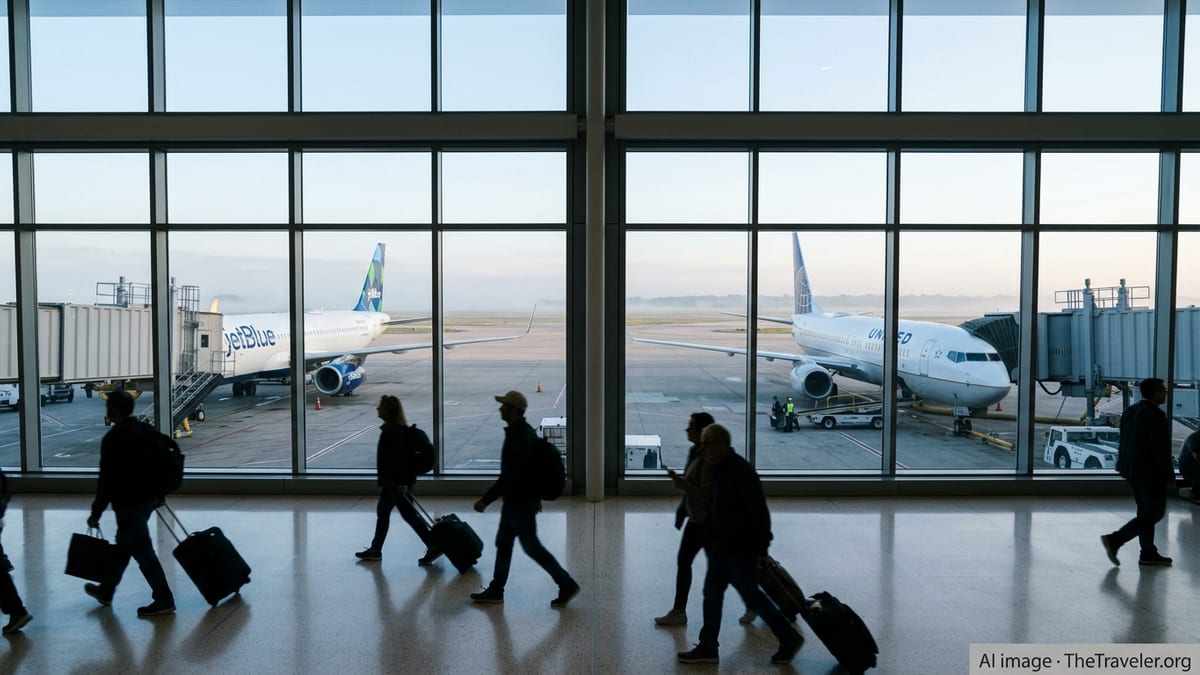
The Blue Sky collaboration between JetBlue and United Airlines was introduced as a broad commercial tie-up spanning both carriers’ domestic and international networks. Publicly available information shows the partnership centers on reciprocal frequent flyer benefits, coordinated booking options and an interline arrangement that allows travelers to combine segments from both airlines on a single itinerary.
Blue Sky is described in regulatory filings as a systemwide arrangement, extending beyond a handful of routes to cover much of each airline’s network. The alliance enables JetBlue’s TrueBlue members to earn and redeem points on select United flights, while United’s MileagePlus members gain similar access on JetBlue services. Industry coverage indicates that the tie-up stops short of a full codeshare or joint venture, meaning each airline continues to market and price its own flights independently.
The partnership received clearance from the U.S. Department of Transportation after a period of review, according to reports on the implementation timeline. That green light followed heightened scrutiny of airline collaborations in the wake of the Justice Department’s successful challenge to JetBlue’s former Northeast Alliance with American Airlines and the separate lawsuit that derailed JetBlue’s attempted acquisition of Spirit Airlines.
Supporters of Blue Sky have presented the arrangement as a consumer-friendly alternative to consolidation, offering more one-stop and connecting options without a formal merger. In practice, the deal gives United and JetBlue a way to extend their reach in the congested New York and Newark area and on other competitive corridors, while retaining separate corporate structures and brands.
Pilots’ Lawsuit Targets Jobs, Seniority and Bargaining Power
The newly filed lawsuit by JetBlue pilots takes direct aim at the Blue Sky partnership, framing it as a threat to pilot roles, pay scales and long-standing labor protections. Early descriptions of the complaint indicate that the pilots, acting through their union representation, contend that shifting flying to partner-operated aircraft could undercut JetBlue crews’ opportunities and weaken negotiated scheduling and staffing rules.
According to legal summaries circulated in aviation circles, the plaintiffs argue that any meaningful sharing of flying between the two airlines risks blurring the line between in-house and partner operations. They contend that if United aircraft increasingly operate routes that JetBlue could fly itself, JetBlue pilots may see slower career progression, reduced access to premium routes and fewer chances to build seniority.
The pilots’ legal filing reportedly raises concerns that Blue Sky could function as a de facto capacity-sharing arrangement in certain markets, even if it falls short of a formal joint venture. In their view, this type of cooperation might give the carriers flexibility to reassign aircraft, consolidate frequencies and reduce overlap in ways that ultimately diminish cockpit jobs at JetBlue.
Pilot representatives also point to the history of the now-defunct Northeast Alliance between JetBlue and American Airlines, where unions voiced similar fears over job security and the outsourcing of flying to partner carriers. The new lawsuit asserts that Blue Sky must be constrained in ways that protect JetBlue pilots’ contractual rights and keep core flying within the JetBlue operating certificate.
Regulators Revisit Competition Concerns After Earlier Court Battles
The pilots’ challenge arrives as U.S. regulators and courts remain vigilant toward airline collaborations. The Justice Department successfully argued in federal court that the Northeast Alliance between JetBlue and American Airlines violated antitrust laws by reducing competition on key routes in the Northeast. Reports indicate that the court found the earlier alliance effectively combined operations in a manner resembling a partial merger.
Against that backdrop, the Blue Sky partnership has drawn attention from rivals and policymakers who question whether it could gradually reshape competitive dynamics, particularly in the New York region and other constrained hubs. Spirit Airlines previously urged the Transportation Department to block the partnership, arguing in public filings that the tie-up would concentrate power among larger carriers and incentivize similar deals across the industry.
Supporters of Blue Sky highlight that, unlike the Northeast Alliance, the JetBlue United collaboration is built around loyalty integration and interline cooperation rather than full schedule coordination or revenue sharing. Regulatory materials describe Blue Sky as avoiding metal-neutral joint venture features such as joint pricing and capacity planning, which were central to prior antitrust concerns.
The pilots’ lawsuit introduces a parallel line of scrutiny by focusing not only on consumer fares and route competition but also on the distribution of flying across fleets and carriers. If the case proceeds, court filings and discovery could shed light on how the two airlines modeled capacity shifts and employment impacts when negotiating the partnership.
Implications for Travelers and Future Airline Partnerships
For travelers, Blue Sky has been marketed as an expansion of choice, giving passengers more flexibility to mix and match itineraries and loyalty benefits across JetBlue and United. Frequent flyer communities have closely watched the rollout, noting early details on reciprocal earning, redemption options and the integration of elite perks such as priority services and baggage allowances.
The legal dispute by JetBlue pilots introduces uncertainty around how fully the partnership will be implemented and whether any concessions or modifications may be required to address labor concerns. Analysts following the case suggest that the airlines may face pressure to clarify which routes and functions will remain exclusively in-house, and where partner operations are expected to play a more substantial role.
If courts ultimately impose limits on the partnership, future cooperative ventures across the U.S. airline sector could be designed with more explicit safeguards for pilot groups and other labor stakeholders. Observers note that labor objections are increasingly shaping the contours of airline strategy, especially in a tight pilot labor market where carriers compete for qualified crews.
At the same time, travelers could see short-term turbulence in schedules or booking options if litigation delays elements of the rollout or prompts revisions to planned route combinations. Industry commentary indicates that both airlines are attempting to balance the attraction of an expanded network with the need to maintain stable operations and workforce relations.
Labor Relations, Policy Debates and the Road Ahead
The JetBlue pilots’ lawsuit adds a prominent labor dimension to ongoing national debates over airline consolidation, alliances and consumer choice. Union leaders across the sector have increasingly leveraged legal tools and contract negotiations to influence how carriers use partnerships, subcontracting and regional affiliates to deploy aircraft and crews.
Policy specialists tracking the JetBlue United agreement note that the outcome of this dispute could inform how the federal government evaluates future partnerships that stop short of mergers yet still involve deep commercial ties. If Blue Sky is upheld without significant changes, airlines may view loyalty-based and interline-centered collaborations as a more viable path to scale. If courts or regulators require tighter boundaries, carriers may be forced to reconsider how far such arrangements can go without triggering antitrust or labor challenges.
For travelers, the case underscores how decisions made in boardrooms and bargaining sessions can shape route maps, fare structures and service options across the United States. As the lawsuit progresses, consumer advocates, rival airlines and airport authorities are expected to monitor developments closely, watching for any signals that could indicate broader shifts in the competitive landscape.
With the legal process in its early stages, the Blue Sky partnership continues to operate while JetBlue pilots seek judicial review of its contours and consequences. The dispute places the United States once again at the center of a global conversation about how to balance airline cooperation, fair competition and the rights of the workers who keep increasingly complex networks in the air.