

More news on this day
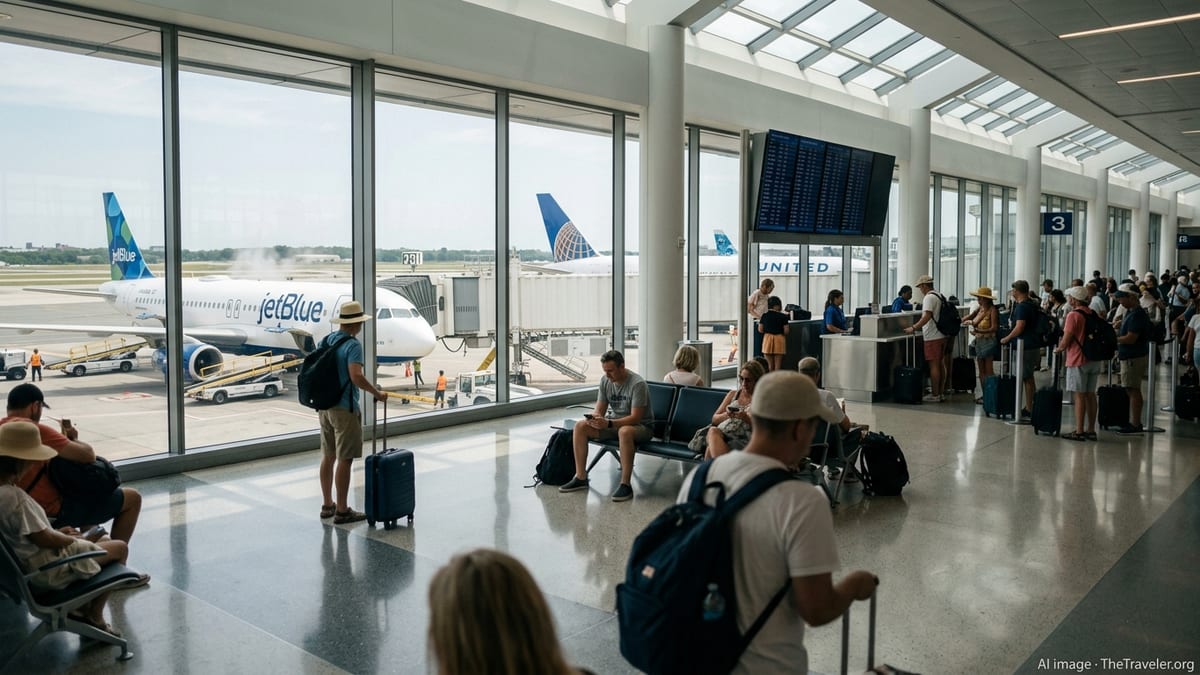
JetBlue’s new Blue Sky partnership with United Airlines is facing turbulence from inside the cockpit, as the carrier’s pilots file suit to challenge the deal and raise alarms about its impact on jobs, safety and the airline’s future growth just as peak summer travel approaches.
Get the latest news straight to your inbox!
What the Lawsuit Is About
The lawsuit centers on JetBlue’s Blue Sky collaboration with United Airlines, a wide-ranging commercial and loyalty partnership announced in 2025. Publicly available information describes Blue Sky as linking the carriers’ frequent flyer programs, allowing customers to earn and redeem points across both airlines and access a wider network of routes, particularly through New York and Boston. The agreement also covers coordinated access to airport slots and gate timings at key airports such as John F. Kennedy International and Newark Liberty International.
The pilots’ union alleges that JetBlue’s management moved ahead with Blue Sky without fully honoring labor commitments tied to existing contracts and bargaining obligations. The complaint argues that elements of the arrangement may change how flying is allocated between JetBlue and United, with possible consequences for JetBlue pilot staffing, seniority protections and long term career progression.
Union filings point to previous antitrust scrutiny of airline alliances, including a federal ruling that forced JetBlue and American Airlines to unwind their Northeast Alliance on competition grounds. By invoking that history, the pilots seek to portray Blue Sky as another transformative partnership that, in their view, should not proceed without stronger safeguards for the JetBlue workforce.
JetBlue has publicly promoted Blue Sky as a consumer friendly collaboration that broadens choice and strengthens its competitive position against larger network carriers. At the same time, United has described the deal as a way to add New York capacity using JetBlue’s existing slots, while giving MileagePlus members new access to leisure routes in the Caribbean, Florida and beyond.
How Blue Sky Could Reshape JetBlue’s Network
Analysis of Blue Sky details published by the airlines indicates that the partnership reaches beyond a simple earning and redemption tie up. Over the next several years, United is expected to return to JFK using slots made available by JetBlue, while both airlines gain flexibility at Newark through an exchange of flight timings. For travelers, that could translate into more one stop options and better connectivity across domestic and international routes.
For pilots, however, the same changes can carry different implications. Union leaders have signaled concern that shifting flying toward United on certain long haul or higher yield routes might reduce growth opportunities for JetBlue crews, even if overall seat capacity in the market rises. If more passengers connect via United’s long haul network, pilots fear JetBlue could evolve toward a feeder role at key hubs rather than building its own long range portfolio.
Labor filings also highlight the broader context in which Blue Sky emerged. JetBlue has been under financial pressure after the collapse of its proposed Spirit Airlines acquisition and the court ordered breakup of the Northeast Alliance. Industry analysts note that partnerships such as Blue Sky can be a way for a mid sized carrier to remain relevant against the largest four U.S. airlines, which command a dominant share of domestic capacity. For pilots, the question is whether that strategy secures growth at JetBlue or gradually shifts it elsewhere.
Regulatory agencies are watching the evolution of airline joint ventures closely, especially when they involve slot constrained airports. While there is no indication of an imminent government challenge to Blue Sky, the pilots’ lawsuit effectively invites closer scrutiny of how the partnership is structured and whether it affects competition, staffing levels and service to smaller markets.
Could Summer Flights Be Grounded?
For travelers trying to make sense of the legal fight, the most pressing question is whether the lawsuit could disrupt summer travel. Based on the current record, the answer is that widespread cancellations or shutdowns appear unlikely in the near term. The case is a civil dispute focused on contract and labor law issues, not a safety grounding or regulatory enforcement action that would immediately take aircraft out of service.
Courts typically move on timelines measured in months, not days, especially in complex aviation and labor matters. Even if judges ultimately side with the pilots on specific claims, remedies often involve orders to bargain, adjustments in how a partnership is implemented, or potential monetary damages rather than abrupt schedule cuts. That said, the lawsuit adds pressure to an airline that is already juggling tight staffing and high summer demand.
The more immediate operational risk comes not from the lawsuit itself but from the broader labor climate it reflects. If negotiations between JetBlue and its pilots were to deteriorate sharply, routes during peak periods could face delays or reductions. While pilots in the United States operate under laws that make sudden work stoppages less common than in some other industries, prolonged disputes can still contribute to scheduling strain and reduced flexibility when weather or air traffic challenges arise.
Travelers should therefore view the lawsuit as one factor among many shaping JetBlue’s reliability this summer. Weather, air traffic control constraints and airport congestion historically play a larger role in day to day disruptions than courtroom developments. However, the legal fight underscores how sensitive the airline’s network plans are to internal labor relations at a time when demand remains high and spare capacity is limited across much of the industry.
What Passengers Should Watch in the Coming Months
Passengers booked on JetBlue or United this summer do not currently need to change travel plans solely because of the lawsuit. Most Blue Sky features, such as reciprocal earning and redemption of frequent flyer points, are expected to remain in place while the case proceeds. Schedules already published for key vacation periods should operate largely as advertised, barring normal operational disruptions.
Frequent travelers, however, may want to monitor several developments. One is whether JetBlue and the pilots’ union reach any interim agreements or updated contract language addressing the partnership. Publicly available filings indicate that unions often seek specific guardrails on how much flying can be shifted to a partner airline, as well as provisions governing training, base closures and aircraft transfers. Concrete progress on those fronts could lower the risk of longer term disruption.
Another factor to watch is whether regulators or rival airlines weigh in more aggressively on Blue Sky. Spirit Airlines has already asked federal transportation officials to take a harder look at the partnership’s competitive effects, arguing in public comments that it resembles the Northeast Alliance structure that a court previously rejected. If government agencies open a deeper review, that could introduce additional uncertainty about how the collaboration evolves through 2027 and beyond.
For now, consumer advocates advise travelers to keep basic protections in place for summer trips. That can include choosing itineraries with more than one daily frequency on key legs, monitoring schedule changes in airline apps, and ensuring that at least one leg of a complex trip is on a larger hub where rebooking options are more plentiful. Those steps help mitigate routine risks in a busy travel season, regardless of how the JetBlue pilots’ lawsuit ultimately plays out.