

More news on this day
JetBlue Airways is cutting back flights at New York’s LaGuardia Airport after its chief executive warned that soaring fees tied to the hub’s multi‑billion‑dollar overhaul are making it increasingly difficult to run a profitable schedule there.
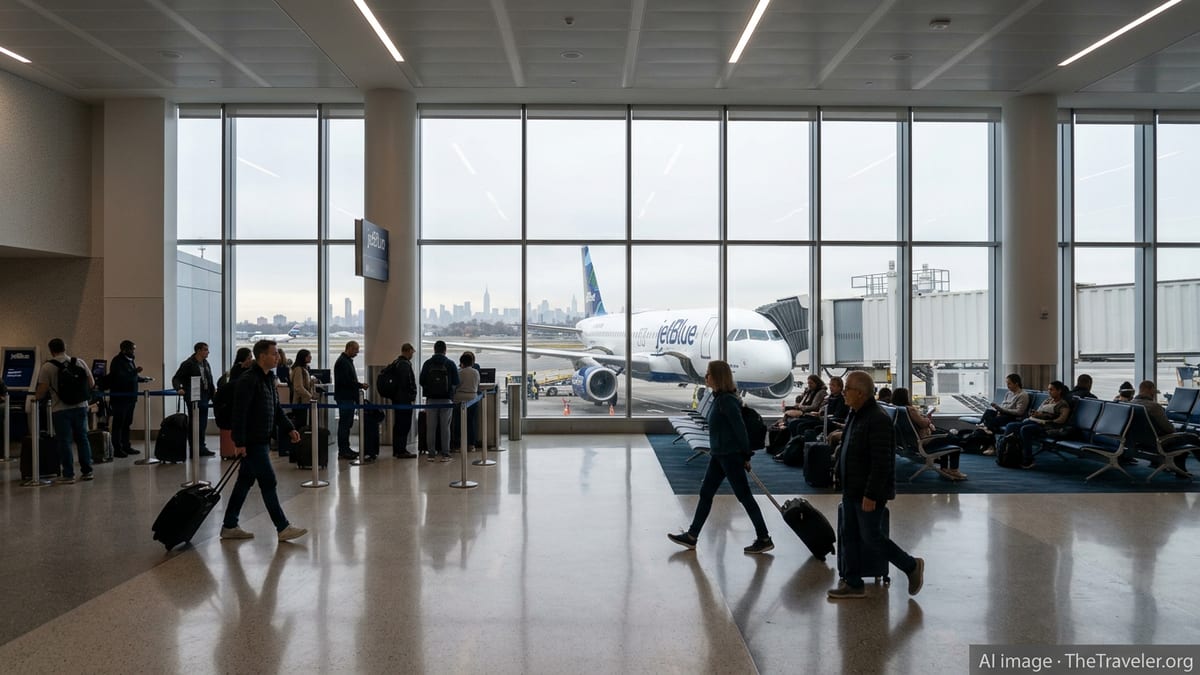
JetBlue Cites Cost Squeeze at Revamped LaGuardia
JetBlue’s latest network adjustment centers on LaGuardia, one of the country’s most congested and expensive airports. Chief executive Joanna Geraghty has warned that charges at the Queens facility have climbed sharply following its multi year reconstruction, squeezing margins on short haul routes that already operate on thin profits.
In comments reported in recent days, Geraghty said LaGuardia had become “too expensive” for the carrier to sustain a large program of flights, pointing to a jump in airport rents and usage fees layered on top of higher labor and fuel costs. The airline is now trimming frequencies on select routes and reallocating aircraft to other New York area airports and focus cities where it believes returns will be stronger.
The pullback underscores how airport pricing, often negotiated years in advance, is colliding with an industry still trying to restore profitability after the pandemic and a series of operational shocks. For JetBlue, which has a strong leisure and visiting friends and relatives customer base, higher charges at LaGuardia risk pushing fares beyond what many travelers are willing to pay.
LaGuardia’s redevelopment, completed in stages over the past several years, has delivered brighter terminals, expanded concessions and new taxiways, but those improvements carry long term financing obligations. Airlines say those costs are increasingly flowing through in the form of higher landing fees, gate rents and passenger facility charges.
Slot Waivers, Staffing Strains and a Fragile New York Market
JetBlue’s LaGuardia reset also comes against a backdrop of broader constraints in the New York air travel market. The Federal Aviation Administration has extended temporary relief on minimum slot usage requirements at New York’s busiest airports through late 2026, acknowledging that air traffic controller shortages still limit how many flights can be handled safely during peak hours.
Those waivers give airlines flexibility to cut or consolidate flights without risking the loss of coveted takeoff and landing rights, creating an opening for carriers like JetBlue to trim less profitable services. At the same time, periodic government shutdowns and staffing shortfalls have already forced system wide schedule reductions and delays, leaving airlines cautious about piling more capacity into a still fragile operating environment.
New York’s three major airports have also faced bouts of extreme congestion, weather disruptions and construction related bottlenecks in the past two years. Carriers have increasingly argued that operating fewer, fuller flights with larger aircraft can be more reliable and cost effective than maintaining dense schedules built around frequent short hops.
The combination of higher airport charges and operational uncertainty has turned LaGuardia into something of a stress test for airline strategies. For JetBlue, which previously leaned on New York growth to power its network, the airport now looks more like a place to defend key routes rather than aggressively expand.
Impact on Travelers and Fares From LaGuardia Changes
For travelers, JetBlue’s LaGuardia cuts are expected to translate into fewer daily frequencies on select business and leisure routes, particularly short haul services where alternative airports such as JFK and Newark offer viable options. While the airline is not abandoning LaGuardia, the schedule reductions will likely narrow timing choices for some passengers.
Industry analysts say reduced competition and capacity at high demand airports tend to push fares higher over time, especially on peak business days. With costs rising across the board, airlines have signaled that ticket prices are unlikely to fall meaningfully even as they prune underperforming flights. Passengers may find the best deals by being flexible on departure times and considering nearby airports in the New York region.
The changes could be especially noticeable for travelers who favor JetBlue for its legroom, free Wi Fi and no frills premium cabin on some routes. Customers who typically connect through LaGuardia may see more itineraries rerouted via JFK, Boston or Florida hubs as the carrier rebalances its network. That shift might add travel time but could also open up new one stop options to the Caribbean and Latin America.
Local business groups and tourism officials will be watching closely to see whether other carriers follow JetBlue’s lead in citing costs as a reason to adjust LaGuardia schedules. A broader retrenchment by airlines could eventually affect the region’s connectivity, particularly for medium sized cities that rely on New York links for corporate and convention travel.
Airline Economics: Fees, Fuel and a Focus on Profitability
JetBlue’s move highlights the growing influence of non fuel costs in airline decision making. While volatile jet fuel prices remain a major concern, airport rents, security charges and passenger facility fees have become a steadily rising line item. Airlines argue that when those costs spike at a particular airport, they must either raise fares, cut capacity or both.
In recent investor communications, JetBlue has signaled an aggressive focus on returning to sustained profitability through 2026, including several hundred million dollars in revenue and cost initiatives. Reallocating aircraft away from expensive or operationally constrained airports is a key part of that playbook, particularly as the carrier digests fleet upgrades and navigates competitive pressure from larger rivals.
The broader industry is undergoing a similar recalibration. United, Delta and American have all previously trimmed or reshaped schedules at high cost or delay prone airports, redeploying jets to routes and hubs where they see stronger yields and more reliable operations. LaGuardia, with its tight slot controls and high capital costs, sits squarely in that category.
Ultimately, the message from JetBlue and its peers is that not every airport can support the same level of service at any price. As infrastructure projects continue across the United States, the LaGuardia example is likely to inform how airlines negotiate future lease deals and how airport authorities balance the desire for world class facilities with the need to keep airline partners on board.
What Comes Next for LaGuardia and New York Flyers
JetBlue’s latest adjustments are unlikely to be the last word on LaGuardia’s role in the carrier’s network. Executives have left the door open to restoring or even adding flights if costs stabilize, operational reliability improves and demand proves resilient at higher fare levels. For now, though, the emphasis is on disciplined capacity and better returns on each seat flown.
Travel experts expect New York flyers to continue gravitating toward whichever airport offers the best combination of schedule, price and reliability. That could mean more travelers shifting to JFK for JetBlue’s longer haul flights, while LaGuardia retains a core of essential business and short haul services served by multiple airlines.
For the Port Authority of New York and New Jersey and its airline tenants, the episode underscores the delicate balance between upgrading aging infrastructure and preserving the economics that keep carriers committed. As other redevelopment projects advance around the region, negotiations over fees and rents will increasingly shape not just airline finances but also the choices available to travelers.
In the meantime, passengers using LaGuardia should brace for a schedule that is a little leaner but potentially more stable, as airlines like JetBlue trade sheer volume for resilience. The airport’s gleaming new terminals may signal a new era for New York aviation, but behind the glass and steel, the financial math is forcing some difficult decisions about where and how often planes take off.