

More news on this day
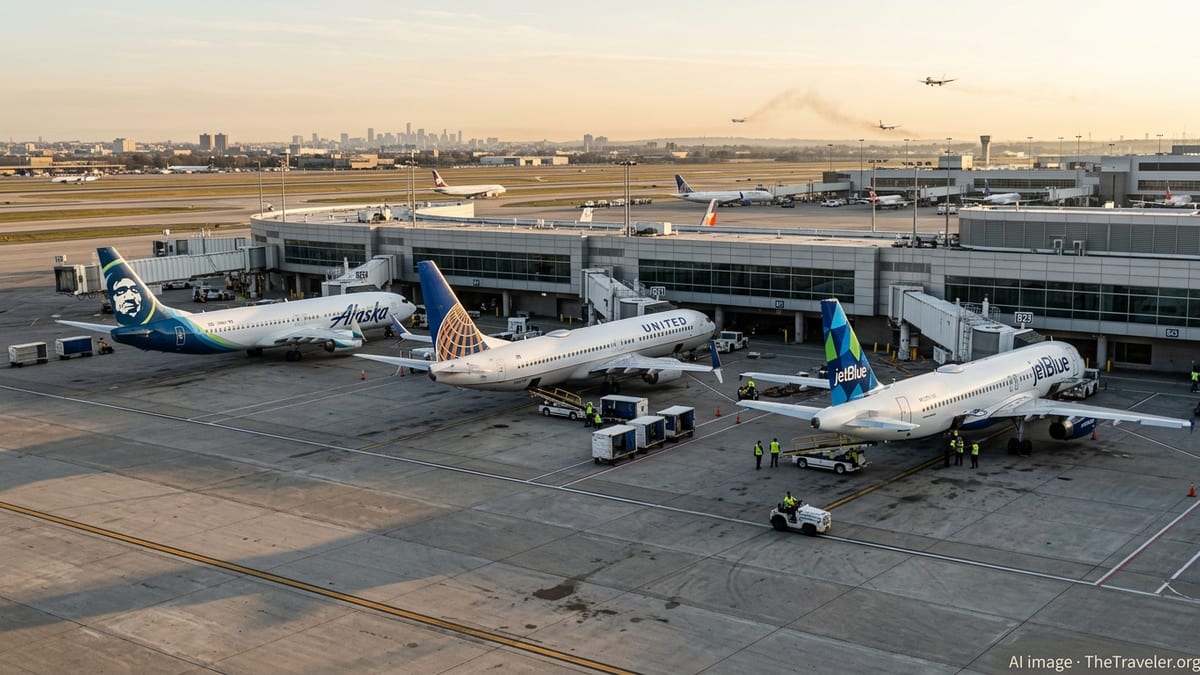
JetBlue is back in the consolidation spotlight as investors, analysts, and aviation watchers increasingly speculate that the New York based carrier is positioning itself for a merger, with United Airlines, Alaska Airlines, and Southwest Airlines frequently cited as the most likely candidates.
Get the latest news straight to your inbox!
From Failed Spirit Bid To Fresh Merger Speculation
JetBlue’s renewed presence in merger chatter follows a difficult two year stretch that upended its original growth strategy. The carrier’s proposed acquisition of ultra low cost rival Spirit Airlines was blocked in January 2024 by a federal judge on antitrust grounds, and JetBlue formally terminated the deal in March that year. Publicly available court documents and regulatory filings show that the transaction was designed to rapidly scale JetBlue into a stronger fifth national competitor, but regulators concluded it would reduce price competition for budget conscious travelers.
The collapse of the Spirit deal forced JetBlue into a strategic rethink. The airline had already unwound its Northeast Alliance with American Airlines after another antitrust ruling, removing a key pillar of its network plan in New York and Boston. Investor commentary and airline earnings coverage through 2024 and 2025 describe a carrier facing higher unit costs, intense fare pressure, and limited access to additional slots and gates in congested coastal markets.
In that context, aviation analysts began to argue that JetBlue’s most realistic path to scale could once again run through consolidation, but this time with a larger or more complementary partner. Research notes and industry commentary in late 2024 and early 2025 increasingly framed JetBlue as a likely target or participant in the next major U.S. airline merger, even as no formal dealmaking has been announced.
Why United, Alaska, And Southwest Are Seen As Frontrunners
Within that speculative landscape, three names appear most often alongside JetBlue: United, Alaska, and Southwest. Each presents a very different strategic fit, and the perceived “frontrunner” status comes largely from network logic and existing fleet choices rather than any confirmed transaction plans.
United is frequently mentioned because of its scale, global connectivity, and already significant overlap with JetBlue in key Northeast markets. Public descriptions of their growing loyalty and commercial ties, including reciprocal earning and redemption opportunities and coordinated benefits for frequent flyers, point to a relationship that is deepening at the customer level. Observers note that, if regulators ever warmed to a large network merger, United would have the ability to absorb JetBlue’s Airbus fleet and slot portfolio while reinforcing its position at New York area airports.
Alaska’s name surfaces for different reasons. The Seattle based carrier has its own acquisition of Hawaiian Airlines pending regulatory review, but analysts highlight the cultural and fleet similarities between Alaska and JetBlue. Both rely heavily on narrow body Airbus and Boeing aircraft, both have strong West Coast or East Coast franchises, and both market themselves on a more customer friendly product than traditional ultra low cost carriers. Industry commentary suggests that combining Alaska’s western network with JetBlue’s eastern strength could create a bi coastal challenger with national reach without the sheer dominance of the largest legacy groups.
Southwest is the third commonly cited candidate, largely because of its balance sheet strength, history of digesting AirTran, and vast domestic point to point network. Some airline watchers argue that Southwest could use JetBlue’s strong New York and Boston presence, as well as its transatlantic experiment from the Northeast, to diversify away from a purely domestic model. However, Southwest’s single aircraft type strategy and distinct brand identity present substantial integration challenges, making any hypothetical merger more complex than others on the table.
Regulatory Reality Check After Two Antitrust Setbacks
Even as merger talk intensifies, the regulatory reality remains a major obstacle. The U.S. Department of Justice has taken a notably tougher line on airline consolidation in recent years, challenging both JetBlue’s Northeast Alliance with American and its Spirit acquisition. In both cases, federal judges sided with antitrust concerns that combinations would reduce competition and raise fares.
Legal analyses of those decisions highlight several themes that would likely reappear in any future JetBlue merger review. Authorities focused closely on overlap in key city pairs, the role of low fare carriers in disciplining prices, and the cumulative impact of past industry consolidation. Any deal involving United or Southwest, both members of the country’s largest airline groups by traffic and revenue, would draw intense scrutiny over whether it further entrenches the dominance of major network carriers.
A transaction with Alaska might initially appear more modest in scale, but it would still face questions about competition on overlapping coastal routes, potential fare effects, and whether smaller airlines would be left with fewer ways to challenge larger incumbents. Analysts note that regulators would likely examine not only current schedules but also how a combined network might deploy slots and gates in constrained airports over time.
Given JetBlue’s legal track record, public commentary from aviation lawyers and policy experts tends to frame any new merger attempt as an uphill battle. The carrier would need to present a detailed case that a combination actually enhances consumer choice or preserves low fare options rather than eliminating them.
Investor Pressure, Network Constraints, And Strategic Options
Behind the legal and strategic debate lies a financial story that continues to drive merger speculation. JetBlue has faced sustained earnings pressure, with reports showing a combination of higher labor and fuel costs, operational disruptions, and competitive discounting in key leisure markets. The blocked Spirit deal removed a planned path to rapid scale and synergy driven cost reductions, leaving management to pursue a more incremental turnaround.
Publicly available investor presentations and earnings commentary suggest that the airline is focusing on capacity discipline, product improvements, and targeted network tweaks to restore profitability. At the same time, online investor forums and research notes frequently describe JetBlue as vulnerable to takeover interest if performance lags and its market valuation remains depressed compared with peers.
Network constraints add another layer to the equation. With limited new slot opportunities at congested airports like New York’s JFK and LaGuardia, organic growth is challenging. A merger or deep commercial partnership offers a shortcut to new markets, better asset utilization, and potentially stronger bargaining power with suppliers. That combination of financial strain and structural limits on growth is a key reason consolidation scenarios continue to draw attention.
Yet observers also caution that not all strategic alternatives require a full merger. Expanded code sharing, deeper loyalty integration, joint ventures on specific routes, or selective asset swaps could allow JetBlue to improve its position without triggering the most severe antitrust reactions. The recently expanding partnerships environment in the industry suggests there is space between independence and outright consolidation.
A Carrier At The Center Of The Next Consolidation Debate
For travelers, the outcome of JetBlue’s strategic crossroads will shape fares, route choices, and the competitive landscape on both coasts. The airline built its brand around more comfortable cabins, free Wi Fi, and a customer friendly image in a market long dominated by larger legacy carriers. Whether it remains a standalone challenger, joins forces with a big network airline, or aligns more closely with a mid sized rival like Alaska will influence how that value proposition evolves.
For now, the discussions around United, Alaska, and Southwest largely remain the domain of analysts, investors, and aviation enthusiasts weighing the relative fit of different combinations. Publicly available information points to deepening partnerships and commercial ties, but no formal merger transaction has been announced. After two major antitrust defeats, any concrete move toward a deal would likely be telegraphed carefully to financial markets and in regulatory filings.
What is clear is that JetBlue is once again at the heart of the U.S. airline consolidation debate. The next chapter, whether it brings a transformative merger or a more cautious partnership strategy, will serve as an important test of how far regulators, investors, and the traveling public are willing to let the structure of the nation’s airline industry evolve.