

More news on this day
JetBlue has brought its signature “Fly Like a Girl” program back to Fort Lauderdale, marking the 12th annual edition of the youth aviation event and reaffirming the airline’s push to get more girls excited about careers in the sky.
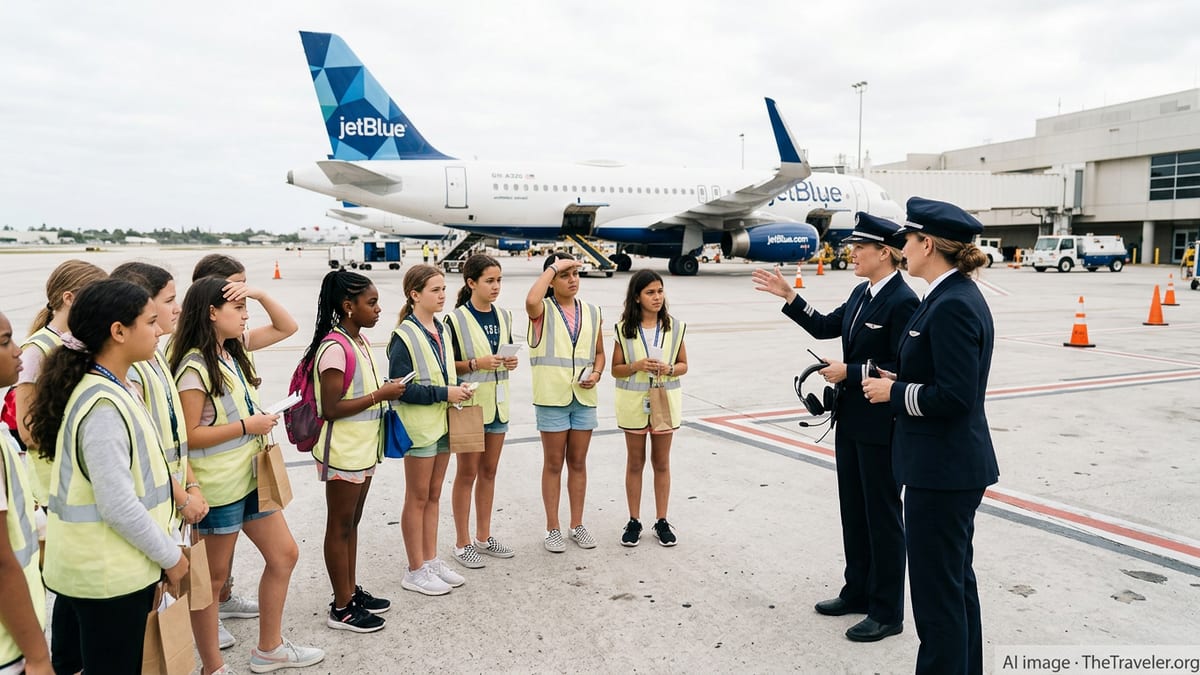
Fort Lauderdale Hosts Milestone Edition of Signature Program
The latest Fly Like a Girl gathering took place at Fort Lauderdale-Hollywood International Airport, where JetBlue crewmembers and partners welcomed local students for a full day inside the world of commercial aviation. Building on past activations in South Florida, the airline framed this 12th annual event as a milestone moment for its long-running effort to diversify the talent pipeline.
Participants, largely girls aged 8 to 14 from schools and community organizations across Broward County, were invited onto the ramp and into normally restricted areas to see firsthand how an airline operates. Many of the students were stepping onto a commercial jet and into an active hangar environment for the very first time, guided throughout by women who work in roles not always visible to the public.
JetBlue has previously hosted Fly Like a Girl in Fort Lauderdale as part of a broader social impact strategy in Florida, one of its most important markets. This year’s edition was designed to deepen those roots, connecting the carrier’s growth at Fort Lauderdale-Hollywood International with outreach that speaks directly to local families.
Airport officials have highlighted Fly Like a Girl as one of the most visible examples of how a major carrier can plug into community education, aligning a busy travel hub with hands-on learning in science and technology for nearby neighborhoods.
Hands-On Access to Aircraft and Aviation Careers
Central to the Fly Like a Girl experience is the chance to get close to real aircraft and equipment. In Fort Lauderdale, students toured the cabin and cockpit of a JetBlue Airbus jet, watched ground crews position stairs and tugs, and learned how maintenance teams keep planes flight ready. Crewmembers broke down complex concepts, from aerodynamics to navigation, into age-appropriate explanations tied to what the students could see and touch.
Inside the terminal and at nearby facilities, popup stations introduced a wide spectrum of aviation careers. Pilots walked students through flight planning and checklists, while aircraft technicians explained the diagnostic tools and inspections that accompany every departure. Airport operations staff, customer support teams and in-flight crewmembers added perspectives on safety, service and logistics.
The airline also spotlighted less visible professional paths such as network planning, finance, marketing and sustainability, underscoring that an interest in aviation can lead to many different roles. For many attendees, it was the first time they had heard directly from professionals about how they had turned a childhood love of airplanes into a long-term career.
Interactive demonstrations, including simple coding activities and basic flight simulations, helped connect the dots between classroom STEM lessons and the technology that underpins modern air travel. Organizers said those short, hands-on moments often become the most memorable part of the day for students deciding what to study next.
Women Leaders Take Center Stage as Role Models
A defining feature of Fly Like a Girl is that the event is led primarily by women in aviation, offering visible role models in an industry where female representation remains limited, especially in technical and leadership positions. At the Fort Lauderdale gathering, female pilots, engineers, executives and frontline crewmembers took turns sharing their personal journeys and answering questions from the students.
Speakers described overcoming stereotypes, navigating flight training and building careers in fields historically dominated by men. They emphasized resilience, teamwork and a passion for problem-solving, illustrating how those traits matter in the cockpit, in the hangar and in the boardroom. Many highlighted the importance of mentors and peer support, encouraging girls to seek out networks that will help them stay engaged with STEM.
JetBlue’s Women in Flight crewmember resource group played a highly visible role, coordinating volunteers and shaping programming to reflect what young girls say they need most: honest stories, practical advice and encouragement to imagine themselves in these jobs. The group’s members see Fly Like a Girl as both an outreach opportunity and a chance to build community within the company itself.
Parents and educators who accompanied students noted that seeing women in uniform, on the ramp and in leadership roles sent a powerful message about what is possible. The informal conversations between sessions, from cockpit photo moments to quick chats on the tarmac, often yielded the most candid and impactful exchanges.
STEM Pipeline and Community Impact in South Florida
Beyond a single weekend event, JetBlue positions Fly Like a Girl as a long-term investment in the STEM pipeline. The Fort Lauderdale edition was closely tied to local schools and youth organizations, with invitations designed to reach students who might not otherwise have direct exposure to aviation professionals or airport operations.
Organizers worked with teachers to align elements of the program with classroom topics in science and math, sending students home with materials that educators can use to continue the discussion. Some attendees were connected with follow-on opportunities such as scholarships, aviation camps and mentoring programs supported by the JetBlue Foundation and community partners.
Local officials have pointed to initiatives like Fly Like a Girl as a way to ensure that the economic growth tied to Fort Lauderdale-Hollywood International Airport translates into opportunities for residents. By spotlighting high-skill, high-demand careers and making them tangible for middle school students, the event aims to plant seeds that could pay dividends for the regional workforce years down the line.
For JetBlue, the Fort Lauderdale gathering also underscored its broader strategy in Florida, where the carrier is adding routes and deepening partnerships while trying to distinguish itself on community engagement. The airline says that inspiring the next generation of aviators, particularly young women, is essential if the industry is to keep pace with long-term demand for pilots, technicians and other skilled roles.
Growing Tradition Looks Ahead to Future Flights
Now in its 12th year, Fly Like a Girl has grown from a single event into a recurring tradition that moves across key cities in the JetBlue network, with Florida playing an increasingly prominent role. Each new edition builds on the last, adding local partnerships and refining activities based on what resonates most with students and families.
In Fort Lauderdale, this evolution could be seen in the expanded mix of hands-on stations, the deeper involvement of airport stakeholders and the rising number of alumnae returning as volunteers or interns. Organizers say it is not uncommon for past participants to come back years later, either as college students pursuing aviation studies or as new hires beginning their own careers in the field.
JetBlue executives have signaled that the airline intends to keep Fly Like a Girl central to its social impact portfolio, even as it navigates broader industry challenges. By concentrating resources on a program that directly connects crewmembers with local youth, the carrier is betting that authentic engagement will continue to differentiate its brand in competitive markets such as South Florida.
For the girls who spent the day exploring aircraft, testing simulators and quizzing pilots in Fort Lauderdale, the 12th annual Fly Like a Girl event was less about corporate strategy and more about possibility. Many left clutching boarding passes and souvenir name tags, but organizers hope the most enduring takeaway will be a new sense of confidence that an interest in flying can one day become a profession.