

More news on this day
JetBlue’s expected launch of nonstop service between Montego Bay and Miami in 2026 is emerging as a potential catalyst for stronger tourism flows and business travel between Jamaica and South Florida, as the airline deepens its footprint in the state and Caribbean markets look to capture renewed demand.
Get the latest news straight to your inbox!
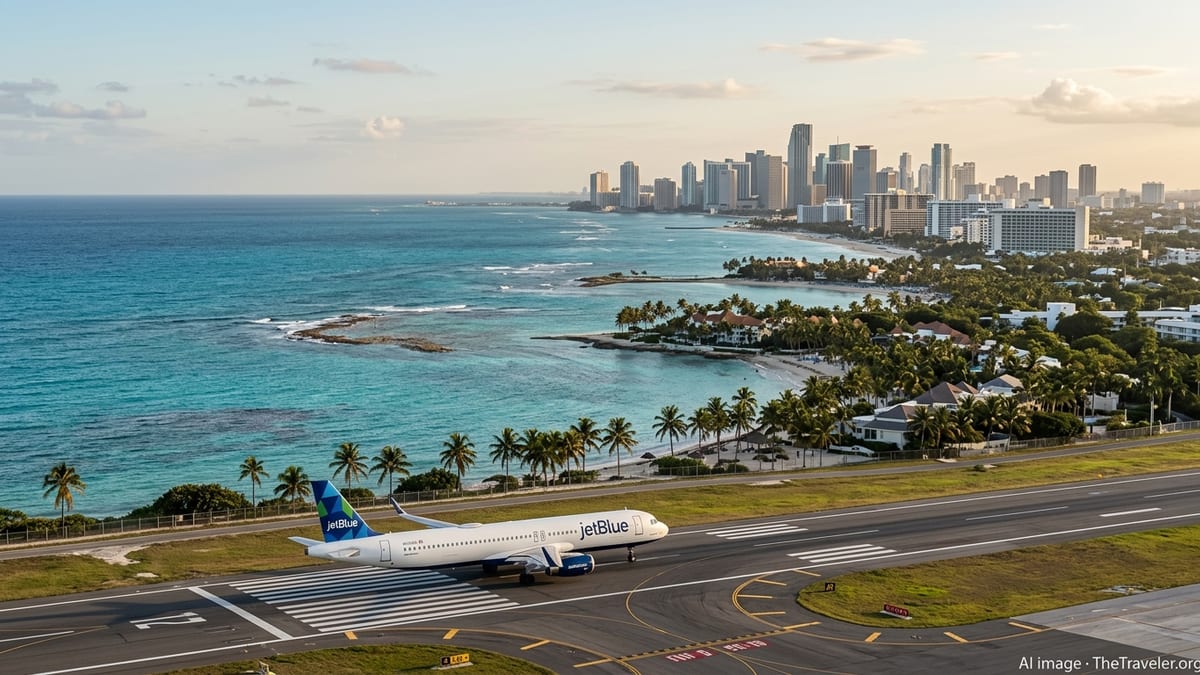
Strategic New Link Between Key Sun Destinations
The proposed JetBlue connection between Montego Bay’s Sangster International Airport and Miami International Airport would align two of the region’s busiest leisure and diaspora corridors at a moment of strong recovery in Caribbean travel. Montego Bay is Jamaica’s primary tourism gateway, while Miami serves as a major hub for Caribbean-bound passengers, cruise embarkations and regional business activity. Publicly available information on JetBlue’s recent network decisions highlights an aggressive expansion across Florida and the wider Caribbean, indicating that a Jamaica–Miami pairing fits within a broader strategy focused on high-demand, short-haul routes.
Recent announcements show JetBlue adding and expanding service from its Fort Lauderdale focus city to multiple Caribbean and Latin American destinations through 2025 and 2026, reinforcing South Florida as a core platform for regional growth. Industry observers note that a direct Montego Bay–Miami option would complement existing JetBlue service from Montego Bay to Fort Lauderdale and other U.S. cities, potentially allowing the carrier to diversify its South Florida offering across both major airports while targeting different passenger segments.
Miami already hosts frequent services to Montego Bay operated by other carriers, and the addition of JetBlue is widely seen as likely to increase competition on pricing and schedules. Travel analysts suggest that incremental capacity on the route in 2026 would support Jamaica’s tourism growth targets and offer Florida-based travelers greater flexibility during peak holiday and cruise seasons.
Tourism Stakeholders Eye 2026 Demand Upswing
Tourism planners in Jamaica have been forecasting continued visitor growth through 2026 on the back of strong North American demand, new hotel developments and rising cruise calls. A new JetBlue-operated bridge between Montego Bay and Miami would slot into this outlook by offering additional lift from one of Jamaica’s most important source regions. Travel trade reports indicate that Florida consistently ranks among the top origin states for U.S. visitors to Jamaica, underscoring the relevance of improved connectivity for both short-break getaways and longer vacations.
On the Florida side, the expected route would give Miami-area residents another low-cost, high-frequency option for beach escapes, destination weddings and all-inclusive resort stays in Montego Bay and along Jamaica’s north coast. Retail booking platforms already show sustained interest in Jamaican packages for 2026, reflecting confidence that air capacity will continue to grow. A JetBlue presence on the Miami corridor could also encourage more dynamic pricing and bundled offers targeting families and millennial travelers.
Industry commentary points to potential benefits beyond leisure trips. The new service is anticipated to support small-business travel, cultural exchanges and sporting events that regularly move between Jamaica and South Florida, where a large Jamaican diaspora lives and works. Additional nonstop frequencies would reduce travel times compared with itineraries involving connections through other U.S. hubs, making cross-border engagements more accessible and affordable.
Strengthening Ties With South Florida’s Caribbean Gateway
JetBlue’s steady build-up across Florida in recent seasons highlights how central the state has become to its network design. The airline has publicly detailed plans to grow departures from Fort Lauderdale, introduce new Florida destinations and increase links from the state into the Caribbean and Latin America through 2025 and 2026. This emphasis on Florida as both an origin and connecting market provides the operational backdrop for a Montego Bay–Miami launch, which would further entrench the airline in a region where it already claims a leading leisure share at nearby Fort Lauderdale.
Miami International Airport functions as a high-volume gateway for cruise passengers, many of whom combine sailings with short land stays in Caribbean destinations. A JetBlue service into Montego Bay would be well positioned to capture pre- and post-cruise demand among travelers seeking a resort stay in Jamaica before or after itineraries departing South Florida. Travel agencies specializing in cruise-and-stay packages are expected to watch schedules and fare structures closely once further details on timings, aircraft type and frequency emerge.
At the same time, improved air links between Montego Bay and Miami could support regional multi-stop itineraries that include both Jamaica and South Florida, particularly for long-haul travelers from Europe and Latin America who connect through Miami. With JetBlue expanding its overall Florida connectivity, a direct Jamaica–Miami segment would slot naturally into wider itineraries that combine city stays, beach destinations and cruise departures within a single trip.
Competitive Dynamics and Passenger Experience
The entry or expansion of JetBlue on the Montego Bay–Miami corridor would add a new competitor into a market already served by legacy and low-cost carriers. Market watchers suggest that more competition has historically translated into sharper fares and increased schedule options on short-haul Caribbean routes, especially around school holidays and winter peaks. For Jamaica, any downward pressure on average ticket prices from Florida can support volume growth by making spontaneous and repeat visits more feasible for cost-conscious travelers.
JetBlue’s product is expected to be a differentiating factor on the route. The airline’s public communications consistently spotlight in-flight amenities such as complimentary Wi-Fi on most aircraft, seatback entertainment and a strong focus on customer service. If these features are deployed on a Montego Bay–Miami service, the carrier is likely to market the route not only on price but also on comfort and convenience relative to competing options. This approach could resonate with frequent flyers, including members of JetBlue’s loyalty program seeking to earn and redeem points on Caribbean trips.
In addition, integration with JetBlue’s growing network across Florida may allow passengers to easily connect between Montego Bay and other in-state cities via Miami or nearby Fort Lauderdale, depending on final scheduling. That flexibility is considered particularly important for visiting-friends-and-relatives traffic, which often involves complex itineraries linking multiple households in different cities within the same trip.
Infrastructure Readiness in Montego Bay and Miami
Sangster International Airport in Montego Bay has undergone phased expansion and modernization to handle rising passenger volumes, with upgrades focused on terminal capacity, security screening and passenger amenities. Aviation data and local reporting suggest that continued investment is aimed at accommodating growth in international traffic from North America and Europe through the latter half of the decade. A new or expanded JetBlue service to Miami would add to an already diverse roster of foreign carriers operating at the airport, reinforcing Montego Bay’s status as a regional hub.
Miami International Airport, meanwhile, is pursuing its own long-term capital programs designed to manage sustained growth in international and domestic traffic. These projects include terminal enhancements and new technologies intended to speed border processing and baggage handling, developments that are relevant for short-haul Caribbean flights where quick turnarounds and punctual operations are commercially vital. Analysts note that by 2026, portions of this work are expected to support greater operational resilience during peak travel periods.
For passengers, the combination of infrastructure improvements at both ends of the route and the customer-service focus that JetBlue promotes across its network could shape perceptions of the Montego Bay–Miami corridor as an efficient and passenger-friendly option. As airlines and tourism boards refine their outlooks for 2026, this anticipated link is likely to be watched as a barometer of traveler appetite for frequent, competitively priced connections between Jamaica and one of its most important U.S. gateways.