

More news on this day
Weekend escapes to Bali are set to become even easier for Australians as Jetstar prepares to launch direct flights between the Sunshine Coast and Denpasar, adding the beachside Queensland gateway to an already extensive network of Bali routes from Adelaide, Darwin, Perth, Sydney, Melbourne and Cairns.
Get the latest news straight to your inbox!
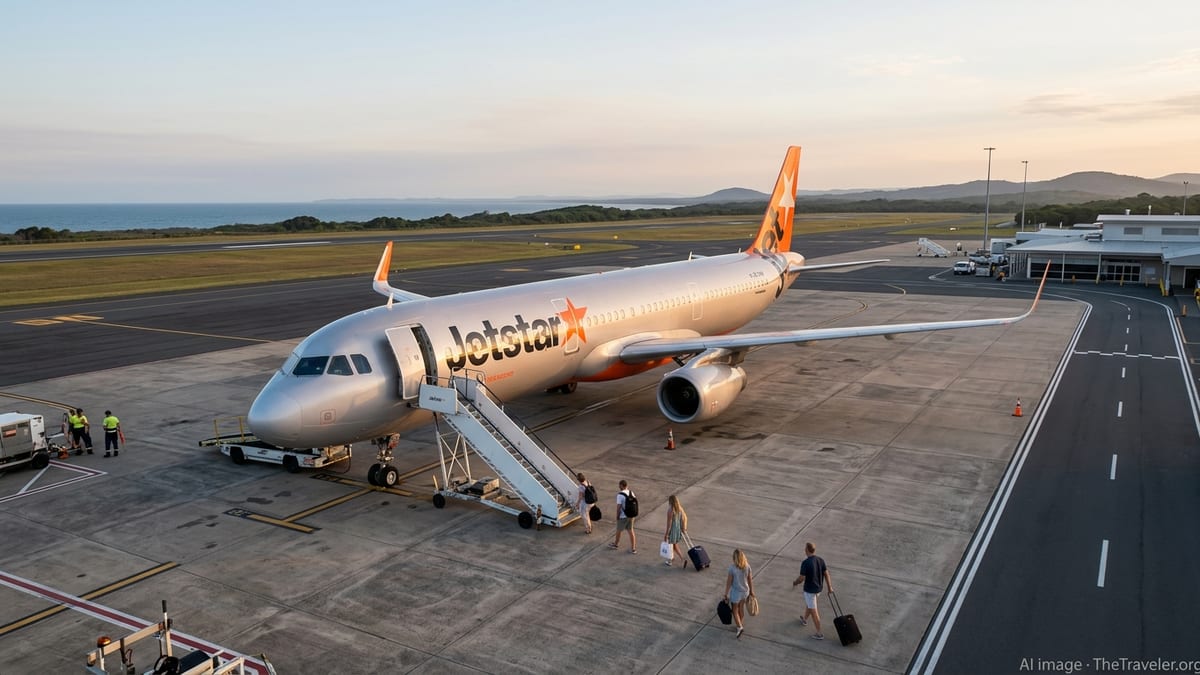
Sunshine Coast Becomes Jetstar’s Newest Bali Gateway
Jetstar’s new Sunshine Coast to Bali service, scheduled to begin operating in late March 2026, will mark the airline’s first ever direct international route from the coastal Queensland airport to Indonesia. Publicly available information from Jetstar’s announcements indicates that the flights will operate three times a week on Airbus A321LR aircraft, adding more than 70,000 low-fare seats a year between Maroochydore and Denpasar.
The Sunshine Coast route is described in industry coverage as Jetstar’s tenth direct connection between Australia and Bali and its fourth from Queensland. It follows the carrier’s earlier launches from the Gold Coast and Newcastle, underlining Bali’s status as one of the most in-demand overseas destinations for Australian leisure travellers.
The schedule is designed to give Sunshine Coast residents a non-stop option to Bali, eliminating the need to first travel by road or air to Brisbane. With a flight time of around six hours, the new service is expected to support short breaks and long weekend trips, a pattern that has driven demand on existing Jetstar routes to the Indonesian island.
Airport material for the 2026 season also highlights that the Sunshine Coast flights will provide through-connections onward to Singapore via Bali, opening a broader international network from a region that has traditionally focused on domestic services.
Network of Australian Cities Feeding Bali Leisure Demand
The Sunshine Coast addition builds on a well-established web of Jetstar services linking Bali with major and regional Australian cities. According to schedules summarised in aviation reports and airport statistics, Jetstar and partner airlines operate direct Denpasar flights from Adelaide, Darwin, Perth, Sydney, Melbourne and Cairns, alongside other gateways such as Brisbane, Canberra, Newcastle and the Gold Coast.
Data released by Bali’s I Gusti Ngurah Rai International Airport and independent tourism outlets shows that routes connecting Adelaide, Brisbane, Cairns, Canberra, Gold Coast, Darwin, Melbourne, Perth and Sydney form a significant share of inbound Australian traffic to the island. Jetstar has been steadily increasing capacity on these sectors, often with promotional sales aimed at stimulating off-peak travel and encouraging short stays.
Recent network updates indicate that the airline is also strengthening its Victorian presence with new Bali flights from Melbourne’s Avalon Airport, turning Denpasar into a central hub for Australian holiday travel. Industry publications describe the Avalon–Bali launch as Jetstar’s eleventh Australia–Bali route, following closely behind the Sunshine Coast and Newcastle announcements.
By layering the Sunshine Coast on top of this broader network, Jetstar is effectively giving more Australians a direct pathway to Bali without backtracking to a capital city, a shift that is expected to influence how travellers plan quick weekend getaways.
Weekend-Friendly Timings Target Short Break Travellers
While detailed timetables for the Sunshine Coast route are still being refined ahead of the March 2026 start, previous Jetstar schedules on similar leisure-focused routes provide an indication of the strategy. Services from Adelaide, Darwin, Perth, Sydney, Melbourne and Cairns to Bali typically concentrate on late afternoon and evening departures from Australia, with morning or midday returns that align with hotel checkout times.
This pattern has been widely interpreted by travel analysts as catering to weekend and long-weekend demand, enabling passengers to finish work on a Friday, fly to Bali in the evening, and return late Sunday or Monday with minimal time away from the office. The Sunshine Coast flights are expected to follow a comparable model, given the strong emphasis on leisure travellers and families in the region’s tourism profile.
Published coverage of Jetstar’s earlier Australia–Bali launches suggests that the airline often introduces new routes with promotional fares and bundled holiday offers. These short-lived sales have historically driven spikes in bookings from cost-conscious travellers looking to secure quick trips around public holidays, school breaks and shoulder seasons.
With Sunshine Coast locals now able to bypass connecting flights through Brisbane or Sydney, industry observers anticipate a noticeable shift in outbound travel patterns, with more residents opting for spontaneous weekend breaks in Bali, particularly outside peak school holiday periods.
Implications for Regional Tourism and Airport Growth
The decision to base a Bali service at Sunshine Coast Airport carries wider implications for both the local tourism economy and the broader Australia–Indonesia travel corridor. Airport media releases point to the route as a milestone in the region’s bid to expand international connectivity and attract higher-spending visitors, both outbound and inbound.
On the outbound side, the Sunshine Coast has traditionally relied on domestic services to cities such as Sydney, Melbourne, Adelaide and Cairns. Jetstar’s move into direct international operations signals growing confidence in the region’s catchment area, particularly as population growth and shifting work patterns make flexible leisure travel more common.
For Bali and Indonesia, the added Sunshine Coast capacity further diversifies the Australian source market. Rather than funnelling travellers solely through the major capitals, the new route brings in visitors from a coastal lifestyle region whose travel preferences often lean towards short, frequent getaways. Tourism bodies are expected to monitor how this influences average length of stay and spending patterns in Bali’s resort districts.
Analysts also point to potential flow-on benefits for Singapore and beyond, due to Jetstar’s planned through-connections via Denpasar. For Sunshine Coast residents, Bali becomes not only a beach holiday destination but also a stepping stone to a wider Asian network, reinforcing the airport’s transformation from a primarily domestic gateway into a modest but growing international hub.
Competitive Landscape and Future Capacity Signals
Jetstar’s latest Bali expansion comes amid growing competition on Australia–Indonesia routes. Reports from Bali Airport note that multiple carriers now serve key Australian cities such as Darwin and Adelaide, with Indonesia AirAsia and other airlines adding or reinstating flights alongside Jetstar’s long-standing presence.
Despite this competition, the low-cost model remains a defining feature of the market, with regular promotional campaigns from Jetstar and rival carriers keeping fares accessible for price-sensitive travellers. The Sunshine Coast launch, supported by modern A321LR aircraft with lower operating costs compared with older models, is widely interpreted as part of a broader capacity and efficiency strategy.
Aviation industry sources tracking schedule filings for the Northern Summer 2026 season also highlight that Qantas intends to codeshare on a suite of Jetstar-operated Denpasar routes, including services from Adelaide, Cairns, Darwin, Perth, Sydney, Melbourne and the Sunshine Coast. This arrangement is expected to expand booking options and loyalty benefits for passengers across the broader Qantas Group network.
As the Sunshine Coast joins Adelaide, Darwin, Perth, Sydney, Melbourne and Cairns on Jetstar’s roster of Bali gateways, the coming year is set to test how much additional weekend and short-break demand remains untapped. The answer will likely shape future decisions on frequency increases, aircraft deployment and the potential for further regional Australian cities to seek their own direct links to Indonesia’s best-known holiday island.