

More news on this day
Travellers moving between Thailand, Australia and Malaysia faced fresh disruption this weekend as cancellations by Jetstar Airways and Batik Air Malaysia severed key links to Melbourne, Sydney and Kuala Lumpur, adding to a wider wave of delays rippling across Asia’s already stretched aviation network.
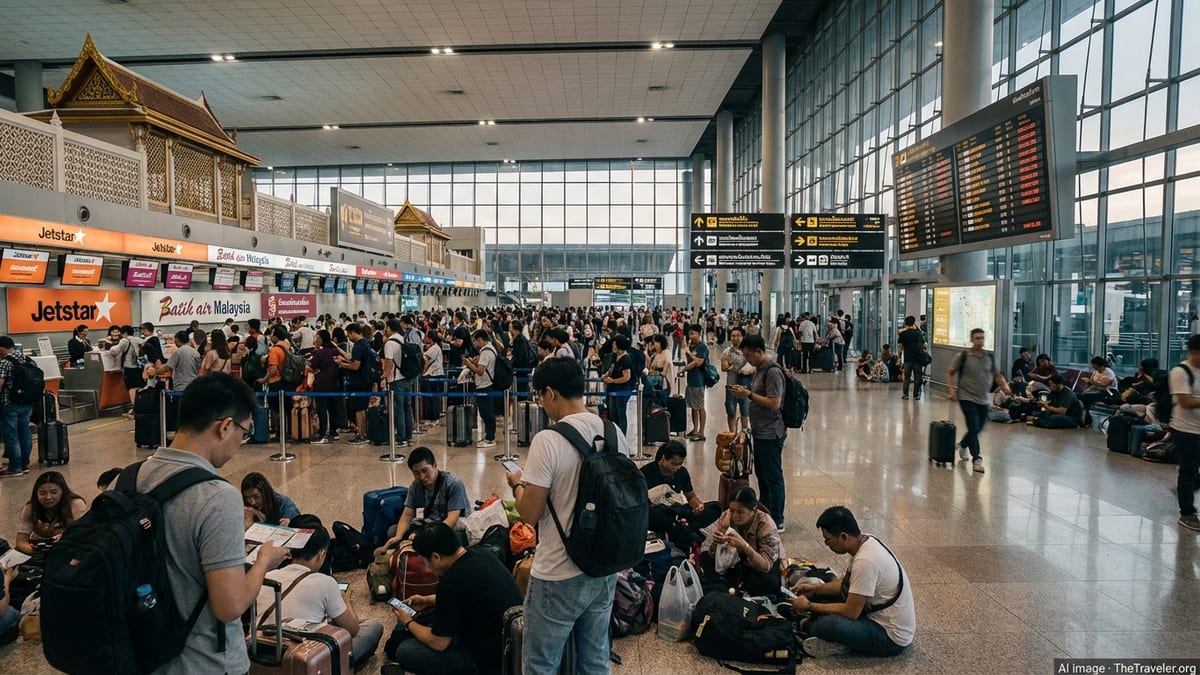
Three Cancellations Hit Strategic Long Haul and Regional Links
The latest turbulence for passengers began in Bangkok, where Jetstar’s JQ30 service from Suvarnabhumi Airport to Melbourne was cancelled on Friday night, February 27. The overnight flight is a core low cost connection between Thailand and Victoria, routinely operating close to capacity with a mix of holidaymakers, students and visiting friends and relatives traffic.
On the same day, Jetstar passengers also reported disruption on a Thailand to Sydney flow, with a key feeder service no longer operating as scheduled. While the airline has continued to run domestic services between Melbourne and Sydney, the loss of a Thailand link has left many travelers scrambling for alternatives via Singapore or Kuala Lumpur.
Further adding to the strain, Batik Air Malaysia scrubbed a Thailand linked leg that feeds its Kuala Lumpur based network, impacting passengers booked to connect onwards to the Malaysian capital and beyond. The cancellation affects travelers using Thailand as a staging point for itineraries into Malaysia, Australia and other Southeast Asian destinations.
The three affected flights together represent an important bridge across the busy Thailand Australia Malaysia triangle. Their sudden removal has intensified an already difficult travel environment in the region, where carriers are juggling adverse weather, aircraft utilization pressures and congested airports.
Regional Flight Chaos Forms the Backdrop
The disruption in Thailand is unfolding against a wider backdrop of operational turmoil across Asia. In recent days, aviation data and industry reports have pointed to dozens of cancellations and hundreds of delays at major hubs including Kuala Lumpur, Jakarta, Singapore and multiple airports in China and Japan, with Batik Air, Jetstar and several regional rivals all affected.
Weather has been a recurring trigger, with fast moving storm systems and low cloud interfering with traffic flows and forcing air traffic control to reduce arrival and departure rates. Airlines already operating tight schedules have had little room to recover when one sector falls badly behind, leading to rolling knock on impacts that can ultimately force cancellations on later flights.
The pressure has been especially visible in Southeast Asia’s leisure markets. Popular destinations such as Phuket and Bangkok depend heavily on point to point services from Australia and Malaysia, while Kuala Lumpur functions as a key hub for both Batik Air Malaysia and AirAsia. When a single long haul Thailand Australia or Thailand Malaysia rotation is lost, the effect can cascade across multiple routes for days.
Industry analysts note that late February remains a busy period for regional tourism, business travel and students returning to campuses in Australia. That seasonal demand has meant many disrupted passengers have struggled to find spare seats on alternative services at short notice.
Passengers Face Long Queues, Rebookings and Higher Fares
For travelers caught in the cancellations, the immediate impact has been felt in airport terminals across Thailand and neighboring hubs. Passengers from the cancelled Bangkok to Melbourne flight reported long queues at airline counters, with ground staff working to rebook customers onto later Jetstar services from Bangkok or indirect routings via other cities.
Those with onward connections, including domestic legs within Australia or regional hops from Kuala Lumpur, have faced particularly complex rebooking scenarios. With many flights already heavily booked, airlines have limited flexibility, and some travelers have had to accept overnight stays or itineraries involving multiple stops.
The dynamic pricing of remaining seats on alternative carriers has also been painful. As demand surged on rival services between Thailand, Australia and Malaysia, fares climbed sharply, leaving passengers who chose to self rebook with significantly higher costs than their original tickets.
Travel agents in both Bangkok and Kuala Lumpur reported a spike in last minute enquiries, as customers sought guidance on the fastest and least costly way to complete disrupted journeys. Some agents said they were advising flexibility on travel dates or routing, with options via Singapore, Denpasar or Hong Kong sometimes offering the most realistic path to Australia.
Tourism and Aviation Stakeholders Monitor Knock On Effects
The cancellations have also raised concern among tourism operators and airport stakeholders in Thailand, who rely heavily on reliable links to both Australia and Malaysia. Australian visitors are a key market for Thai beach destinations and urban tourism, while Kuala Lumpur is an important source of short break and shopping traffic.
Hoteliers in Bangkok and Phuket said they were watching for signs of short term cancellations from Australian guests who may not be able to find alternative flights at reasonable prices. Some properties have already fielded requests to adjust check in dates or shorten stays as travelers rework their itineraries.
At the same time, airports in Thailand and Malaysia are working to manage congestion from displaced passengers and aircraft. Ground handling providers have reported increased pressure on customer service desks, baggage facilities and airport transport links, particularly at peak times when disrupted passengers overlap with regular scheduled flows.
While a small number of cancellations might not drastically alter long term tourism trends, repeated disruptions on the same corridors, especially those connecting Thailand to major source markets such as Australia, can erode traveler confidence and push some visitors to consider alternative gateways.
What Travelers Should Do Now
With flight operations still unsettled across parts of Asia, travel experts are urging passengers booked on upcoming Jetstar Airways and Batik Air Malaysia services touching Thailand to monitor their itineraries closely in the days ahead. Airline apps, SMS alerts and direct contact with carriers or travel agents remain the most effective way to track last minute schedule changes.
Customers whose flights have already been cancelled are typically entitled to a choice of refund or rebooking, depending on the fare rules and local regulations. However, processing times can vary, and those needing to reach Australia or Malaysia urgently may prefer to accept a later departure or a more complex routing rather than wait for a cash refund.
Travel planners also suggest allowing longer connection times when using Thailand or Kuala Lumpur as transit points to Australia, at least while the current wave of regional disruption persists. Booking through tickets on a single carrier or alliance can make it easier to secure assistance and protection if one sector in a journey is cancelled.
For now, the combination of three high impact cancellations, weather related strain and tight regional capacity has turned what should have been straightforward hops between Thailand, Melbourne, Sydney and Kuala Lumpur into a test of patience and flexibility for many travelers, underscoring how fragile Asia’s revived aviation recovery can still be when multiple stress points converge.